

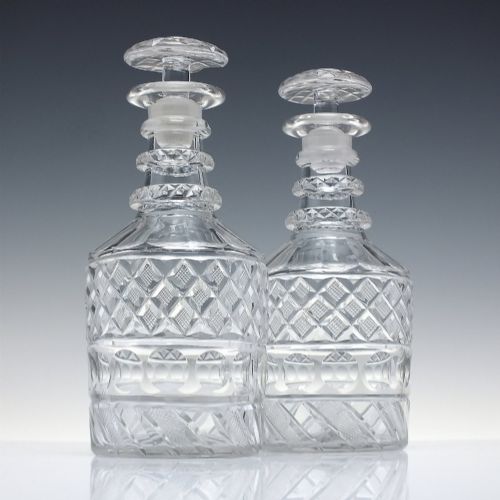
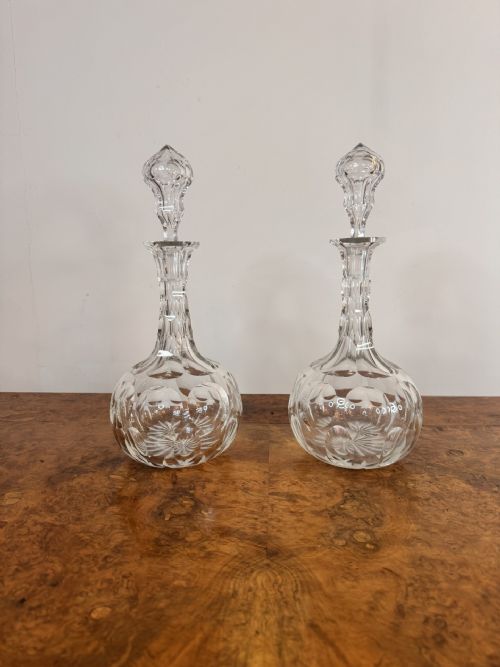
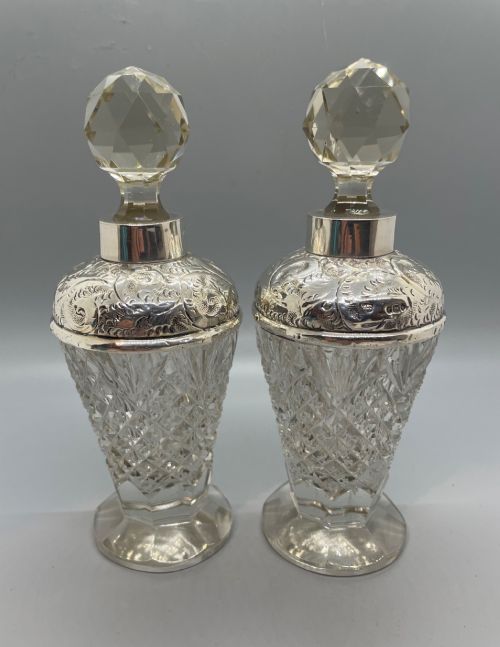


Pair Glass Decanters Stoppers
Pair glass decanters stoppers bring symmetry and brilliant light to a room, offering functional elegance rooted in centuries of craftsmanship.
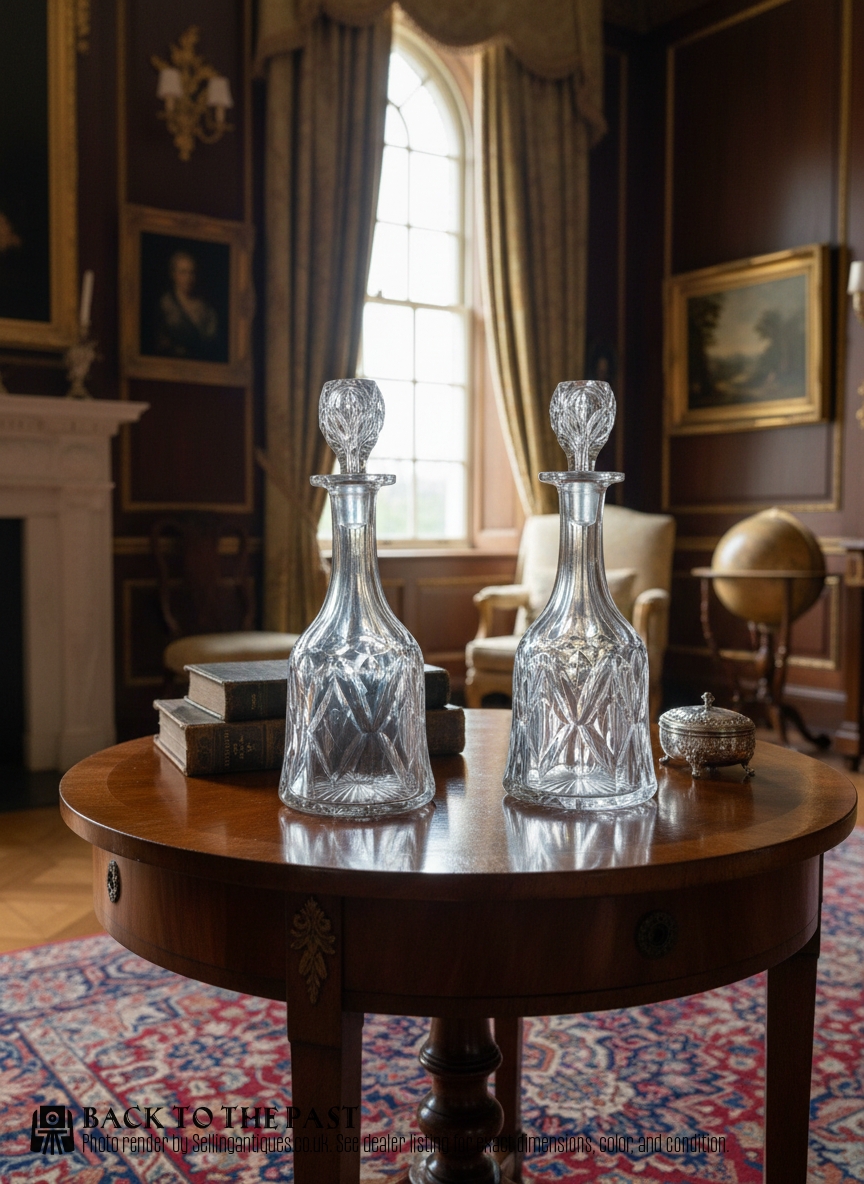
Pair Glass Decanters Stoppers
When searching for pair glass decanters stoppers, a buyer looks at matching sets designed to hold and serve spirits, wine, or scents. These twin vessels often feature matching stoppers that complete the silhouette.
The most common examples on this page hail from the Victorian and Georgian eras, spanning heavy cut glass to slender shaft and globe forms. English and French workshops dominate the available selection.
Beyond traditional wine service, the category includes smaller scent bottles, tincture bottles, and apothecary jars mounted in silver or crystal. Each variant reflects the domestic and social habits of its period.
Distinctions in quality
Quality rests in the crispness of the glass cutting, the weight of the crystal, and the precise matching of the original stoppers to their vessels. Superior examples display deep, sharp facets that refract light cleanly without distortion.
The refinement of ancillary materials, such as hallmarked silver collars or intricate hand-engraving, separates standard utility wares from the finest salon pieces. Proportions remain harmonious across superior pairs, with balanced bases and clear metalwork.
Pair Glass Decanters Stoppers Retail Price Guide 2026
Typical asking prices for pair glass decanters stoppers among the pieces listed under this phrase on Sellingantiques today, from the lower quarter to the upper quarter. They describe what is for sale here now, not the wider market.
The inventory records functional forms ranging from large wine decanters to tiny apothecary jars and scent bottles.
Rene Lalique·Mappin & Webb
The Pair Glass Decanters Stoppers Glossary
- Prussian style
- A decanter shape characterised by a tapering body and multiple concentric rings around the neck. This design originated in the Georgian period and remained popular through the nineteenth century.
- Shaft and globe
- A distinct silhouette featuring a long, slender neck above a rounded globular body. Victorian examples often paired this form with union engraving.
- Tincture bottle
- A small glass vessel originally used by apothecaries to store liquid medicines. They frequently feature matching ground glass stoppers to maintain an airtight seal.
- Lead crystal
- Glass containing a high proportion of lead oxide, which increases clarity and weight. It allows for deeper cutting and sharper facets.
- Silver collar
- A metal band fitted around the neck of a decanter or scent bottle, often bearing assay marks. It provides structural reinforcement and decorative contrast.
Pair Glass Decanters Stoppers: Frequently Asked Questions
How do I know if the stopper is original?
Original stoppers share the same glass colour, wear patterns, and internal hue as the decanter body. Grinding marks on the peg should match the texture of the neck interior.
Matching numbers or identical facet alignments often confirm the pair started life together. A proper fit sits flush without excessive wobble.
What is the difference between Georgian and Victorian decanters?
Georgian decanters typically feature three or four neck rings and heavy, geometric cut patterns designed for Port or Madeira. They lean toward robust, weighty proportions.
Victorian variants introduce lighter ruby, amethyst, or cranberry glass alongside shaft and globe silhouettes. Engraved floral motifs and silver collars become more prevalent in this later era.
How should I clean antique glass decanters?
Avoid sudden temperature changes to prevent the aged glass from cracking. Warm water and mild soap suffice for routine care, avoiding harsh abrasives.
Allow vessels to dry completely upside down before replacing the stopper. Professional cleaning methods handle stubborn interior residue safely.
Were these decanters meant for wine or spirits?
Larger cut glass and crystal vessels served dining tables containing fortified wines like port or sherry. Smaller variants housed spirits or cordials.
Specialised scent bottles and tincture jars fulfilled personal grooming and apothecary needs rather than dining service.