
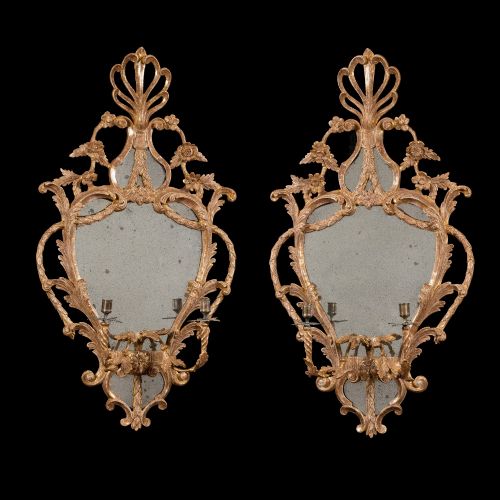

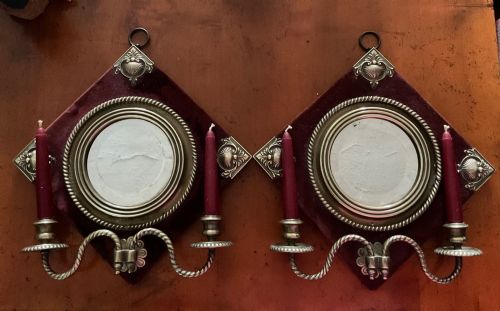
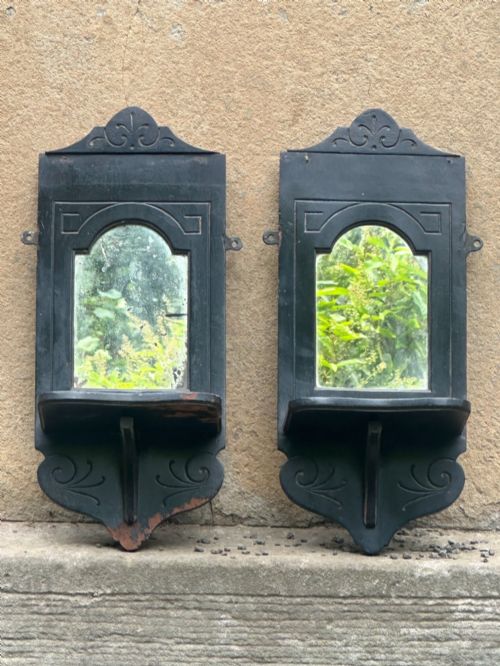


Pair Girandole Mirrors
These pair girandole mirrors combine reflective glass with integrated candle arms to light period rooms with dual illumination.
Pair Girandole Mirrors
When searching for pair girandole mirrors, buyers encounter decorative wall lights that merge a looking glass with candle sconces, designed to amplify candlelight across an interior space. These twin objects frequently emerge from the eighteenth, nineteenth, and early twentieth centuries in matching sets intended for symmetrical placement on either side of a mantelpiece, window, or architectural pier.
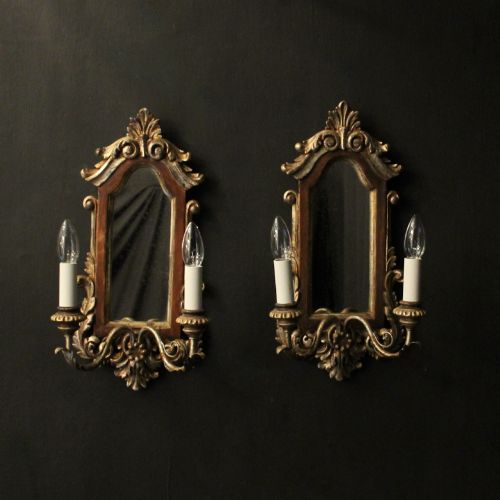
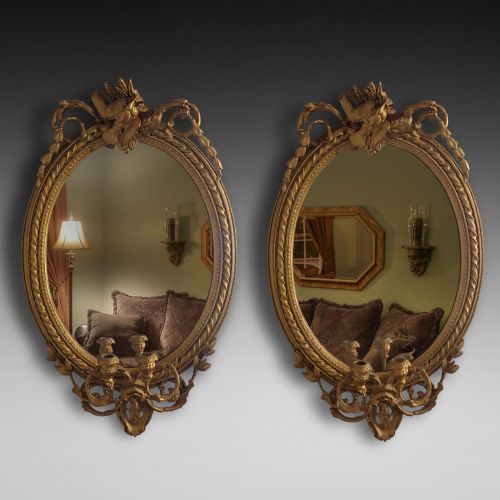
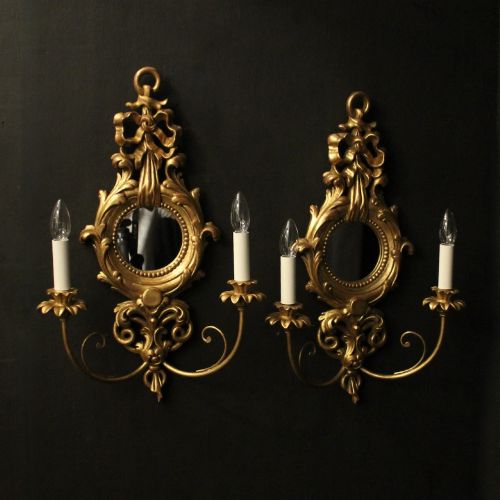
The selections span distinct stylistic revivals and regional workshops, ranging from Florentine giltwood carvings and Venetian pier mirrors to French bronze wall lights and English brass Sconces. Common forms include convex circular glasses, oval frames with crestings, and rectangular carved plates fitted with twin or triple candle arms branching outward from the base.
Originating as functional lighting before electricity, these pieces showcase diverse interpretations across the Regency, Rococo Revival, Neoclassical, and Aesthetic movements. Surviving examples demonstrate how makers adapted traditional candle-reflecting designs into decorative wall furnishings for formal salons and drawing rooms.
How they were made
Craftsmen built the structural foundations of these wall lights using carved timber, cast brass, bronze, or wrought iron, often applying gesso layers to wood before detail carving. Giltwood and gilt-painted surfaces received thin sheets of gold leaf or metallic paint over a prepared ground, creating the reflective metallic finishes seen on nineteenth and twentieth-century examples.
Mirror plates utilised silvered glass, sometimes shaped into convex curves to capture wide room angles or cut into rectangular and oval formats to fit ornate frames. Metal arms for candles were cast, chased, or forged separately before being securely fixed to the lower frame structure to support multi-branch illumination.
Listings feature pieces spanning the eighteenth to the twentieth centuries, utilising materials such as giltwood, bronze, brass, and mirrored glass across various revival styles.
What varies in quality
The standard of carving and metal-chasing defines the upper tier of these objects, separating hand-modelled gesso and deeply carved giltwood enrichments from simpler moulded compositions. Crisp botanical motifs, scrollwork, and figural crestings indicate skilled workshop execution rather than mass-produced casting.
The preservation of original mercury or silvered mirror glass and matching gilding surfaces dictates overall integrity. Pairs that retain their original candle arms, structural backplates, and uniform patination across both pieces command greater regard among collectors.
Cottier and Co
The Pair Girandole Mirrors Glossary
- Girandole
- A decorative wall mirror fitted with attached candle branches designed to multiply the flickering light within a room. These fixtures appeared in various historical revivals throughout the eighteenth and nineteenth centuries.
- Gesso
- A plaster-like material applied to wood frames to provide a smooth surface for intricate carving and subsequent gilding. Artisans modelled fine relief details into this compound before applying metal leaf.
- Giltwood
- Timber coated with gold leaf or metallic powder applied over a prepared ground of size and gesso. This finish provided a rich, reflective surface popular in formal interior decoration.
- Sconce
- A wall-mounted lighting bracket designed to hold candles or lamps, frequently integrated directly beneath or beside a looking glass. These fittings formed a primary method of wall illumination before gas and electric lighting.
- Convex mirror
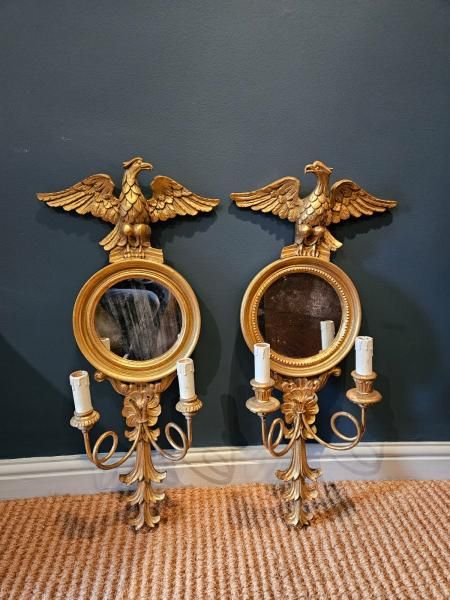
- A round looking glass with an outward-curving surface that reflects a wide, panoramic view of the interior space. Regency examples often housed these within circular frames surmounted by eagles or decorative crests.
Pair Girandole Mirrors: Frequently Asked Questions
How were girandole mirrors used?
Historically, these mirrors hung in principal rooms such as drawing rooms, dining spaces, and parlours, positioned to catch and distribute candle light across the evening gatherings. Their reflective glass and metallic arms maximised the ambient illumination available before gas lighting.
They served both as functional light sources and as prominent decorative focal points mounted between windows or above fireplaces.
How do I style girandole mirrors at home?
These matching wall lights look best hung at eye level in pairs, typically flanking a central architectural feature like a fireplace, mantelpiece, or console table. Their symmetrical design creates formal balance on a wall while adding reflective depth to smaller spaces.
Modern interiors can use them to introduce historic texture and ambient wall lighting without needing to burn candles in the sconces.
How do I tell different periods apart?
Distinguishing periods relies on examining the framing materials, decorative motifs, and manufacturing techniques used in the construction. Regency pieces often feature convex glass within round frames, while Victorian and Edwardian examples lean toward ornate brass, bronze, or heavily carved giltwood rococo revivals.
Looking closely at the backplates, fixings, and the composition of the gesso or metal helps establish the likely decade of manufacture.