


Regency Giltwood Sconces
Regency giltwood sconces bring brilliant reflective light and neoclassical elegance to any interior wall.
Regency Giltwood Sconces
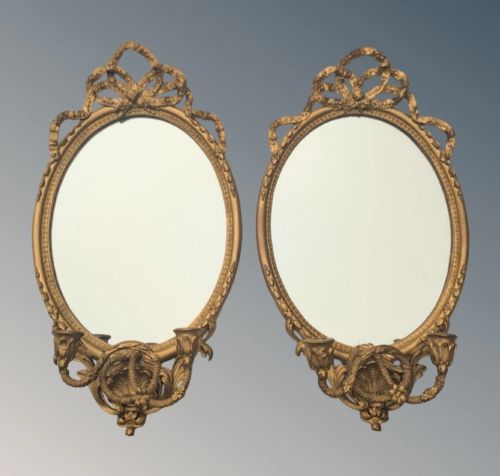
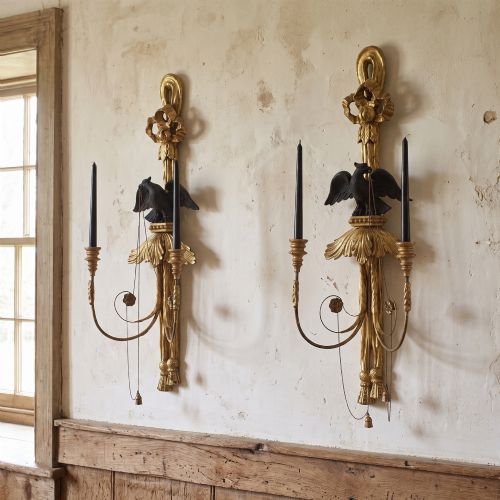
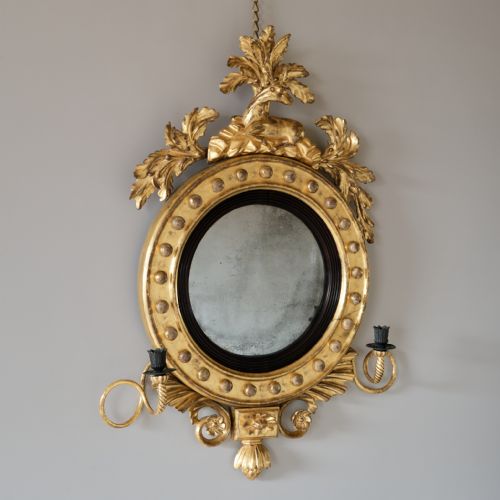
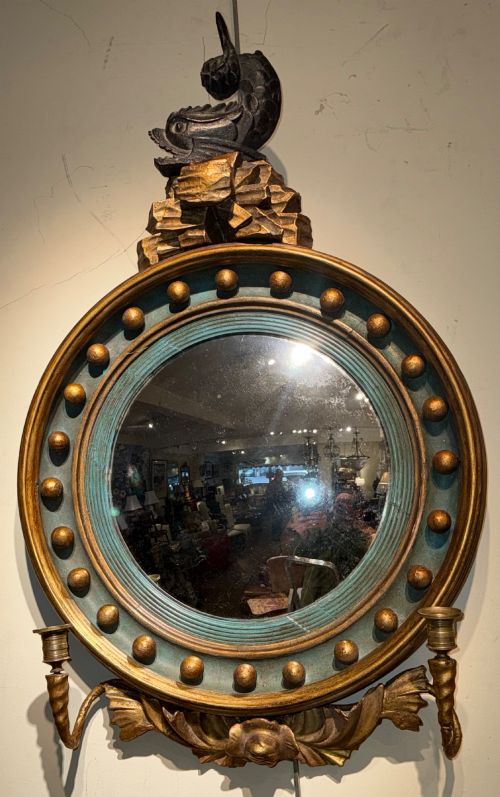
When you search for regency giltwood sconces, you encounter wall-mounted lighting and convex mirrors designed to amplify candlelight in principal rooms. These pieces originate primarily from the Regency period and the nineteenth century, alongside later revivals from nineteen ten and nineteen twenty.
The most frequent forms on this page include convex mirrors, girandoles, and paired wall sconces. Many items incorporate eagle motifs, pier glass, and neoclassical styling that reflect the sophisticated tastes of the period.
Makers and craftsmen of these eras utilised giltwood, gesso, brass, and ebonised wood to achieve striking visual contrast. Buyers select these items to introduce period character and warm reflectivity into traditional and modern spaces alike.
How they were made
Artisans constructed the primary frames of regency giltwood sconces using carved wood or moulded gesso over a wooden base. This combination allowed workshops to achieve intricate neoclassical details, eagle figures, and reeded bezels.
Workers applied thin sheets of gold leaf over a prepared bole layer to create the characteristic giltwood surface. Brass and metal components provided structural support for candle arms, while circular mirror glass filled the centres.
Current listings feature pieces spanning the Regency era, the nineteenth century, and early twentieth-century revivals from nineteen hundred to nineteen twenty.
What varies in quality
The crispness of the original gesso carving and the depth of the gilding separate standard examples from superior pieces. Early nineteenth-century work displays sharper definition in mouldings and foliage than twentieth-century revivals.
The integrity of the mirror glass and the retention of the original surface patination determine the overall desirability of each sconce. Pieces retaining their original gilt surfaces and intact wooden frames command greater appreciation among collectors.
The Regency Giltwood Sconces Glossary
- Giltwood
- Wood that has been decorated with gold leaf applied over a prepared ground. This finish provides the bright reflective surface characteristic of many antique frames.
- Convex mirror
- A circular mirror with a curved glass surface that reflects a wide, distorted field of room interior. These were popular in Regency reception rooms for practical illumination.
- Girandole
- A branched wall sconce or a mirror fitted with candle holders attached to the frame. They were designed to multiply the flickering light of candles across the wall.
- Gesso
- A plaster-like mixture applied to wooden frames as a base for gilding. It allows carvers to achieve fine relief details before applying gold leaf.
- Neoclassical
- A style drawing inspiration from the classical art and architecture of ancient Greece and Rome. It heavily influenced the symmetry and motifs found on Regency furniture and wall sconces.
Regency Giltwood Sconces: Frequently Asked Questions
Where should I hang a convex mirror?
These mirrors work best in principal reception rooms, hallways, and dining spaces where their curved glass can capture and reflect natural and artificial light from across the room.
Position them at eye level to maximise their decorative impact and to allow guests to appreciate the detailed giltwood frames.
How do I clean giltwood frames safely?
Dust giltwood surfaces gently with a soft, dry brush to prevent any damage to the delicate gold leaf layer. Avoid using liquid cleaners, moisture, or chemical solvents, which can strip the historic gilding and expose the underlying gesso.
If stubborn dust accumulates in the carved recesses, use a feather duster or compressed air at a safe distance.
What is the difference between a sconce and a girandole?
A wall sconce primarily functions as a candle bracket mounted to the wall, whereas a girandole specifically incorporates a mirror plate with integrated candle arms attached to the frame.
Both forms served the dual purpose of illumination and decoration in period interiors.
How do I date a giltwood mirror?
Examine the construction methods, the wood behind the frame, and the composition of the gesso and glass plate. Earlier pieces from the Regency era feature hand-carved elements and older mirror glass, while twentieth-century revivals often show more uniform machine-moulded details.
Looking closely at the backboards and fixings often reveals clues about the period of manufacture.