

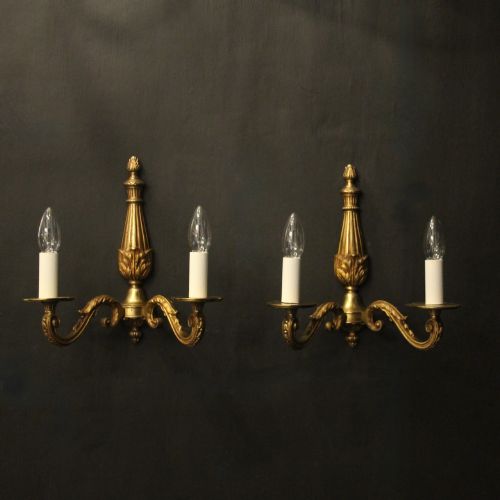
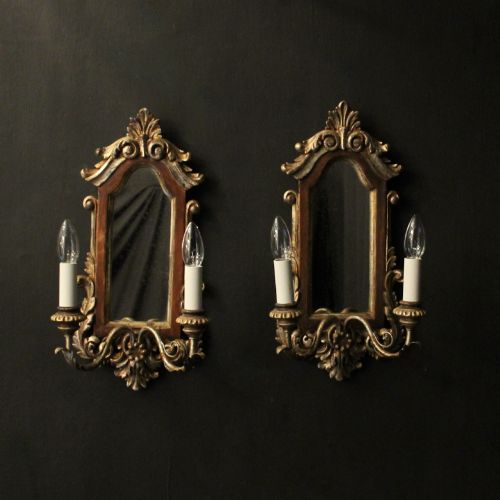
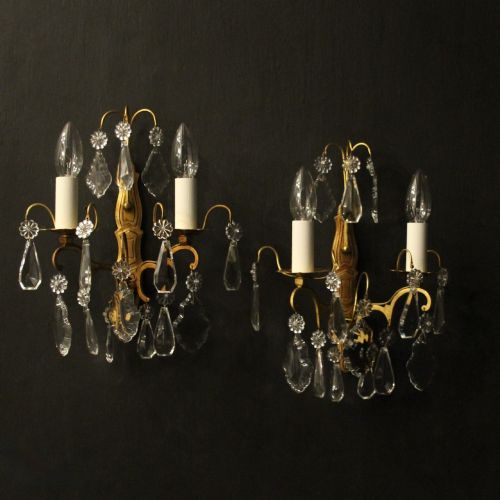
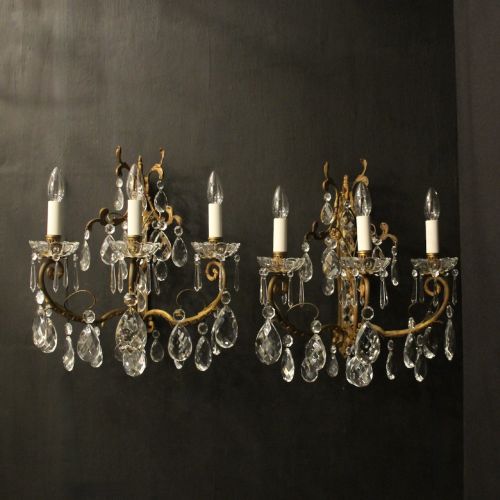
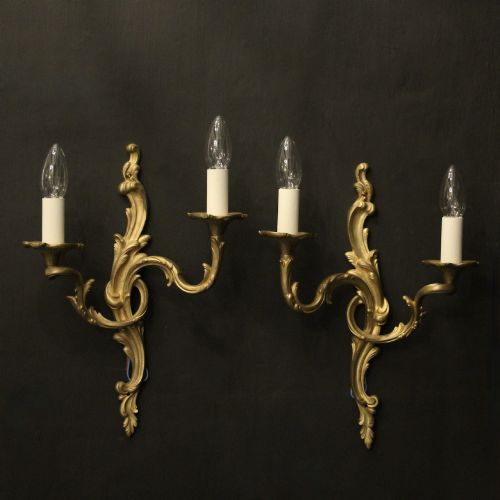
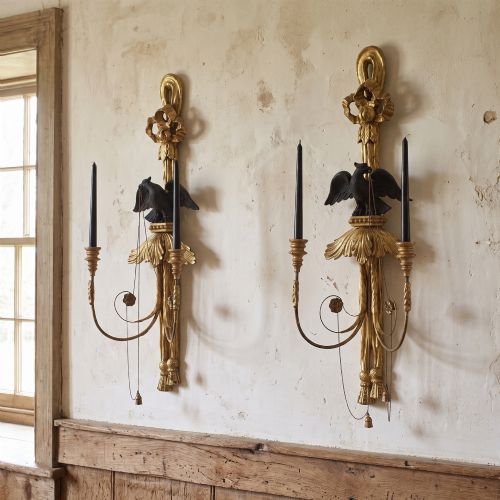
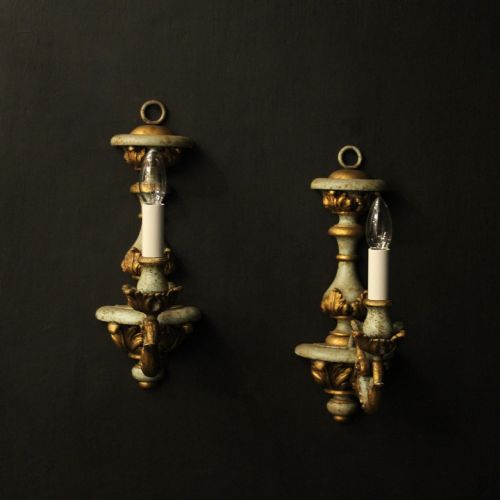
Pair Gilded Wall Lights
Pair gilded wall lights illuminate interiors with period grace, bringing candlelit warmth and reflective sparkle to panelled rooms.
Pair Gilded Wall Lights
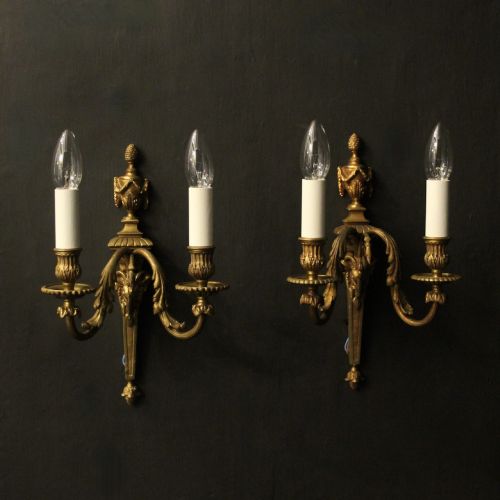
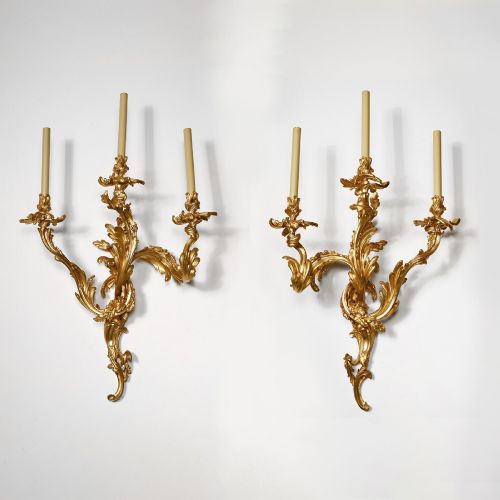
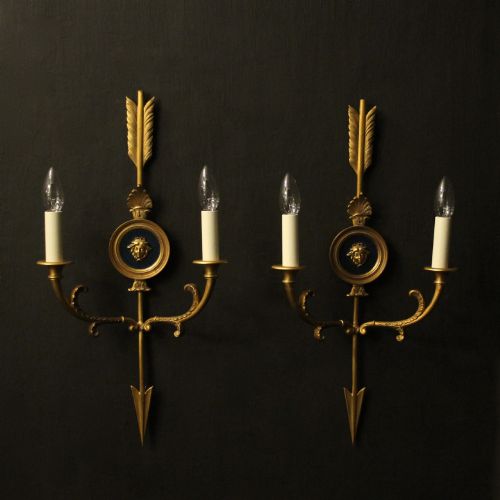
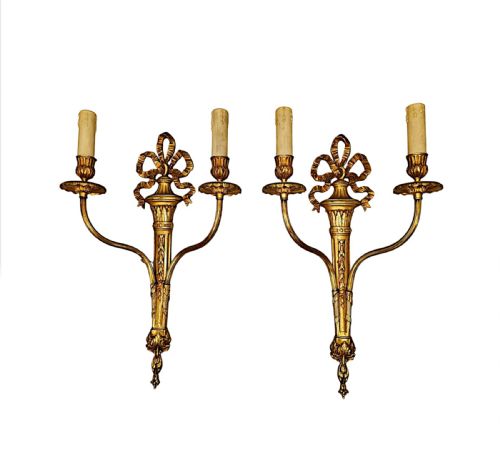
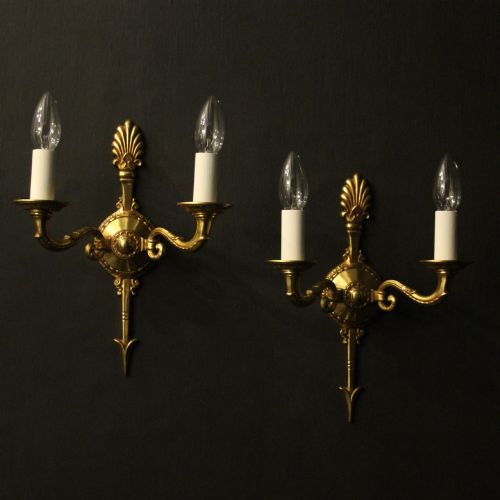
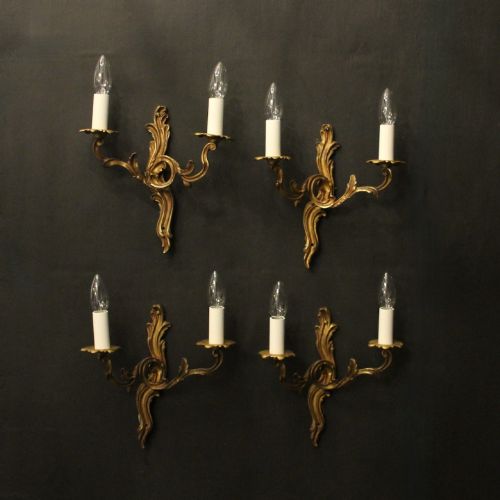
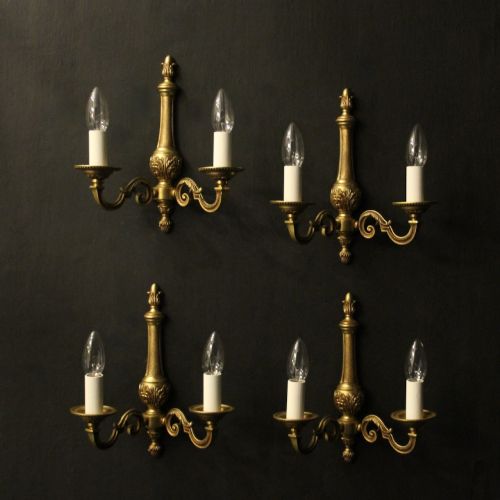
A buyer investigating pair gilded wall lights encounters decorative fixtures designed to mount directly onto vertical surfaces, providing both illumination and sculptural ornament. These objects appear frequently in French and Italian regional designs, spanning periods from the eighteenth century through the 1930s.
The selections on this page concentrate heavily on twin-arm and triple-arm configurations, alongside single-arm variants and specialised forms like girandoles and half-lanterns. French models heavily influence the selection, often adopting styles such as Rococo, Louis XVI, and Empire.
Materials and Construction Methods
Makers utilised metal and wood as the primary structural foundations, applying layers of gold leaf, ormolu, or liquid gilding to create luminous surfaces. Gilded bronze, brass, and giltwood dominate the physical evidence, providing durable armatures that hold candle holders or electrical fittings.
Techniques combine hand-carving for wooden components with metal casting and chasing for bronze and brass branches, backplates, and sconces. Crystal pendants, mirror plates, and Murano glass elements frequently integrate into the designs, secured with pins or wire to amplify the reflected light.
Listings feature pieces spanning from the 18th century to 1930, utilising brass, giltwood, and gilded bronze.
Differentiating Quality Among Sconces
Quality rests upon the crispness of the casting in metal pieces and the depth of the hand-carving in wooden examples. Superior items display sharp botanical or rocaille relief, where chased details remain distinct rather than softened by excessive wear or hasty finishing.
The integrity of the gilding further distinguishes tiers of craftsmanship, with double-gilded or fire-gilt surfaces retaining a rich, warm tone compared to flat modern metallic paints. Heavier gauge brass and solid bronze provide structural rigidity, ensuring the arms support candles or bulbs without sagging.
The Pair Gilded Wall Lights Glossary
- Ormolu
- Finely ground high-carat gold mercury-gilded onto a bronze object. This French technique yields a durable, deep golden lustre characteristic of luxury antique metalwork.
- Girandole
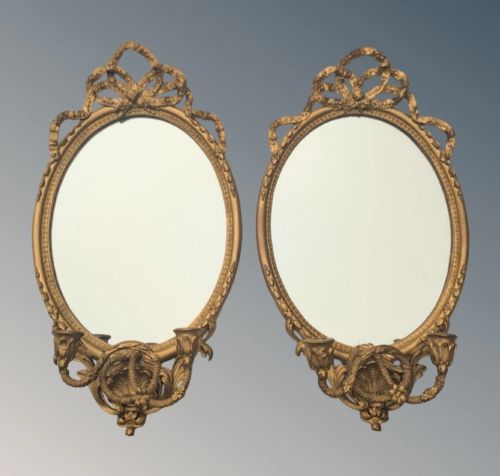
- An ornamental branched wall light featuring a mirrored backplate. The reflective glass multiplies the candlelight within the room.
- Giltwood
- Timber, typically lime or pine, prepared with gesso and bole before applying thin sheets of gold leaf. Hand-carved Florentine sconces rely heavily on this substrate.
- Sconce
- A wall-mounted lighting fixture designed to hold candles or electric lamps. These decorative brackets project forward from the mounting surface.
- Pricket
- A sharp metal spike on a candleholder designed to secure the base of a wax taper. This medieval-derived form persists in ecclesiastical and traditional Italian designs.
Pair Gilded Wall Lights: Frequently Asked Questions
How were pair gilded wall lights used?
These fixtures mounted to walls in pairs to flank mirrors, doorways, or fireplaces, distributing ambient illumination across a room. They held candles originally, utilising reflective backplates and gilt surfaces to bounce light into darker corners.
Over subsequent eras, many examples adapted to electricity while retaining their original decorative positioning. Their placement created balanced focal points within formal interiors and domestic sitting spaces.
Which periods do these wall lights represent?
The available pieces span from the 18th century through the 1930s, encompassing Georgian, Victorian, and early 20th-century revivals. Earlier centuries feature hand-carved Venetian and French artisanal work.
Twentieth-century listings frequently include revival pieces that replicate French Rococo, Empire, and Louis XVI styles. These later iterations maintain traditional casting and gilding methods established in earlier centuries.
What materials make up these sconces?
Primary construction materials include cast bronze, brass, and carved timber substrates. Metal components receive applications of ormolu, gilt bronze, or standard gold leafing.
Additional elements incorporate crystal drops, mirrored glass backing plates, and Murano glass details. These varied materials contribute to the overall weight, reflectivity, and visual texture of each pair.
How do I style wall lights at home?
Mounting a pair symmetrically at eye level on either side of a large mirror or sideboard creates a classic focal point. They function effectively in hallways, dining rooms, and living spaces to provide layered ambient light.
Ensuring the wiring matches modern safety standards allows safe integration into contemporary electrical circuits. The reflective gilt surfaces complement both traditional period rooms and eclectic modern interiors.