

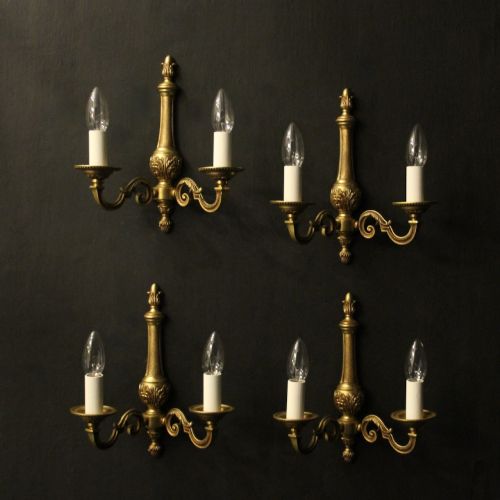
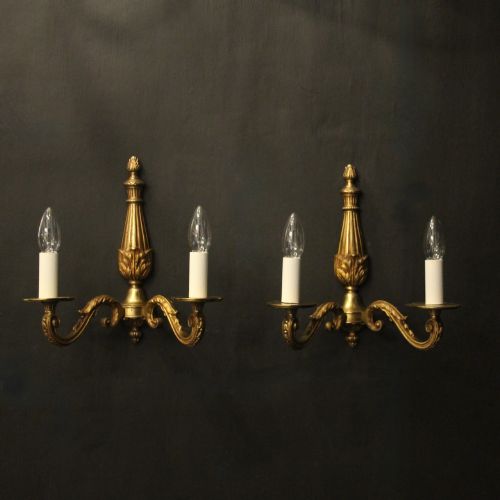
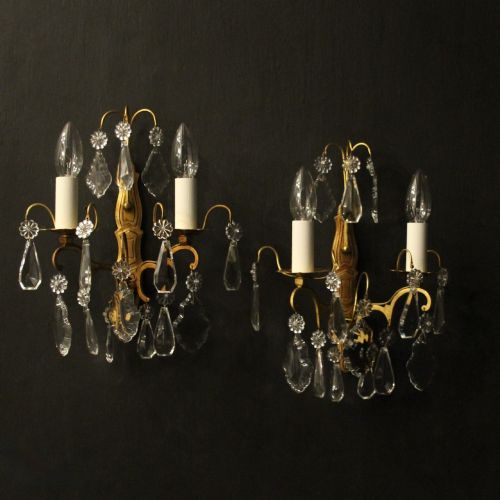
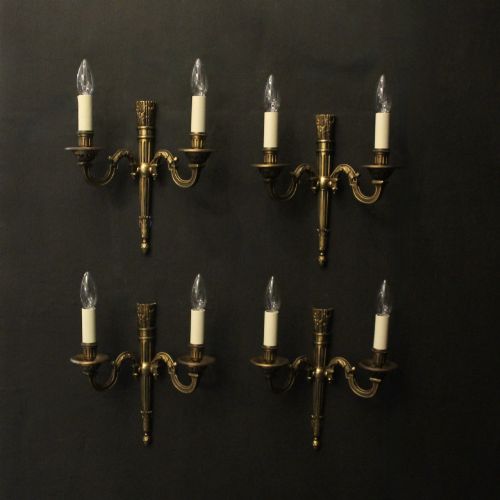
Gilt Brass Twin Light
A gilt brass twin light brings warmth and decorative focus to an interior through paired arms and golden metalwork.
Gilt Brass Twin Light
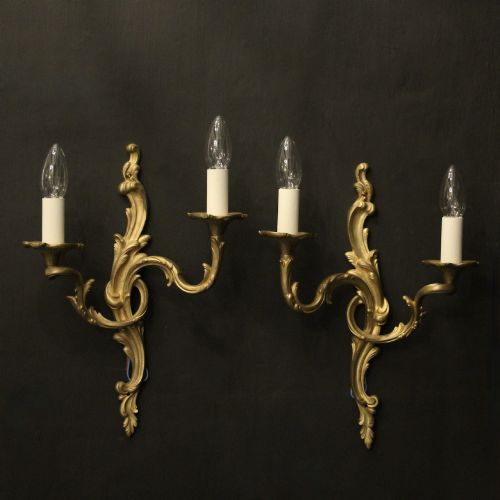
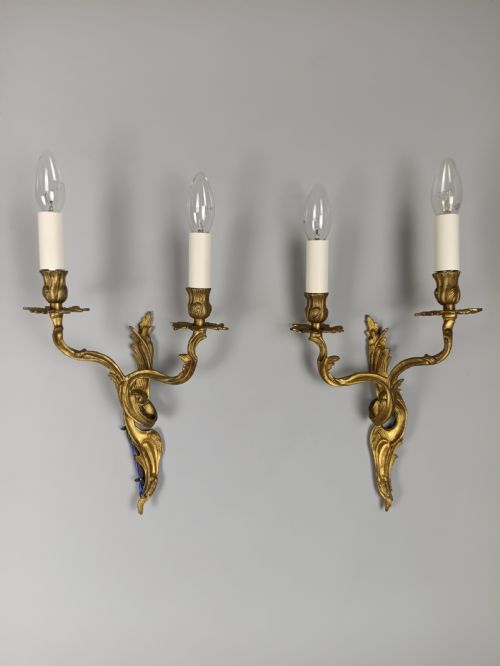
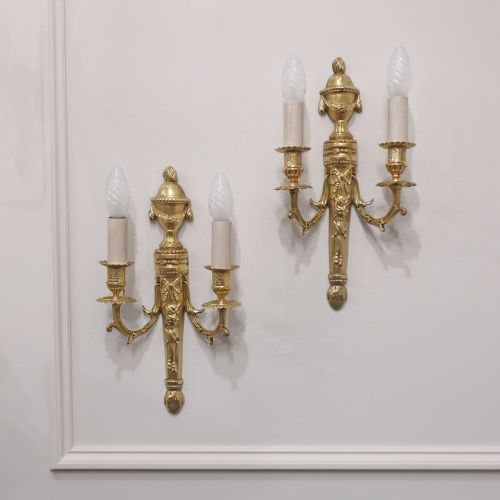
A gilt brass twin light typically appears as a wall-mounted sconce or lantern featuring two arms designed to hold candles or electric bulbs. These fixtures frequently emerge from French workshops during the nineteenth and early twentieth centuries, spanning periods from the eighteen-eighties through to nineteen-thirty.
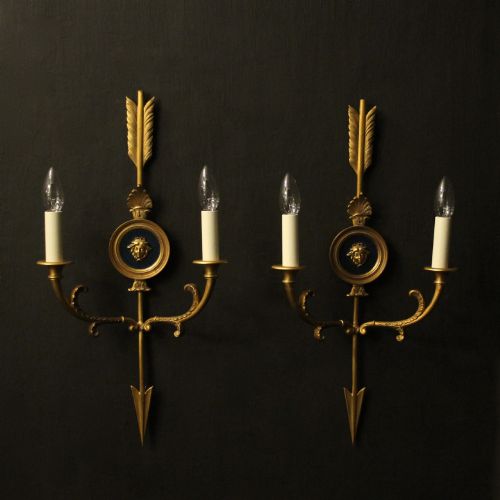
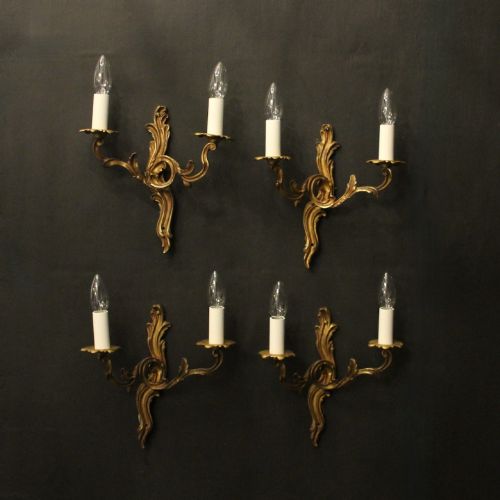
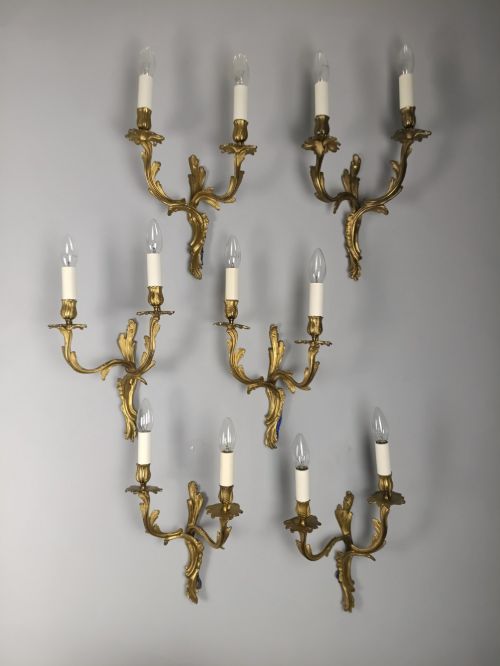
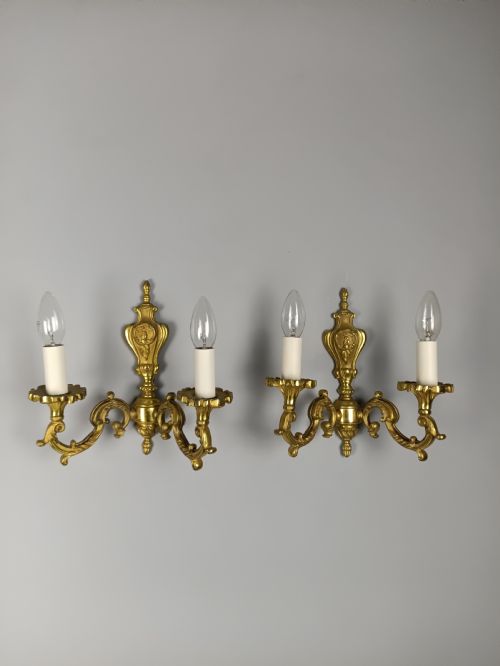
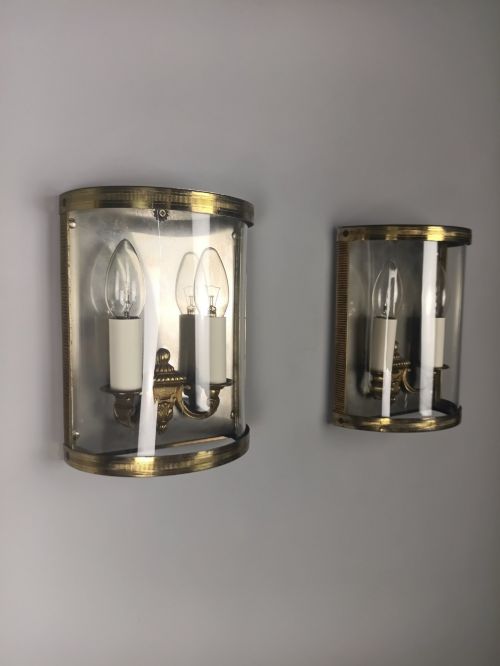
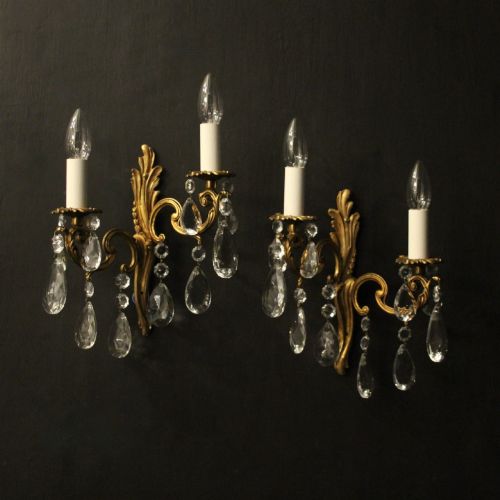
Buyers encounter various configurations, including pairs and larger sets, often rendered in styles that draw upon Rococo, Empire, and Neoclassical traditions. The forms range from simple twin-armed brackets to convex half lanterns and crystal-trimmed sconces intended for principal reception rooms.
Most examples originate from French sources, though English mid-century interpretations also appear in the record. The core function remains decorative illumination, casting a warm reflection off gilded surfaces and polished metal mounts.
Materials and construction methods
The construction relies heavily on brass, bronze, and gilt metal, which provide a sturdy armature for the wall lights and lanterns. Artisans applied thin layers of gold leaf or applied ormolu finishes to the base metals to achieve a rich, luminous sheen.
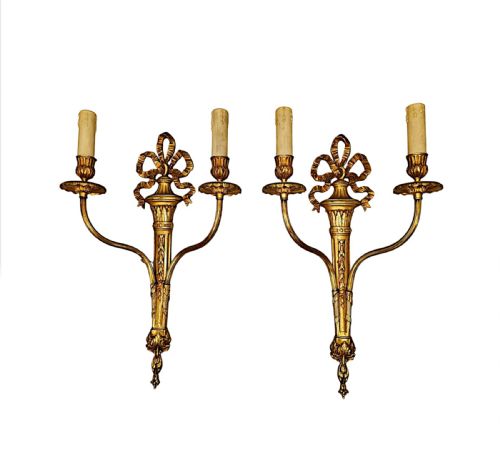
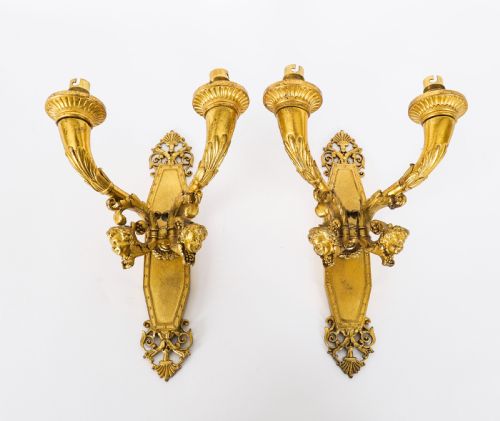
Decorative elements such as ribbons, cherubs, and acanthus leaves were cast in metal and chased by hand to sharpen the detail before gilding. Crystal drops and glass panels were frequently integrated into the designs of lanterns and sconces to enhance light refraction.
Several wall lights incorporate carved cherubs or fluttering ribbons, bringing a touch of playful charm to the gilded metalwork.
Distinguishing quality across the range
Quality rests upon the crispness of the metal chasing and the depth of the gilding applied to the bronze or brass substrate. Finer pieces display sharply defined ornamentation, such as intricate ribbon bows or feathered leaves, whereas simpler castings show softer contours.
The integrity of the construction and the retention of original surface patination dictate the standing of an individual wall light. Substantial weight in the metal and careful assembly of the arms indicate superior workshop production.
Casier·Maison Baguès
The Gilt Brass Twin Light Glossary
- Ormolu
- A gold-coloured bronze alloy used for decorative mounts and furniture embellishments. It involves applying finely ground high-carat gold to a bronze base.
- Gilt Brass
- Brass that has been coated with a thin layer of gold or gold-coloured wash. This treatment provides the visual warmth of solid gold while using a more accessible underlying metal.
- Wall Sconce
- A decorative light fixture fixed to a wall, typically designed to project illumination upwards or outwards into a room. These pieces often feature backplates that secure directly to the wall surface.
- Candelabra
- A branched candlestick or light holder designed to support multiple candles or bulbs simultaneously. In wall-mounted formats, these branch outwards from a central backplate.
- Chasing
- The artful finishing of metal surfaces using small punches and hammers to refine cast details and create texture. This technique distinguishes high-grade metalwork from unrefined castings.
Gilt Brass Twin Light: Frequently Asked Questions
How were gilt brass twin lights used historically?
These fixtures were mounted on drawing room and hallway walls to reflect candlelight and illuminate interiors during evening hours. Their twin arms provided balanced illumination across mirrored surfaces and wood panelling.
Over time, many examples were adapted for electricity, yet they retained their original placement as decorative focal points within domestic spaces.
How do I care for antique gilt brass wall lights?
Dusting the metal gently with a dry, soft cloth preserves the delicate gilt surface without wearing away the finish. Avoid abrasive cleaning agents and chemical polishes that can strip the gold leaf or ormolu.
Check the wall fixings periodically to ensure the weight of the metal and any crystal components remain securely supported.
Are these wall lights wired for modern use?
Many listings indicate that pieces have been rewired for contemporary electrical standards, while others retain their historic configuration. Buyers should review individual descriptions to determine the current wiring status.
Professional installation by a qualified electrician ensures safe mounting and connection to existing household circuits.
How can I tell different period styles apart?
Rococo revival pieces display asymmetrical curves, shell motifs, and scrolling foliage popular in nineteenth-century designs. Empire and Neoclassical examples favour strict symmetry, classical urns, and architectural motifs.
Twentieth-century pieces often streamline these traditional vocabulary elements into lighter, more restrained decorative formats.