

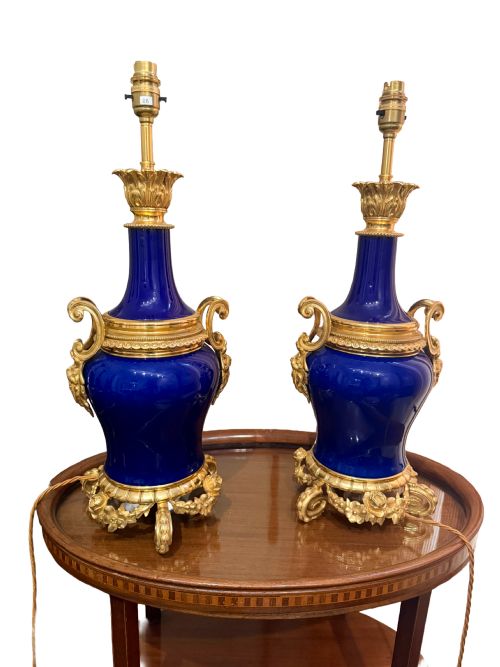
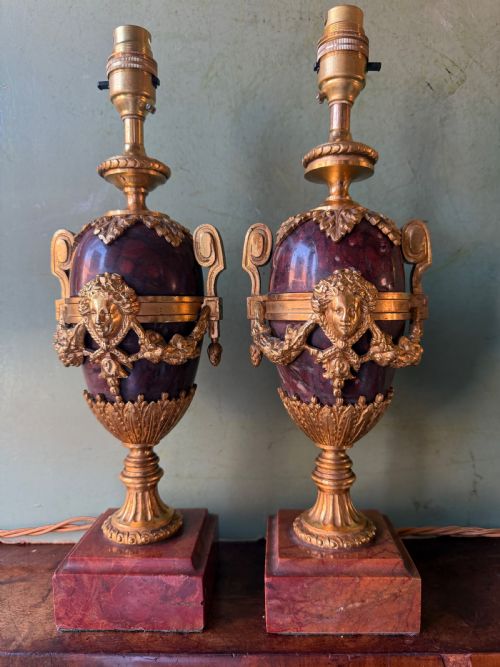
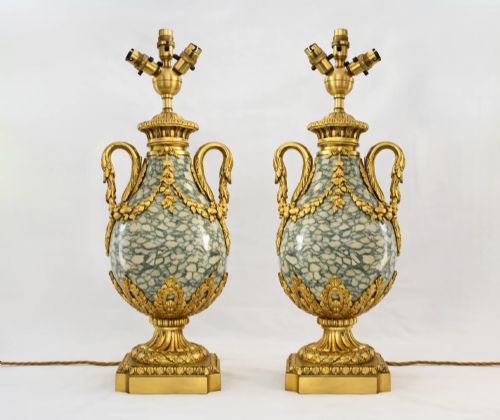


Pair French Urn Lamps
Pair french urn lamps bring classical symmetry and warmth to a room, turning decorative vessels into practical lighting.
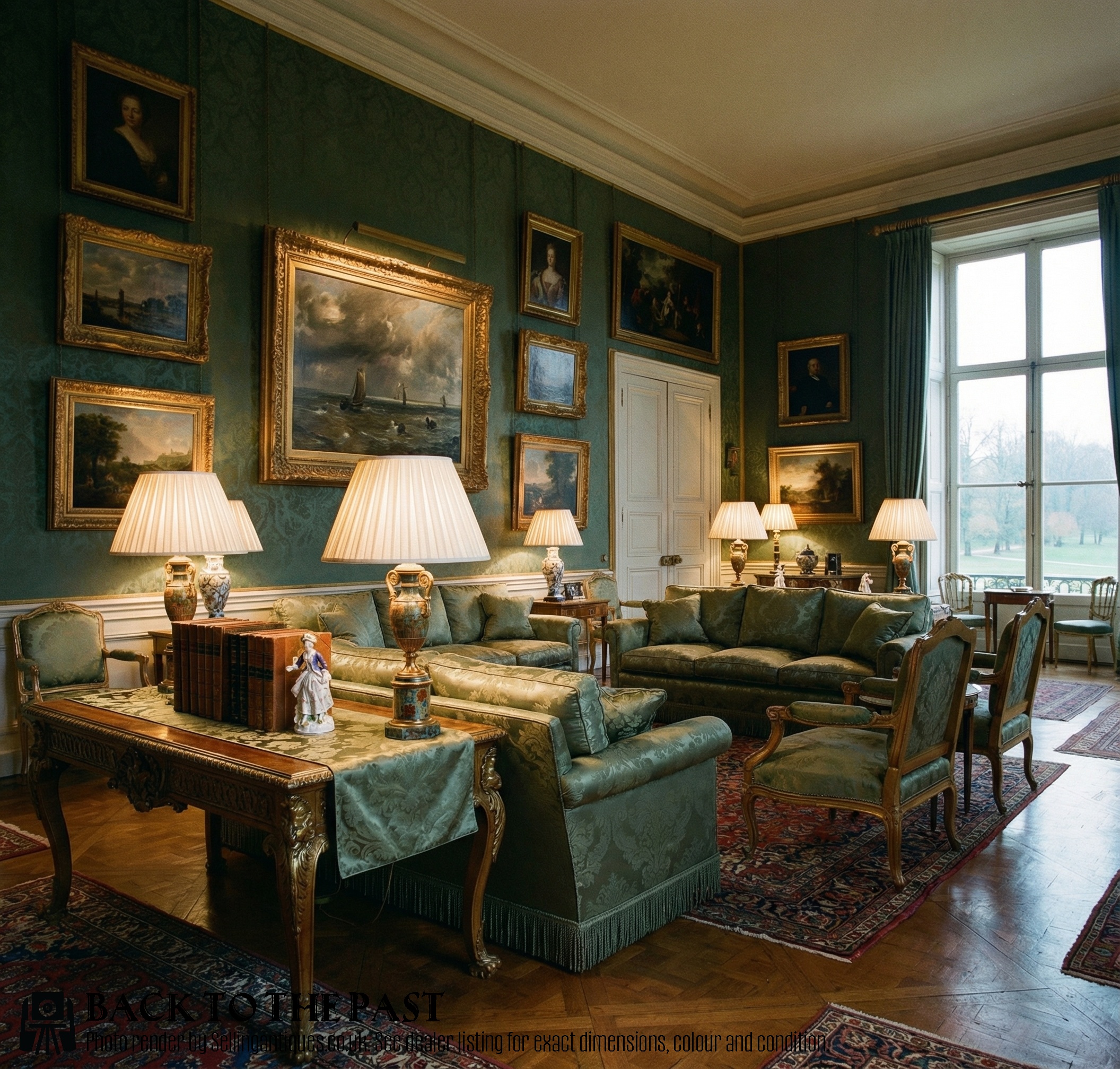
Pair French Urn Lamps
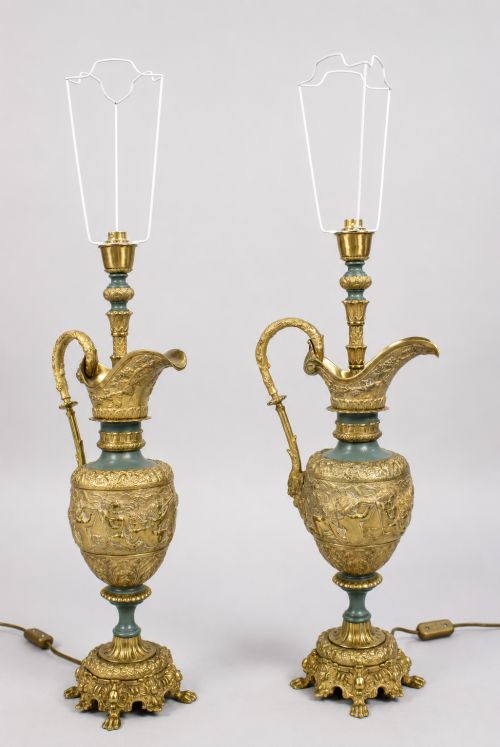
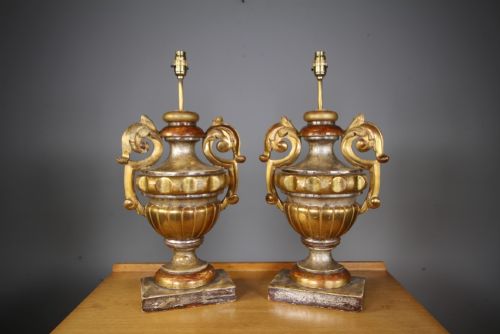
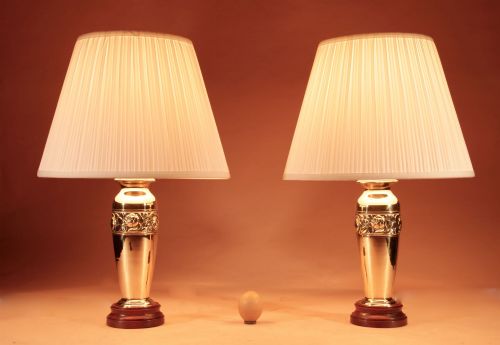
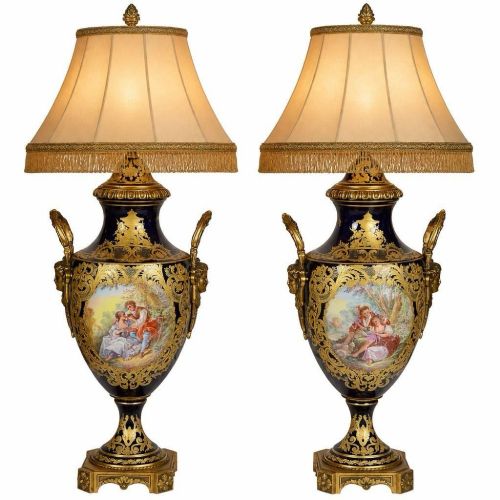
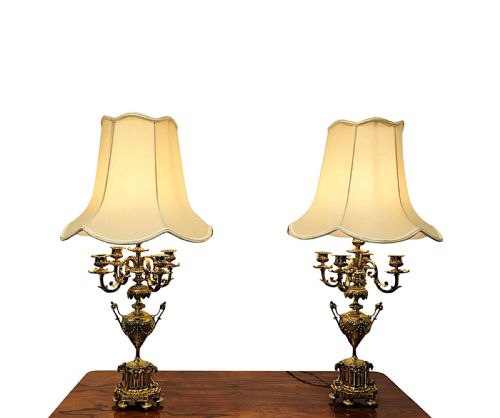
When searching for pair french urn lamps, a buyer encounters matching pairs of decorative vessels adapted for illumination, mostly dating from the nineteenth century into the early twentieth century. These objects typically take the form of classical vases, ewers, or cassolettes raised on substantial bases and fitted for electricity.
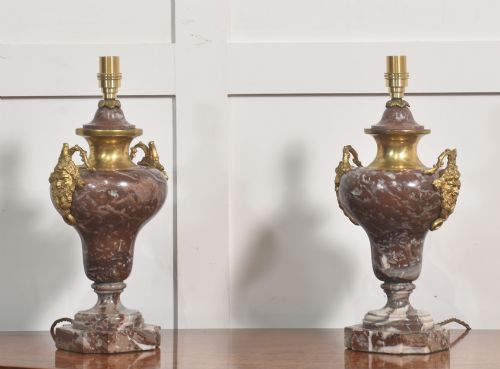
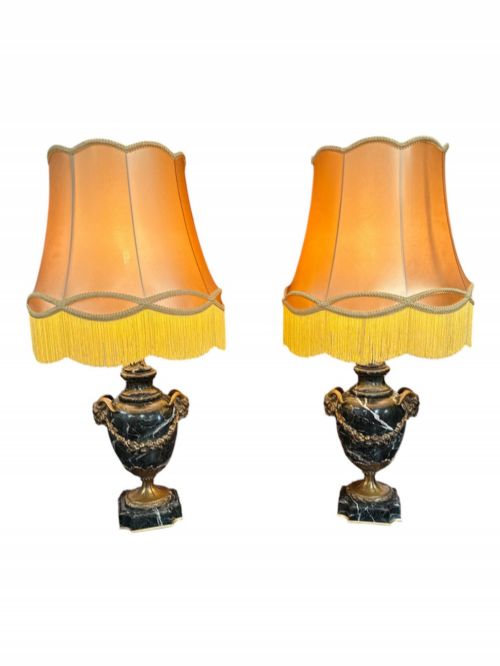
The aesthetic draws heavily on neoclassical, Louis XVI, and French chateau styles, reflecting classical antiquity through symmetrical design. Surviving examples frequently combine heavy stone bodies with cast metal mounts, translating monumental architecture into domestic lighting.
What varies in quality
Quality rests primarily in the crispness of the cast metal mounts and the selection of the base materials, where finely chased ormolu and dense, richly figured marble denote superior craftsmanship. Heavier bronze castings and hand-painted porcelain panels show greater artistic investment than mass-produced spelter or moulded plaster alternatives.
The harmony of the matching pair determines overall success, as minor discrepancies in turning, gilding wear, or stone coloration distinguish workshop standards.
Some nineteenth century engineers clearly repurposed anything to hand, turning ancient washing jugs into glowing household sentinels with a quick drill bit.
The Pair French Urn Lamps Glossary
- Ormolu
- Gilded bronze, where a layer of gold amalgam is applied to a bronze base through heat processing. This technique creates a durable, bright golden finish characteristic of fine French mounts.
- Cassolette
- A decorative vase or urn featuring a reversible lid that functions either as a solid cover or a incense burner. In lamp conversions, these lids are typically fixed in place beneath the bulb fitting.
- Ewer
- A large jug with a wide spout and a curved handle, originally designed for pouring water. Converted ewer lamps maintain this asymmetrical pitcher silhouette.
- Neoclassical
- A style reviving the architectural and artistic motifs of ancient Greece and Rome. It emphasises straight lines, symmetry, and classical restraint.
- Spelter
- An alloy of zinc and lead used as a cheaper, softer alternative to bronze. It is frequently painted or electroplated to mimic heavier metals.
Pair French Urn Lamps: Frequently Asked Questions
Were these always lamps?
Most of these pieces started life as decorative mantel urns, vases, or ewers before being converted into lamps at a later date. Workshops often drilled the original ceramic or stone bodies to run internal wiring.
This conversion process preserves the sculptural integrity of the original antique vessel while adapting it for modern domestic use.
How do I identify Louis XVI style?
Louis XVI style pieces rely on straight lines, geometric symmetry, and classical motifs like acanthus leaves and urns. This aesthetic contrasts with the curving asymmetry of earlier rococo designs.
Look for refined ormolu mounts, fluted columns, and architectural proportions on the marble or bronze bases.
What materials are common?
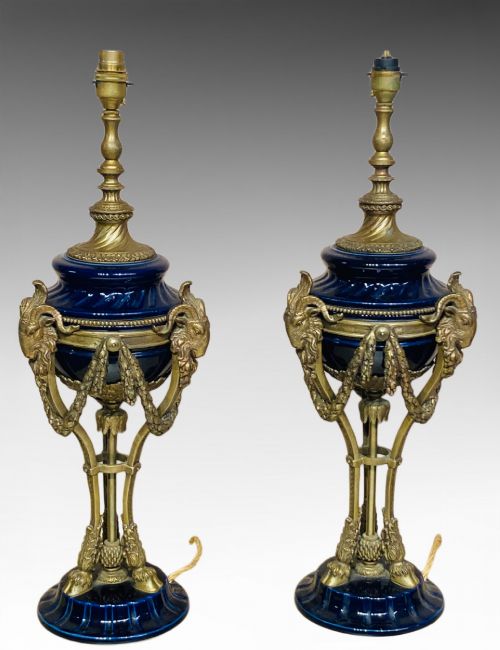
The listings show a frequent pairing of natural stone bodies with cast metal mounts. Rouge marble, white onyx, and porcelain form the main body, while gilt bronze, brass, and ormolu provide structural and decorative accents.
Some examples also utilise terracotta, cast iron, and blue glass to achieve different decorative effects.
Where should I place them?
Because these items are strictly matched pairs, they work best in symmetrical arrangements such as flanking a fireplace, sitting on matching console tables, or anchoring either end of a sideboard. Their height and visual weight command attention in larger reception rooms.
Ensure the lamps sit on stable surfaces where their heavy stone or metal bases are fully supported.