
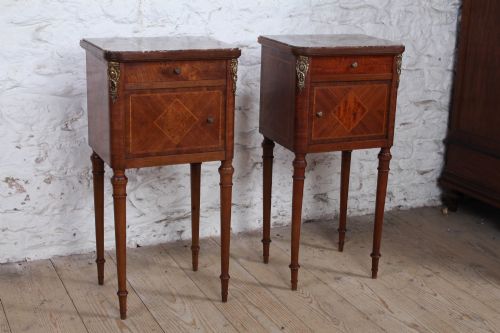
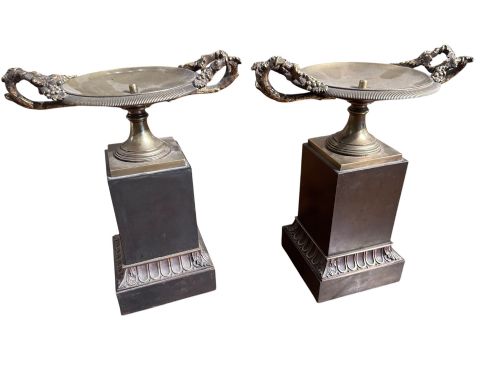


Pair French Pedestal Tables
Pair french pedestal tables bring symmetry and French character to a room, offering functional surfaces derived from nineteenth and twentieth-century designs.
Pair French Pedestal Tables
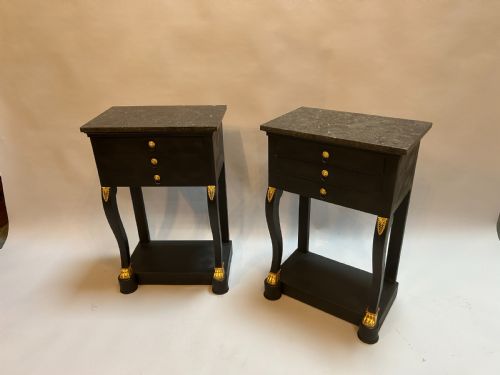
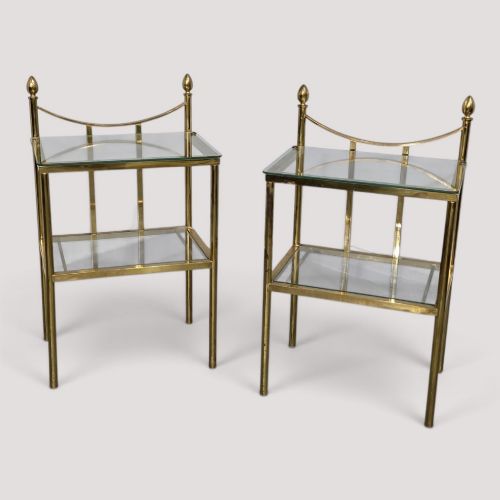
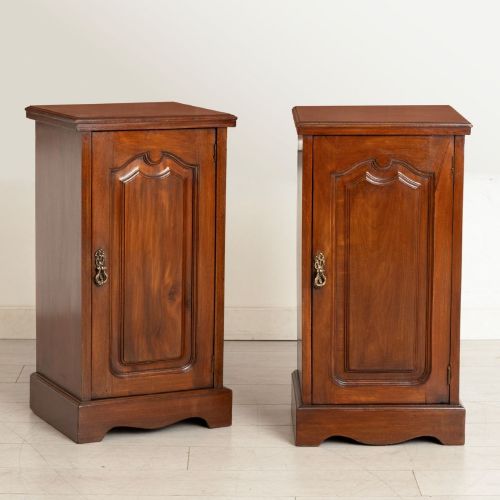
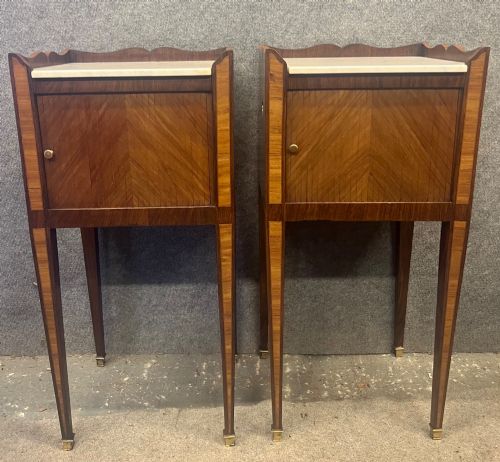
When searching for pair french pedestal tables, buyers encounter matched sets designed for practical utility and decorative balance. These pieces primarily manifest as bedside chests, cabinets, lamp tables, and occasional stands rather than strict central pillars.
The selections span distinct periods including the nineteenth century, the 1900s, 1910s, 1920s, and 1930s. Alongside standard tables, the selection incorporates specialised forms such as plant stands, tazzas, and jardinières.
French styles heavily influence the inventory, featuring French Empire, French Neoclassical, Louis XV Style, Louis XVI Style, and Rococo Revival. These aesthetic traditions shape the proportions and decorative details of the paired items.
How they were made
Cabinet makers utilised a rich variety of timbers including mahogany, walnut, fruitwood, kingwood, burr, satinwood, amboyna, and thuya. Veneering techniques allowed craftsmen to display intricate grain patterns across the surfaces.
Mounts and structural highlights relied on brass, ormolu, gilt metal, giltwood, and silvered bronze. These metallic additions provided structural contrast and decorative enrichment to the wooden frames.
Tops frequently integrated stone and glass elements, notably marble and alabaster. Cast iron and painted finishes also appear on specific occasional forms.
Current listings feature pieces spanning the 18th century, 19th century, and the 1900s through to the 1930s, utilising marble, mahogany, walnut, and fruitwood.
What varies in quality
The standard of timber selection and veneer matching defines the initial tier of quality. Superior examples display carefully chosen burr or exotic wood grains that align harmoniously across both items in the pair.
Execution of mounts and applied hardware dictates the refinement of the piece. Finely chased ormolu and crisply cast bronze mounts distinguish workshop output from simpler production.
The integrity of stone tops, such as fitted marble or alabaster slabs, contributes significantly to the grade of the piece. Intact, well-matched stone inserts reflect superior original construction.
The Pair French Pedestal Tables Glossary
- Ormolu
- Gilded bronze applied as a decorative mount on furniture. This technique was widely utilised during the French Empire and subsequent nineteenth-century revival periods.
- Tazza
- A shallow saucer-like ornamental vessel mounted on a stem and foot. Such objects appear fashioned from marble and ormolu within nineteenth-century decorative selections.
- Thuya
- A fragrant coniferous wood with a distinctive mottled grain pattern. Cabinet makers used its burl form for high-status occasional tables.
- Jardnière
- An ornamental plant container designed for indoor use. Examples found in these selections include large pottery gres pieces serving as side tables.
Pair French Pedestal Tables: Frequently Asked Questions
How were these tables originally used?
These items served functional roles in bedrooms and reception rooms as bedside storage, lamp supports, or plant pedestals.
Matched pairs provided symmetrical balance on either side of a bed or flanking a fireplace.
What periods do these tables represent?
The inventory spans the eighteenth and nineteenth centuries through to the 1930s, encompassing periods like the Victorian era.
Stylistic influences draw heavily from French Empire, Louis XV, and Louis XVI designs.
How do I care for marble tops?
Marble surfaces require gentle cleaning with mild soap and water, avoiding acidic substances that etch the stone.
Regular dusting preserves the polished finish of the natural material.
Are these items strictly matched?
Most listings offer handed pairs designed to mirror one another in layout and orientation.
Craftsmen built these sets concurrently to ensure consistent timber selection and decorative detailing.