


Pair French Marble Lamps
When you search pair french marble lamps, you enter a domain of neoclassical elegance where stone and metal unite for lighting.
Pair French Marble Lamps
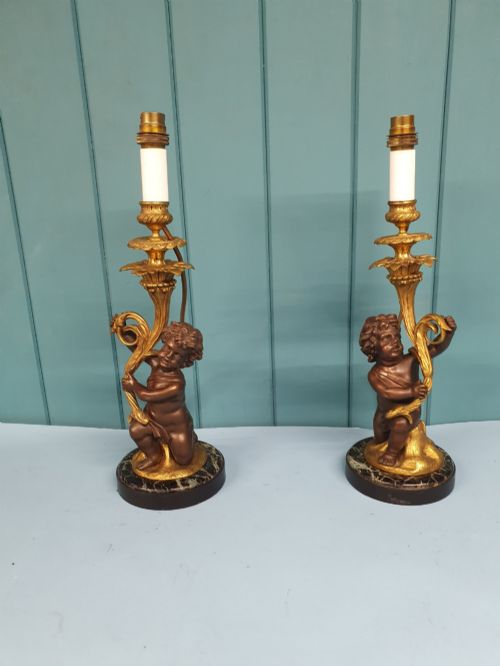
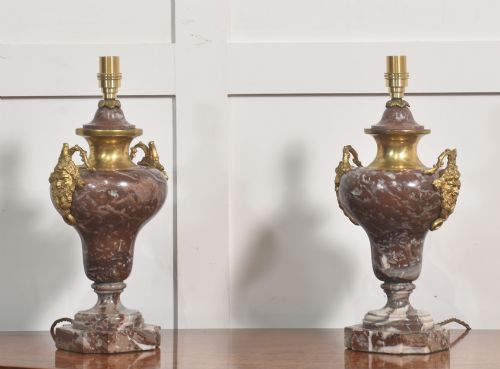
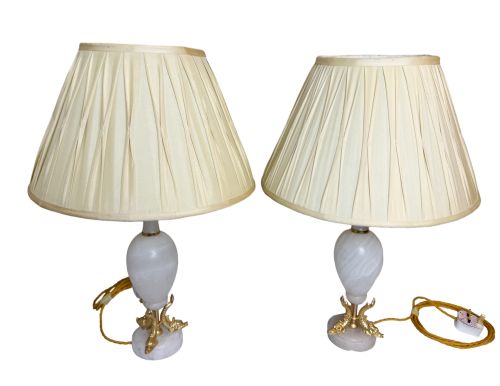
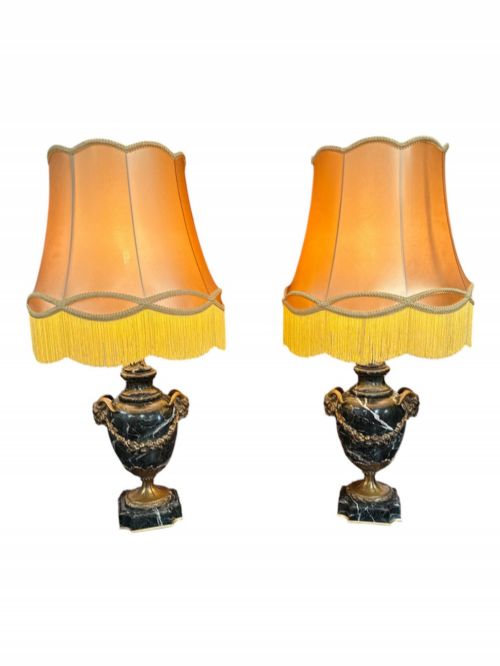
Pair french marble lamps comprise symmetrical pairs of decorative lighting fixtures constructed primarily from natural stone and metallic mounts. These pieces draw heavily on historical design vocabularies such as Louis XVI style, French Rococo Revival, and Neoclassical aesthetics.
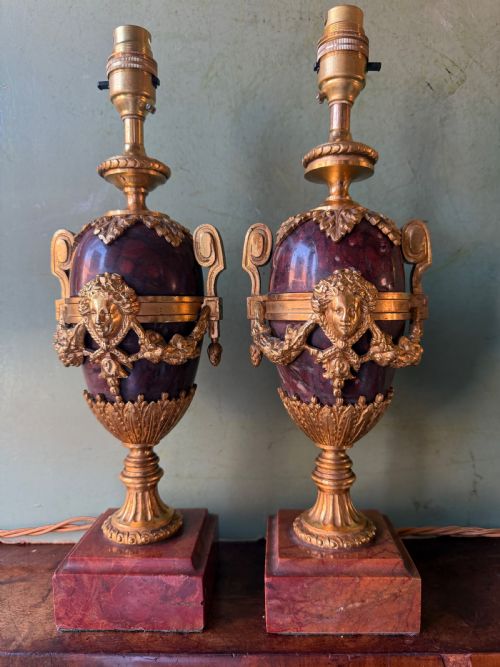
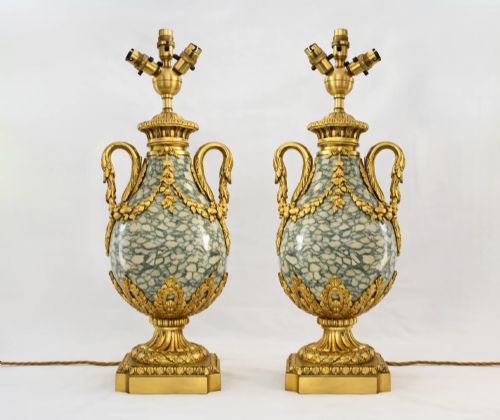
The most common iterations encountered on this page stem from the nineteenth century, featuring turned or carved marble bodies adorned with cast bronze, ormolu, or brass. Alongside traditional table lamps, variants utilise urn and cassolette forms adapted to hold electrical fittings or candles.
How They Were Made
Craftsmen shaped solid blocks of marble - including rouge, siena, and variegated varieties - on lathes or through hand-chiselling to form the central columns and bases. These stone bodies were then combined with cast metal components produced via traditional foundry methods.
Gilt bronze, ormolu, and brass mounts were cast, chased by hand to sharpen details, and subsequently gilded or polished to contrast with the cool surface of the stone. Artisans secured these disparate elements using threaded metal rods and bolts concealed within the core.
Listings feature pieces spanning the Victorian era through the 1930s, utilising brass, bronze, and various coloured marbles.
What Varies in Quality
The standard of a pair french marble lamps rests upon the crispness of the metal chasing and the selection of the stone. Superior examples display deeply chiselled ormolu mounts with sharply defined foliage and figures, paired with marble possessing rich, unbroken natural veining.
Weight and construction also differentiate the tier of manufacture, as finer pieces utilise heavy gauge bronze and solid marble components rather than lighter spelter or thin veneers. The precision with which the metal mounts fit the contours of the stone indicates the skill of the original maker.
The Pair French Marble Lamps Glossary
- Ormolu
- Gilt bronze produced by applying a mixture of finely powdered gold and mercury to a bronze base, then heating to drive off the mercury. This technique creates a distinctive, deep golden finish characteristic of fine nineteenth-century French metalwork.
- Cassolette
- A decorative vase or urn featuring a reversible lid that functions either as a solid vessel or an incense burner. In lighting applications, these objects are often adapted to serve as lamp bodies.
- Rouge Marble
- A rich red limestone featuring white or grey calcite veins, frequently quarried in France and utilised for decorative arts. Its dramatic colour made it a favourite for neoclassical garnitures and lamp bases.
- Louis XVI Style
- A neoclassical design movement characterised by straight lines, symmetry, classical motifs, and restraint following the ornate rococo period. Lamps in this style typically incorporate fluted columns and architectural bronze mounts.
- Spelter
- An alloy of zinc and lead used as a less expensive substitute for bronze in decorative castings. It is softer than bronze and frequently receives a bronze-coloured surface finish.
Pair French Marble Lamps: Frequently Asked Questions
How do I wire antique lamps safely?
Rewiring requires running modern insulated flex through the central channel previously occupied by older wiring or weighted rods. A qualified electrician should perform this update to ensure the internal brass components meet current safety standards without altering the exterior antique housing.
Preserving original switch mechanisms and sockets is sometimes possible, but modern interiors usually necessitate replacing old lamp holders with certified components. The process protects the historic material while rendering the lighting functional for daily use.
What shades suit stone lamp bases?
Selecting shades involves balancing the substantial visual weight of stone and metal with appropriate proportions and fabrics. Silk or pleated fabric shades in neutral tones complement the classical origins of these fixtures without overwhelming the detailed ormolu mounts.
Consider the height and diameter of the marble body when determining shade dimensions to maintain symmetrical harmony. Simple drum or empire silhouettes generally echo the architectural lines found in nineteenth-century French designs.
How do I clean marble and ormolu?
Maintenance requires dry or slightly damp dusting using a soft microfibre cloth to prevent accumulation of grit within carved crevices. Avoid abrasive cleaners, commercial polishes, or acidic substances that can etch polished stone or strip delicate gilt surfaces from bronze mounts.
Gentle care preserves the natural patina developed over decades of exposure in domestic settings. Professional conservation remains advisable if deep cleaning or structural consolidation of the metal and stone becomes necessary.
Were these originally made as lamps?
Many examples began life as decorative urns, cassolettes, or candlesticks before conversion into lighting during the late nineteenth or early twentieth centuries. Artisans drilled the stone bases and fitted electrical hardware to repurpose ornamental garnitures into functional table lamps.
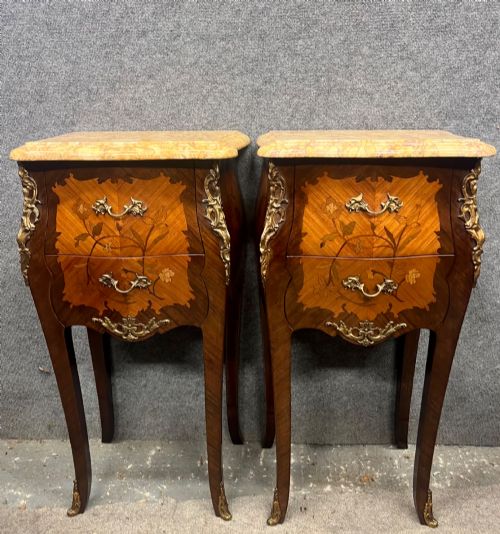
This historical adaptation accounts for the heavy construction and refined sculptural quality superior to standard factory-produced lighting of later periods. The dual nature of these objects explains their presence alongside related furniture forms on this page.