


Pair French Crystal Chandeliers
Pair french crystal chandeliers bring matched symmetry and brilliant refraction to high-ceilinged rooms through historic Continental craftsmanship.

Pair French Crystal Chandeliers
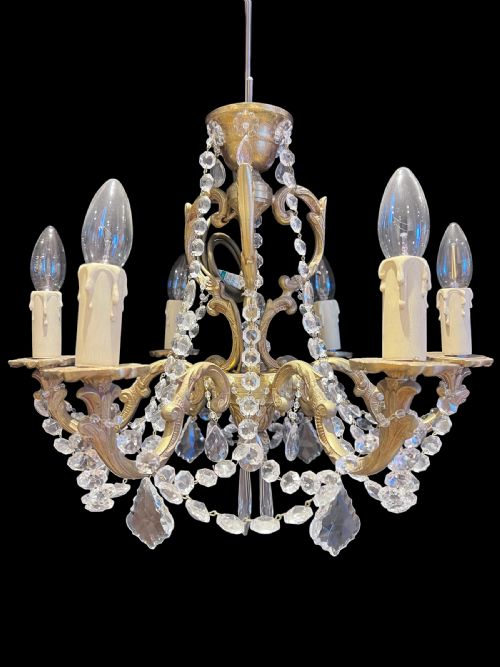
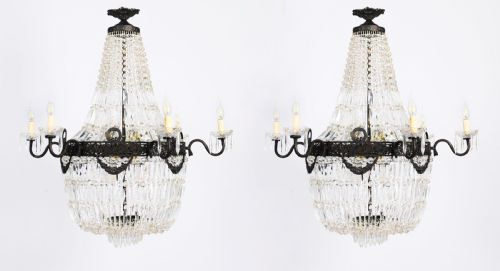
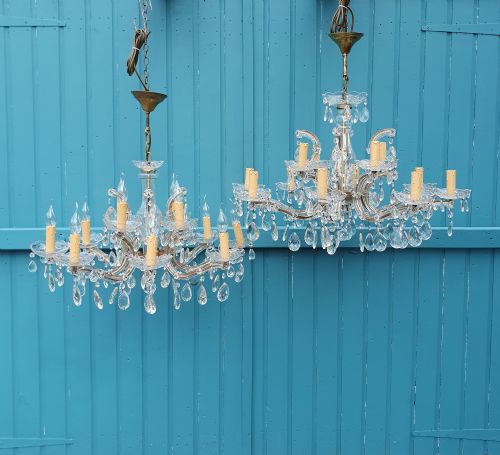
When searching for pair french crystal chandeliers, buyers encounter matched lighting fixtures designed to hang in symmetry across large rooms, halls or reception spaces. The selections span major decorative movements including French Baroque, Rococo, Empire and Louis Revival, alongside Edwardian and early twentieth century interpretations.
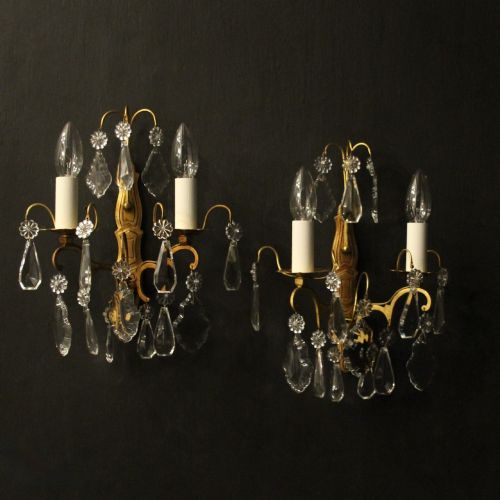
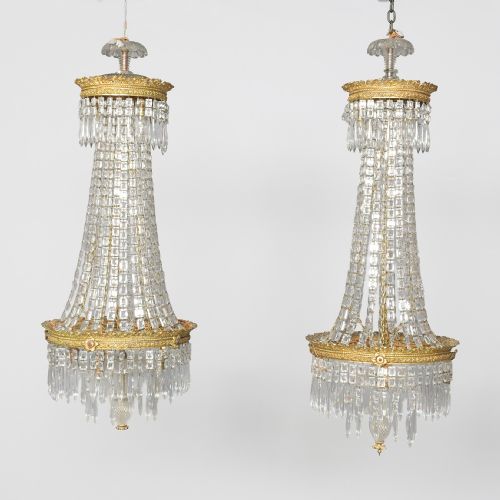
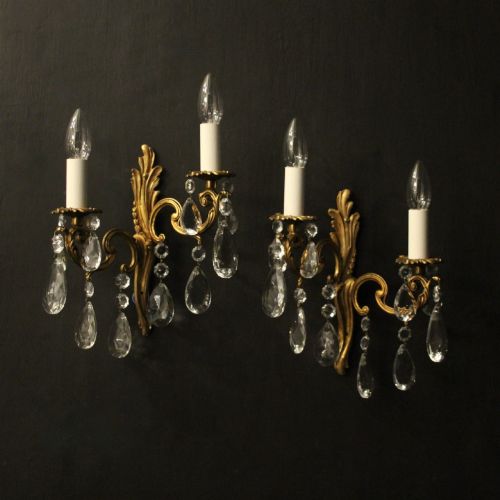
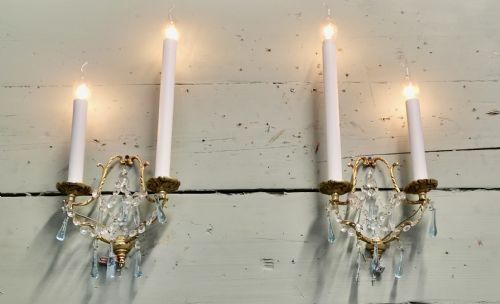
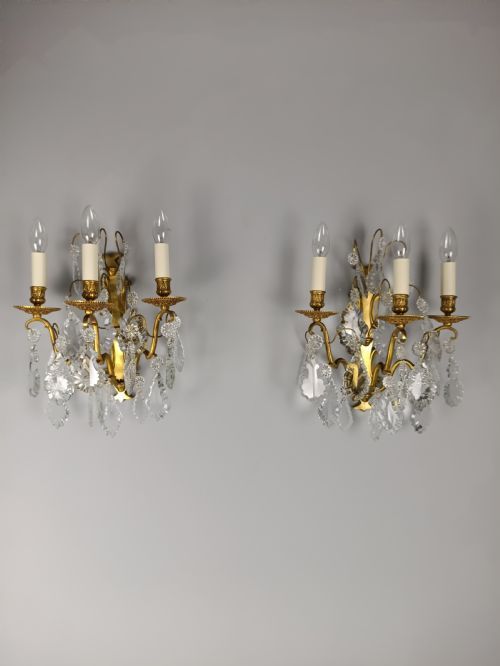
The most common forms met here are multi-arm hanging chandeliers constructed with numerous light points, complemented by matching wall lights, sconces, and smaller specialist variations such as tent and waterfall designs or birdcage formats.
Origins stretch from nineteenth century pieces through to items from the nineteen-twenties and thirties, reflecting sustained demand for coordinated Continental illumination. Buyers also find smaller table chandeliers intended for intimate placement.
How they were made
Construction relies heavily upon metal frames cast in brass, bronze, or gilt brass, which provide the structural backbone to support heavy glass components. Metalwork is frequently gilded or dark-framed to complement the chosen style.
Pendants, drops, beads and plates are formed from cut crystal and crystal glass, shaped to catch and refract light from multiple internal bulbs. These glass elements are suspended from the metal armature using wire loops or pins.
Armatures range from simple twin-arm configurations to complex frameworks holding twelve, fourteen, or eighteen lights, demanding precise balancing during assembly.
Materials documented across the inventory include brass, bronze, gilded bronze, gilt brass, cut crystal, and glass.
What varies in quality
The sophistication of the metal casting separates standard productions from finer examples, particularly in the crispness of chased details on bronze and gilded brass frames. Heavier, more substantial metal framing provides better structural integrity for large multi-light configurations.
The clarity and cutting style of the crystal elements dictate the overall brilliance and light refraction of the fixture. Richly faceted drops and dense bead arrangements reflect a higher grade of manufacture than plain glass alternatives.
Coherence within the pair matters greatly, as true matched sets display uniform glass patination, identical drop shapes, and balanced arm counts that indicate they were conceived together rather than assembled later.
The Pair French Crystal Chandeliers Glossary
- Tent chandelier
- A lighting fixture featuring an upper canopy of gathered crystal strands dropping down in a tent-like cone shape to a central ring. This design gained prominence during neoclassical and revival periods.
- Gilded bronze
- Metalwork coated in a thin layer of gold or gold-coloured alloy, frequently utilised on French frames to add warmth and lustre. It resists tarnishing better than untreated base metals.
- Sconce
- A wall-mounted lighting fixture designed to hold candles or electric lamps, often matched to the style of the main hanging chandelier in a room. Pairs of these provide balanced side illumination.
- Spike chandelier
- A compact lighting format characterised by a central vertical spike or finial surrounded by radiating arms. These often appear in smaller dimensions suited to lower ceilings.
- Waterfall chandelier
- A multi-tiered lighting arrangement where cascades of crystal drops flow outward and downward in overlapping layers. The formation creates a dense sheet of refractive glass.
Pair French Crystal Chandeliers: Frequently Asked Questions
Where should paired chandeliers be hung?
Matched pairs work best in large drawing rooms, long hallways, or grand dining spaces where symmetry enhances the room's proportions. Placing them at equal heights ensures a balanced visual weight across the ceiling.
They also suit large bedrooms or double reception rooms where twin fixtures create a cohesive design scheme without overwhelming a single focal point.
How do I determine the period?
Dating relies upon stylistic markers such as the heavy casting styles of nineteenth century pieces versus the lighter frames seen in nineteen-twenties and thirties items. Examining the fixing methods for the crystal and the type of metal plating also aids identification.
Edwardian and early twentieth century examples often incorporate specific revival motifs like Louis Revival or Florentine flourishes that reflect the era's taste for historic French design.
Are wall lights included in the style?
Yes, many selections feature matching wall lights and sconces designed to complement the main hanging chandeliers in a room. These use the same gilt brass, bronze, and crystal components for visual continuity.
Utilising matching wall sconces alongside central fixtures creates a layered lighting scheme popular in period interiors.
What maintenance do crystal chandeliers need?
Regular dusting keeps the glass elements clear and maintains their reflective quality over time. Periodic checks of the wiring and hanging points ensure the heavy brass and bronze frames remain safely secured.
When cleaning detailed crystal drops, gentle handling prevents dislodging the fine wire pins that secure them to the metal armature.