

French Bronze Pendant Lighting
French bronze pendant lighting brings weight, presence and historic illumination to high ceilings through cast metal, crystal drops and classical restraint.

French Bronze Pendant Lighting
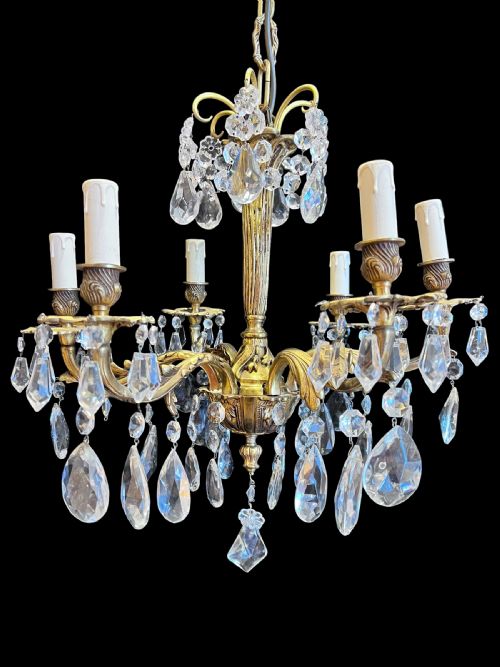
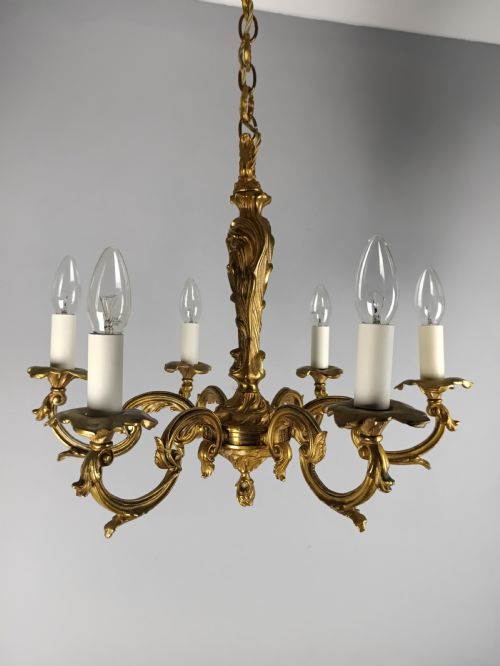
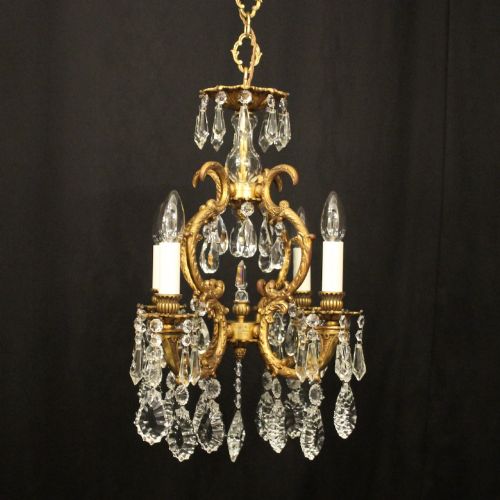
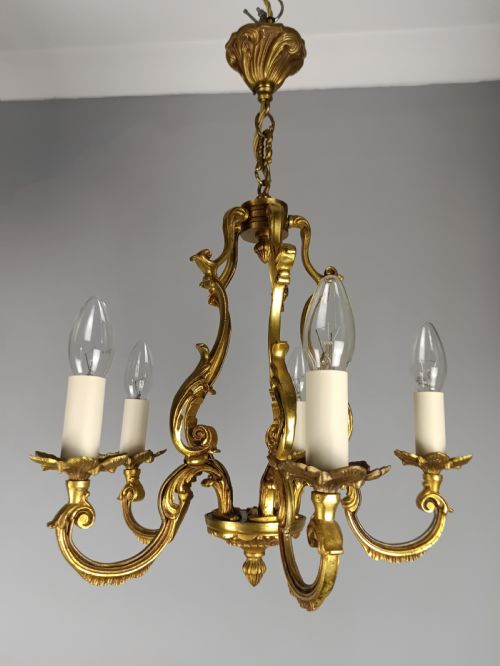
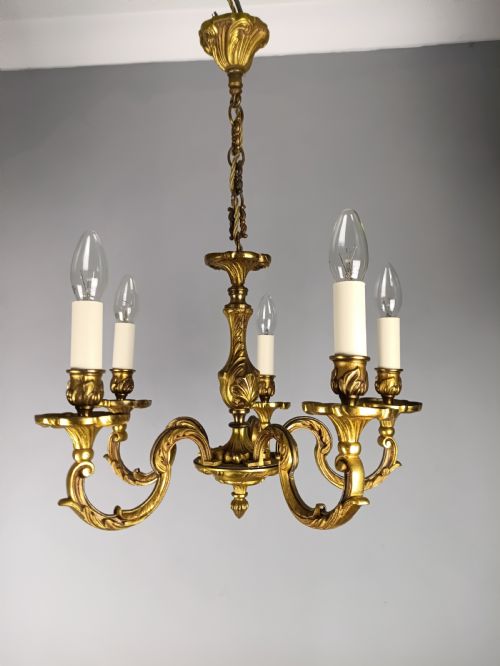
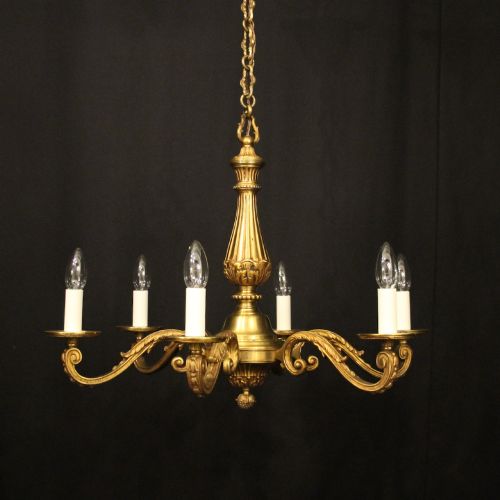
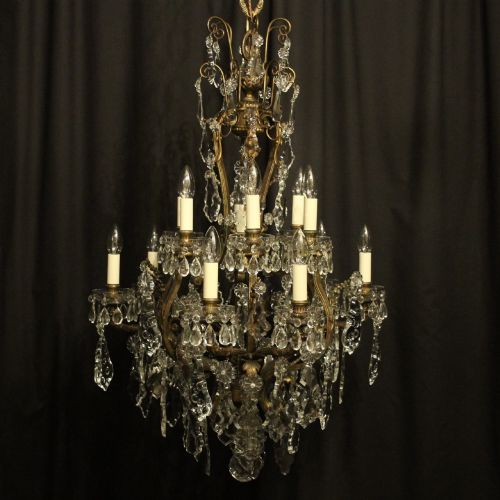
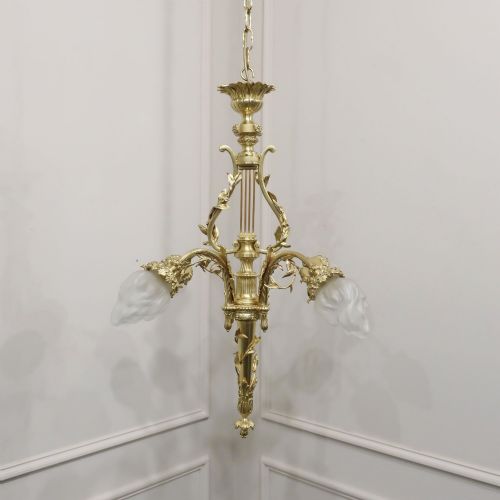
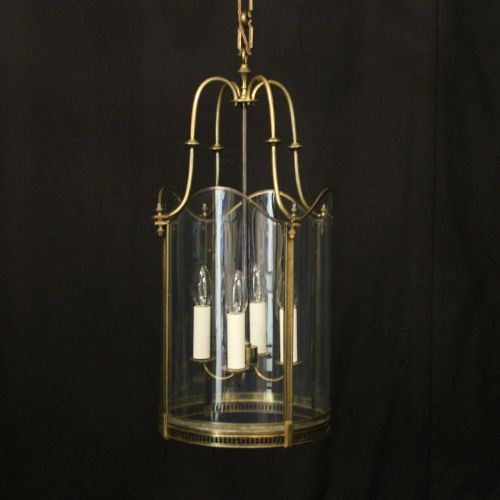
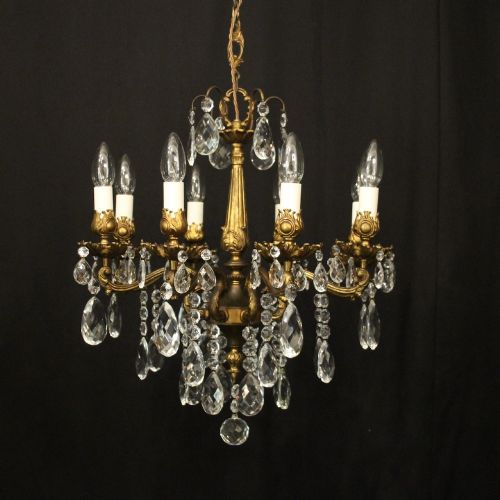
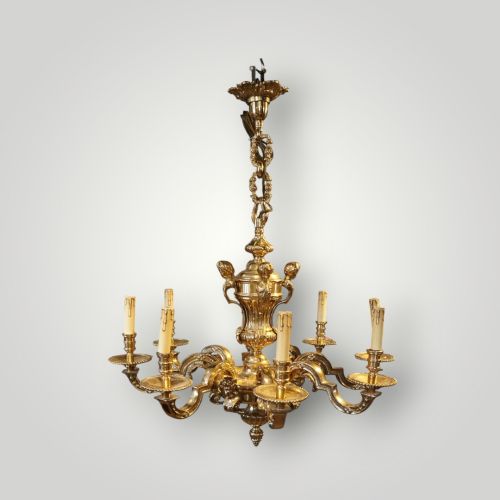
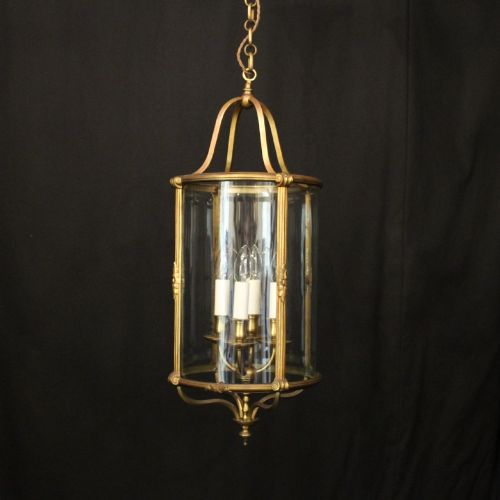
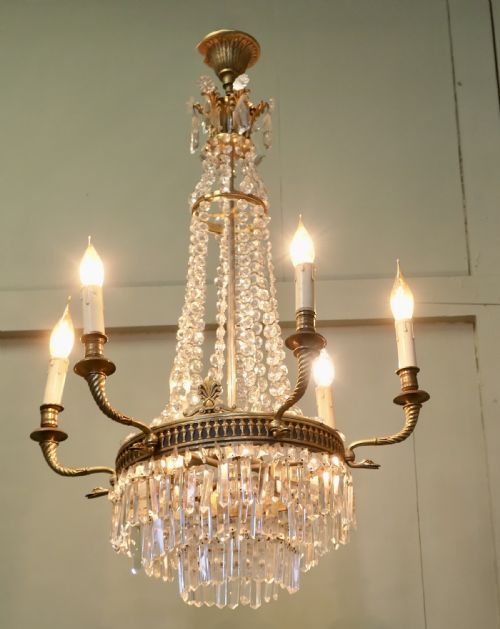
French bronze pendant lighting encompasses suspended fixtures designed to illuminate rooms from above, ranging from grand multi-light chandeliers to enclosed hall lanterns. When exploring French bronze pendant lighting, buyers encounter pieces spanning the nineteenth century through the early decades of the twentieth century. The selection leans heavily towards multi-light chandeliers in gilt bronze, alongside heavy bronze lanterns and crystal-trimmed tent configurations.
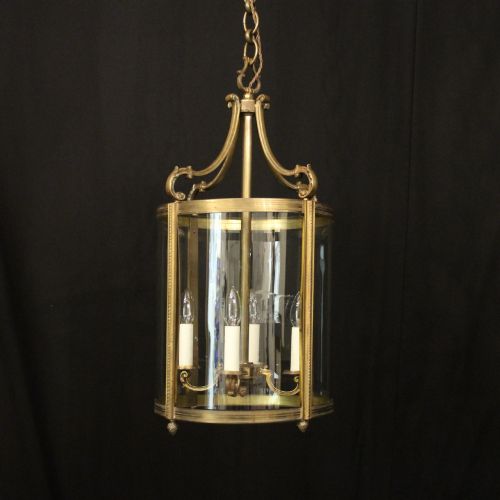
The forms originate in distinct design revivals, drawing on Louis styles, Neoclassical symmetry and Empire grandeur. Hall lanterns with convex glass and gilded mounts appear frequently alongside birdcage frameworks and elaborate drop-crystal assemblies. These suspended fixtures serve as central interior focal points, retaining the proportions and decorative vocabulary of historic French chateaux.
How these fixtures were made
Foundries cast bronze, brass and spelter into intricate structural frameworks, often applying fire gilding or silver leaf to the metal surfaces. Metal components are threaded, pinned or soldered together to support the substantial weight of the frame and electrical or candle components.
Cut glass and crystal prisms are suspended from the metal armature using wire loops or pinned attachments, creating waterfall and tent profiles. Alabaster bowls and moulded glass shades are integrated into later twentieth-century iterations alongside traditional candle-sleeve clusters.
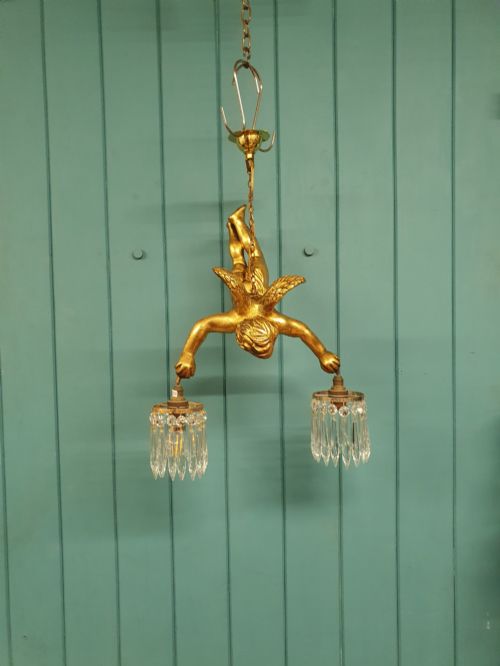
Flying cherubs occasionally share chandelier duties with cut glass crystal spikes, keeping historic illumination delightfully buoyant.
What varies in quality
The precision of the metal casting dictates the crispness of leaf motifs, cherubs and classical moulding, separating sharp hand-chased enrichment from soft production work. Heavier bronze gauges and robust armature construction ensure structural integrity across larger multi-light chandeliers and heavy hall lanterns.
The clarity and cut of the crystal drops, alongside the uniformity of the original gilding, determine the visual richness of the fixture when illuminated. Intricate detailing to internal frames and superior fastening methods reflect the tier of workshop production.
G.E.C
The French Bronze Pendant Lighting Glossary
- Gilt bronze
- Bronze metal treated with a gold application, often through mercury gilding or modern electroplating methods. This finish yields a durable metallic sheen characteristic of formal French interiors.
- Tent and waterfall
- A chandelier configuration where strings of cut crystals form an upper triangular tent above a cascading shower of drops. This design maximises light refraction across the room.
- Hall lantern
- An enclosed hanging light fixture featuring glazed panels set within a metal framework. These pieces were traditionally positioned in entrance halls and stairwells.
- Spelter
- A zinc alloy frequently utilised as a cost-effective substitute for bronze in decorative figures and mountings. It accepts metallic finishes closely resembling genuine bronze.
- Lyre chandelier
- A pendant light incorporating the symmetrical, stringed-instrument silhouette into its central vertical frame. This motif derives directly from Neoclassical design vocabulary.
French Bronze Pendant Lighting: Frequently Asked Questions
How do I hang a heavy bronze chandelier safely?
Suspension requires fixing directly into ceiling joists or structural timber using rated steel hooks and chains capable of supporting the dead weight of solid bronze and crystal.
Professional electrical installation ensures the internal wiring safely accommodates the total wattage of multiple lamp holders.
What is the difference between an Empire and a Louis XVI chandelier?
Empire fixtures draw on military and classical Roman motifs, featuring tents, waterfalls, heavy cast mounts and symmetrical geometry.
Louis XVI pieces emphasise Neoclassical restraint, rectilinear balance, ribbon twists and botanical swags executed in gilt bronze.
How should I clean crystal and gilt bronze?
Dust crystal prisms regularly with a soft lint-free cloth and wash removable drops in warm soapy water before drying thoroughly.
Avoid abrasive cleaners on gilt bronze surfaces, utilising only a dry brush to preserve the historic metallic finish.
Can these antique pendant lights be rewired?
Historic fixtures accommodate modern electrical wiring by threading flexible cable through the central hollow core and arms.
Qualified electricians adapt the original candle tubes or fit appropriate lamp holders to meet current safety standards without altering exterior metalwork.