


Eight Light Crystal Chandeliers
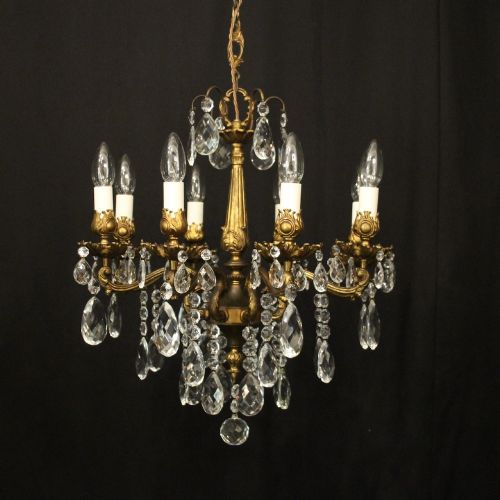
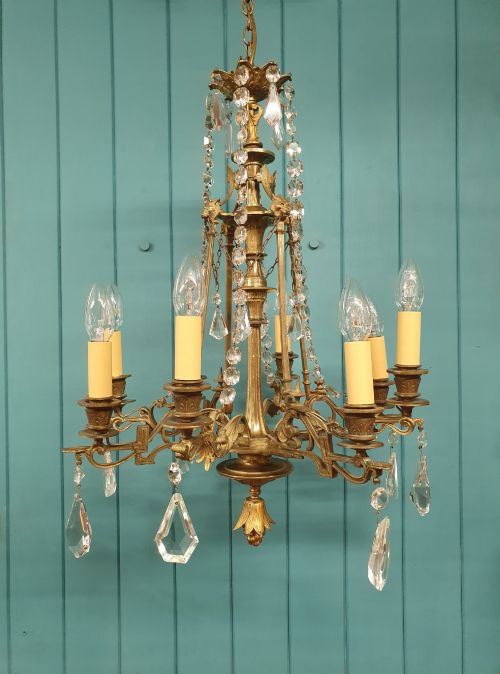
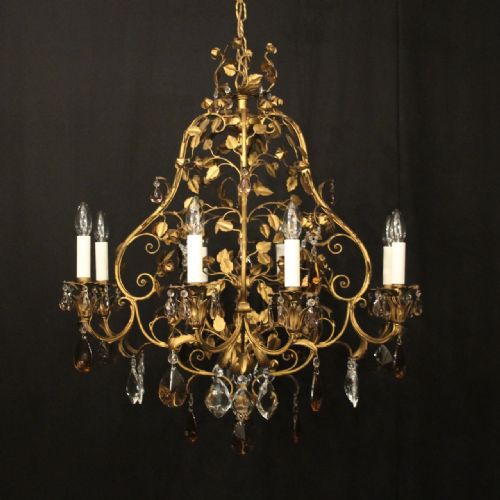
These eight light crystal chandeliers bring grand illumination and classical proportions into a room, drawing the eye upwards with their elaborate glass drops.

Eight Light Crystal Chandeliers
When you search for eight light crystal chandeliers, you find large hanging light fixtures designed to spread a brilliant glow across a grand space. These pieces hold eight distinct branches or candle arms, each fitted to carry its own bulb or candle. The pieces available here span several decades, ranging from Edwardian examples to those dated to 1900, 1920, 1930, and the wider nineteenth century.
The aesthetic leans heavily toward continental traditions, with French Chateau, French Rococo, French Classical, French Neoclassical, and Florentine styles dominating the selection. You will encounter cage chandeliers, gasolier conversions, and multi-armed fixtures featuring intricate metalwork paired with hanging glass. Many items originate from French workshops, bringing distinct regional decorative motifs into the home.
Forms vary from restrained Edwardian cut glass designs to ornate French gilded bronze frames hung with countless prisms. Some examples incorporate unusual decorative elements such as lion masks or painted toleware details alongside the standard brass or gilt metal structures. Each version offers a substantial presence suited to high ceilings and formal entertaining spaces.
Materials and construction methods
Makers built the structural frames of these fixtures using durable metals such as brass, gilt bronze, gilt metal, and toleware. These metals were cast, shaped, and often gilded to provide a rich metallic sheen that catches the surrounding light. Certain pieces utilise brass arms decorated with applied drips to mimic the appearance of melting wax on old candles.
The shimmering visual effect relies on glass, crystal glass, and cut crystal elements suspended from the metal arms and central stems. Craftsmen cut and polished these crystal components by hand to maximise their ability to refract light into prismatic colours. Metal pins and wire secured each individual drop and garland to the main frame, allowing them to sway gently.
French design influences appear frequently across these pieces, encompassing styles from the rococo period to the Edwardian era.
Variations in quality and finish
The standard of a chandelier rests upon the crispness of the metal casting and the depth of the gilding or patination. Finer examples display sharply rendered details like lion masks or rococo scrolls rather than soft, muddy casting marks. The quality of the metal framework dictates how well the fixture supports the heavy weight of the glass components over decades of hanging.
Crystal quality forms the other major dividing line, with superior pieces featuring heavy, hand-cut glass that produces bright prismatic flashes. Lesser examples use simpler, pressed glass drops that lack the sharp facets and clarity of top-tier work. The complexity of the wiring conversion and the completeness of the original crystal drops also determine the overall standing of an individual chandelier.
The Eight Light Crystal Chandeliers Glossary
- Cage chandelier
- A style of light fixture where metal bands enclose the central stem and support an outer ring of lights. This framework creates an open, cage-like silhouette often draped entirely in strings of crystal beads.
- Gasolier
- A light fixture originally designed to burn coal gas before later conversion to electricity. These pieces often retain heavier brass or bronze tubing and distinct valve keys from their original period of use.
- Toleware
- Painted or lacquered sheet metal used in decorative objects and light fittings. It brings colourful matte or glossy finishes to the metal components of a chandelier.
- Cut crystal
- Glass containing lead oxide that has been cut and polished on a wheel to create sharp facets. This process increases the refractive index, making the glass sparkle more intensely under illumination.
Eight Light Crystal Chandeliers: Frequently Asked Questions
Can these chandeliers be hung from standard ceilings?
These large fixtures possess considerable weight due to their dense metal frames and numerous crystal drops. You must anchor the hanging bracket directly into a ceiling joist or install a heavy-duty electrical box rated for substantial loads.
Ceiling height dictates placement, as eight light fixtures require adequate clearance beneath them so people can walk underneath safely. Professional installation is strongly recommended to ensure the mounting hardware supports the full load securely.
How do I date an antique chandelier?
Dating relies on examining the construction methods of the metal frame, the style of the casting, and the type of glass used. Edwardian and early twentieth-century pieces often show specific stylistic revivals, such as French neoclassical or rococo motifs popular during those decades.
Rewired gasoliers and nineteenth-century examples feature heavier bronze castings and different joining techniques compared to later production runs. Comparing the ornamentation against known period styles helps narrow down the decade of manufacture.
What is the difference between glass and crystal?
True crystal contains mineral additives like lead oxide that increase its density, weight, and clarity compared to standard soda-lime glass. This added density allows craftsmen to cut deeper facets that disperse light into a wider spectrum of colours.
Standard glass appears lighter and lacks the intense refractive brilliance found in high-lead crystal drops. You can often feel the difference in weight and temperature when handling the individual hanging prisms.