
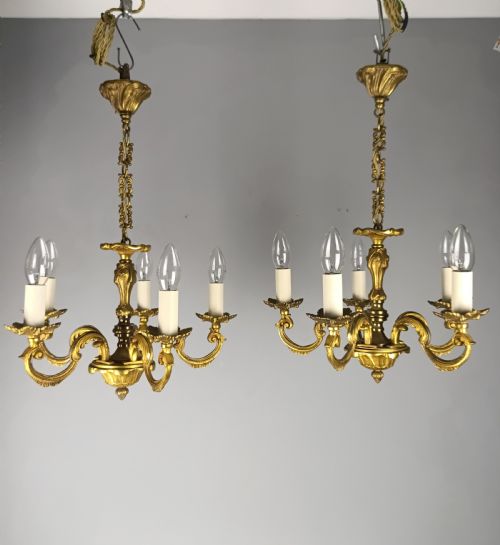
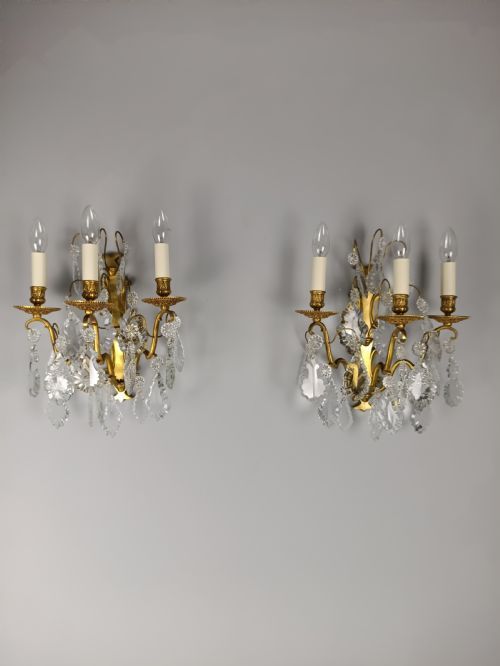


Vintage Brass Chandelier Pair
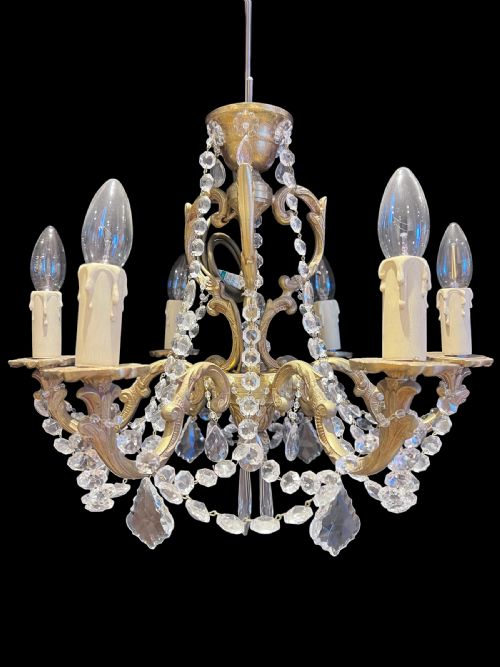
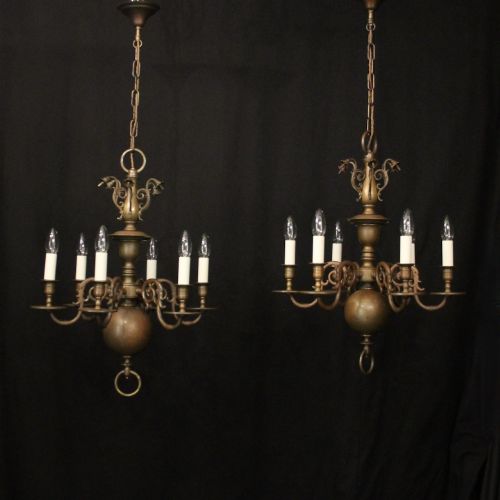
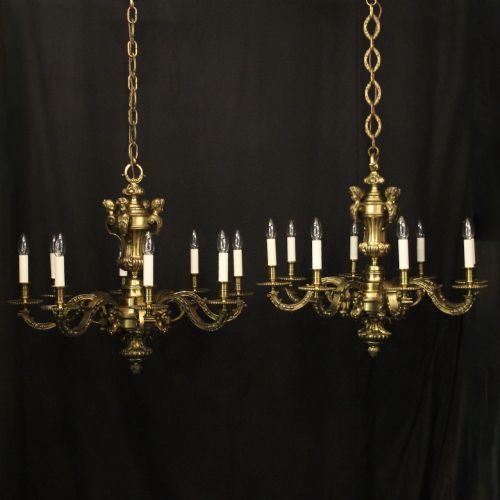
A vintage brass chandelier pair brings balanced proportion and warm metalwork to a room, offering matching illumination from ceiling fixtures created in the early decades of the twentieth century.

Vintage Brass Chandelier Pair
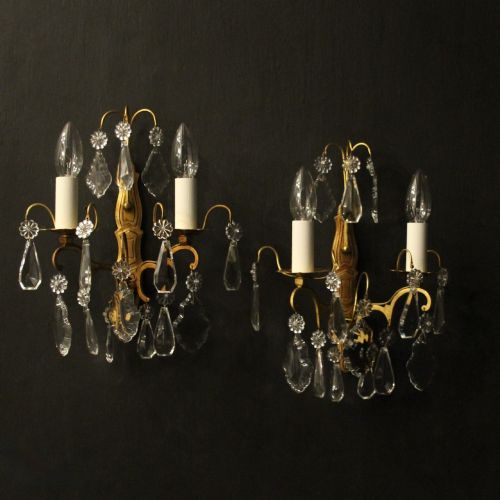
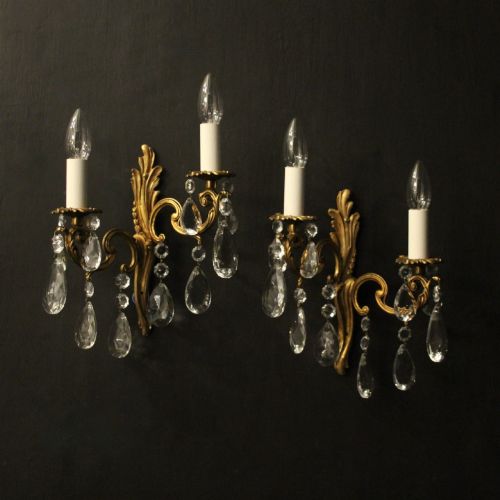
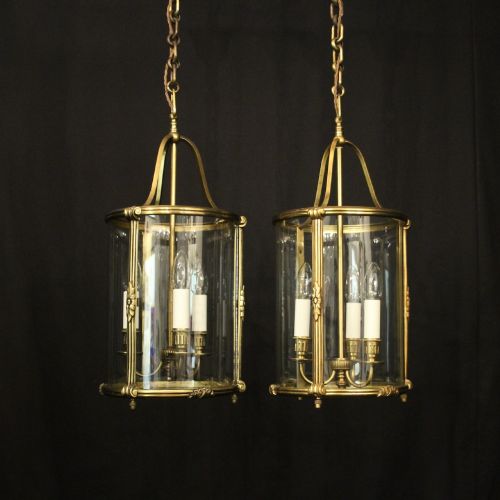
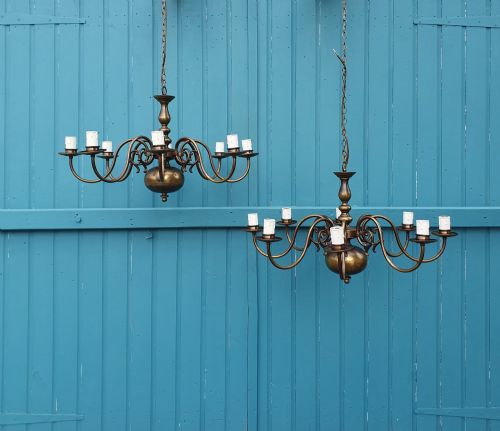
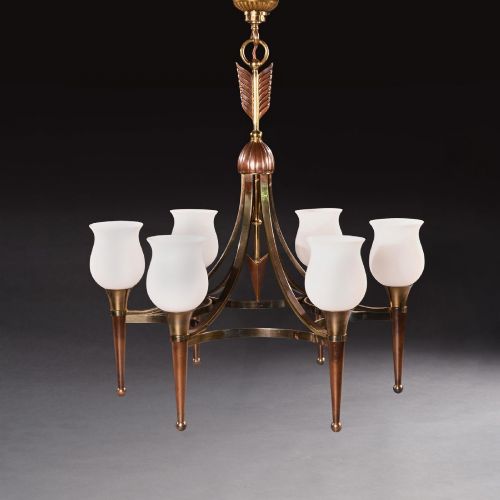
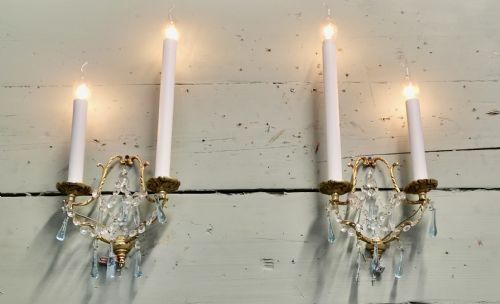
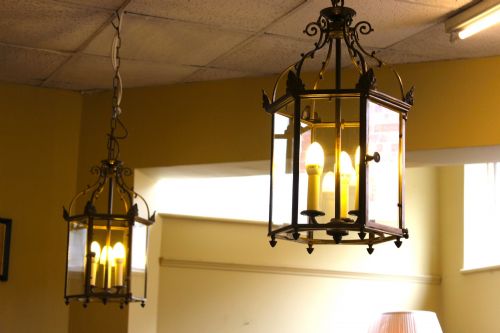
The selections span diverse aesthetics ranging from French styles like Rococo, Empire, and Neoclassical to Dutch Flemish and Edwardian forms. Many examples date from the 1920s and 1930s, featuring multi-light branches, wall lights, and hexagonal lanterns.
French chateau influences and gilt finishes dominate the selection, alongside bronze, gilded bronze, and steel elements. These matching fixtures provide a cohesive decorative scheme for formal halls, living spaces, and dining rooms.
Materials and construction methods
Maker workshops utilised cast and spun brass, bronze, and gilt bronze combined with cut crystal drops and glass shades. Metal components were often cast in sections, chased by hand, and assembled with threaded rods or pins.
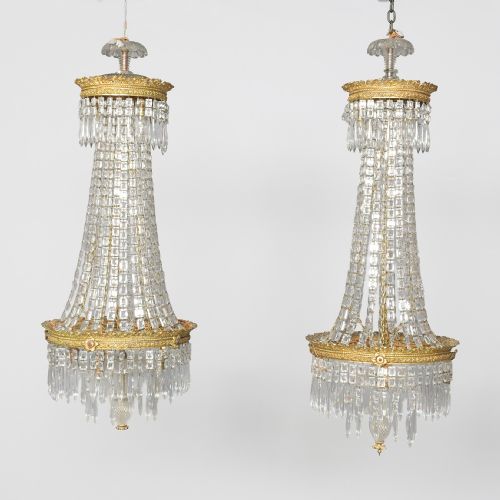
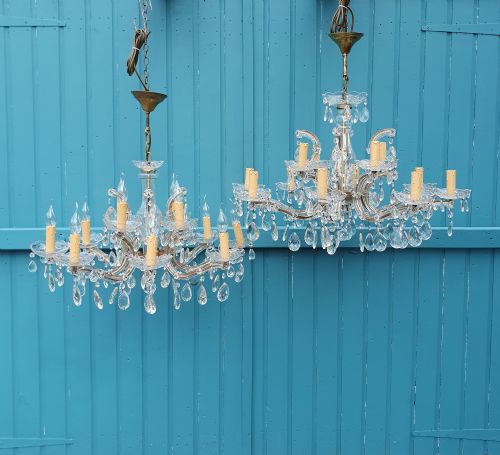
Finishes varied from polished brass to fire-gilded bronze, known as ormolu, which provided a rich golden lustre. Crystal elements were hand-cut and wired together with brass pins to form tents, waterfalls, and birdcage structures.
The listings feature pieces spanning the nineteenth century through the 1950s, constructed from brass, bronze, crystal, and glass.
Distinctions in quality and execution
The calibre of a vintage brass chandelier pair rests on the crispness of the metal casting and the depth of the chasing work. Superior examples exhibit finely detailed floral or scroll motifs rather than soft, mass-produced contours.
Quality also manifests in the weight and clarity of the glass or cut crystal drops. Heavy, hand-cut crystal prisms refract light with greater brilliance than pressed glass alternatives, elevating the overall presence of the pair.
Maison Jansen·Andre Arbus
The Vintage Brass Chandelier Pair Glossary
- Ormolu
- Gilded bronze, where a layer of gold amalgam is applied to a bronze base through heat processing. This technique creates a durable golden finish characteristic of French neoclassical and baroque lighting.
- Tent and waterfall
- A chandelier configuration featuring an upper canopy of strings of beads forming a tent shape, dropping down into a cascading tier of crystal pendants. This style is frequently found in early twentieth-century French designs.
- Birdcage chandelier
- A metal framework shaped like an avian enclosure, lined and draped with glass crystals and central light branches. The design creates an open cage effect that diffuses light outward.
- Gilt brass
- Brass metal treated with a thin layer of gold leaf or gold paint to simulate solid gold or high-grade ormolu. It provides a bright metallic sheen across Edwardian and later fixtures.
- Hexagonal lantern
- A hanging or wall-mounted light fixture enclosed by six flat glass panels within a brass or bronze frame. These pieces often illuminate entrance halls and vestibules.
Vintage Brass Chandelier Pair: Frequently Asked Questions
How are matching chandeliers hung safely?
These fixtures require ceiling hooks anchored directly into structural ceiling joists to support their substantial metal and crystal weight. Professional electricians should handle the suspension and wiring to ensure secure installation.
Matching pairs must be hung at identical heights to maintain proper visual balance within a room. Consideration of ceiling clearance ensures adequate headroom below the lowest crystal drop.
What periods do these fixtures represent?
The available lighting predominantly spans the Edwardian era through the 1930s, with select nineteenth-century examples. French chateau and Rococo revivals heavily influence the decorative vocabulary of this period.
Earlier nineteenth-century pieces display heavier classical ormolu casting, while 1920s and 1930s variants often incorporate cleaner lines or elaborate crystal draping.
How do you clean brass and crystal?
Dusting crystal drops regularly with a soft cloth preserves their refractive quality without harsh chemical cleaners. Brass components benefit from gentle wiping with a dry cloth to maintain their aged patina.
Avoid abrasive polishes on gilded or lacquered surfaces to prevent stripping the historic finish. Professional dismantling may be necessary for deep cleaning complex crystal arrangements.
Where do matching pairs work best?
Symmetrical pairs suit grand spaces such as double reception rooms, long hallways, or large dining tables where balanced illumination is required. Placing identical fixtures in adjacent rooms creates a unified architectural flow.
Wall lights and lanterns from the same era complement the larger ceiling chandeliers when distributed across connecting corridors.