


Pair French Brass Chandeliers
These pair french brass chandeliers bring symmetrical illumination and distinct continental character to a room, spanning styles from Rococo to Mid-Century Modern.
Pair French Brass Chandeliers
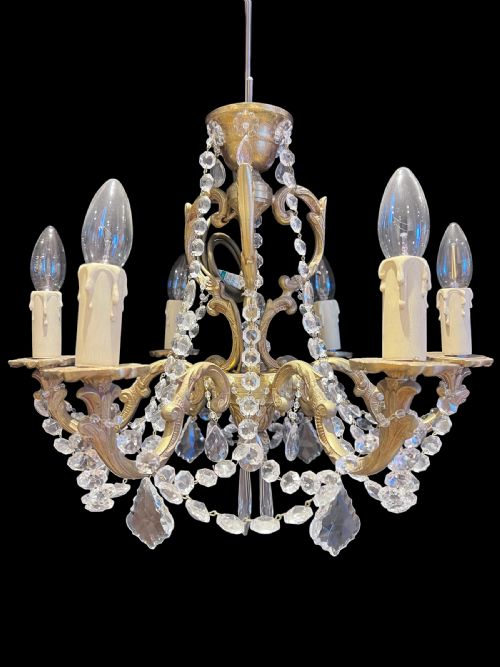
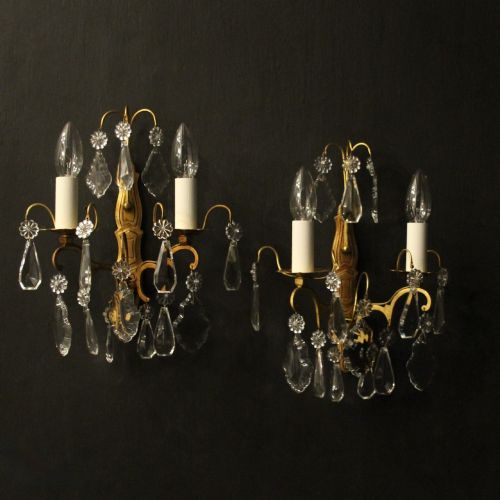
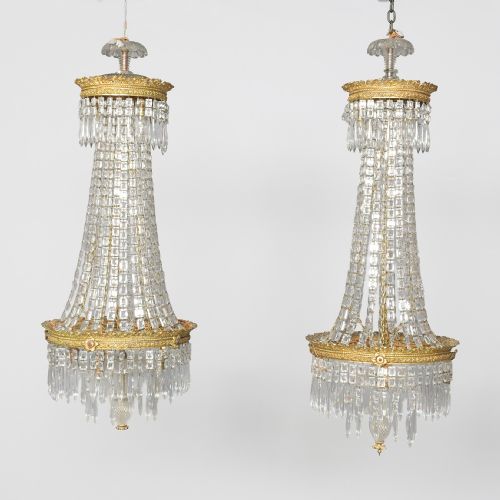
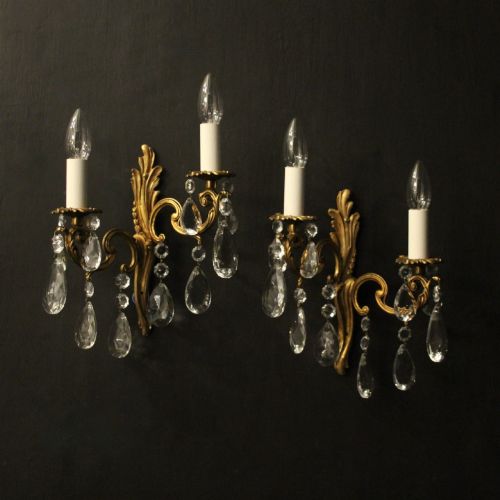
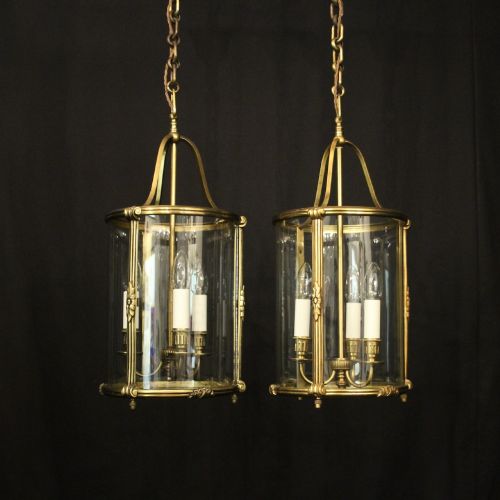
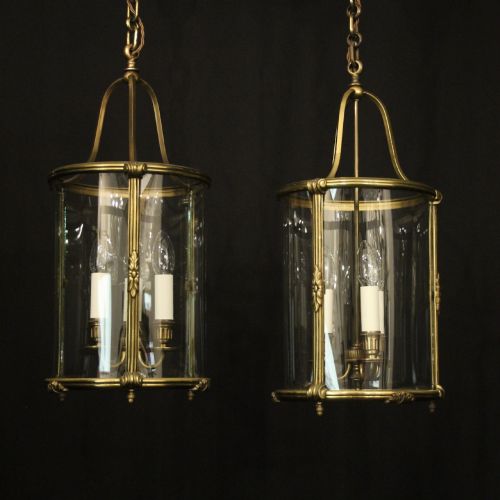
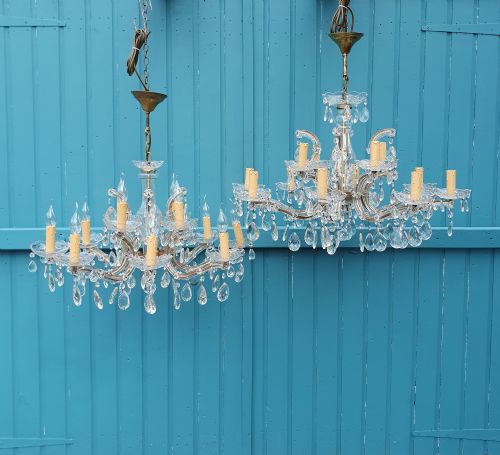
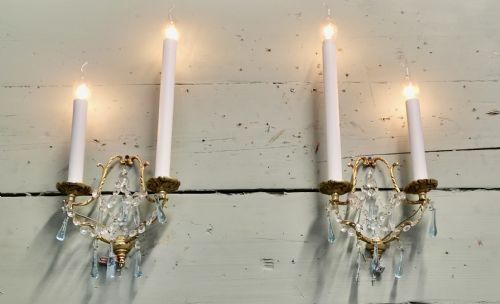
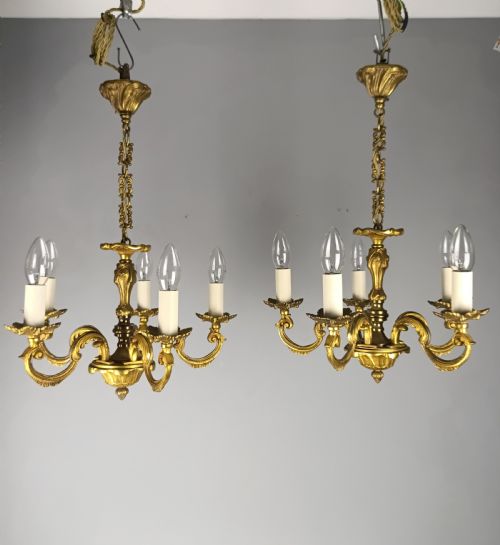
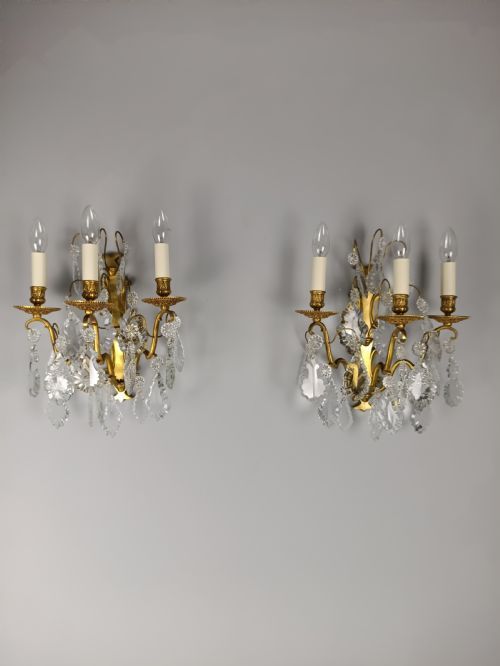
When searching for pair french brass chandeliers, a buyer encounters matching sets of lighting fixtures dominated by brass, gilt bronze, and crystal elements. These objects appear primarily in ceiling-mounted chandelier configurations, alongside paired wall lights, lanterns, and smaller table variants.
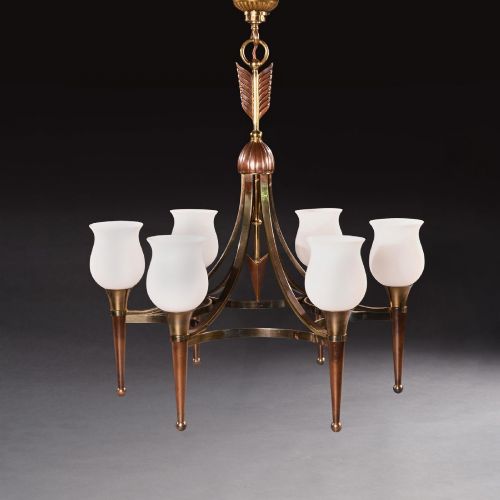
The pieces on this page lean heavily towards early twentieth-century production, notably the 1920s and 1930s, though nineteenth-century examples and Edwardian pieces also feature. Styles range from French Empire and Neoclassical to Baroque, Rococo, and Mid-Century Modern.
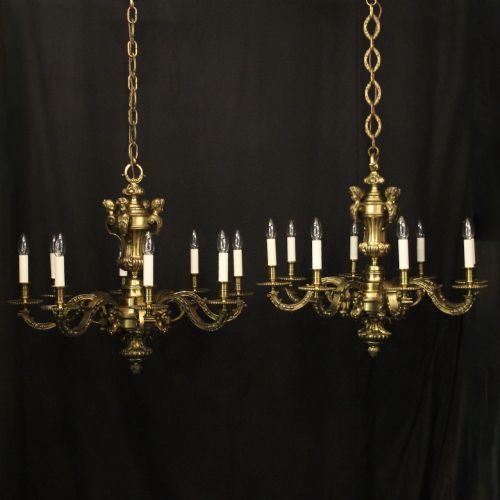
Most examples incorporate multi-arm arrangements holding anywhere from three to twelve lights, frequently embellished with crystal drops, beads, and waterfall formations.
Materials and construction
Makers utilised cast and chased brass, bronze, and gilt bronze as the structural backbone for these lighting fixtures. Metal components are frequently gilded, plated, or left in their natural dark or polished brass state.
Cut glass and crystal elements, including drops, beads, spikes, and bag configurations, were wired or pinned directly to the metal frames to refract light. Steel and iron also appear in specific lantern frames alongside brass components.
Object forms span large ceiling chandeliers, wall sconces, hall lanterns, and petite table-standing variants.
Assessing quality in lighting pairs
The distinction between tiers rests upon the crispness of the metal casting, the weight of the bronze or brass used in the frame, and the clarity of the crystal components. Heavier cast mounts and finely hand-chased surface details indicate superior workshop output.
The integrity of the matching pair relies on identical proportions, uniform patination across both pieces, and the completeness of the crystal droplet assemblies. Superior examples maintain consistency in their decorative motifs, whether cast in a Baroque, Empire, or Rococo idiom.
Maison Jansen·Andre Arbus
The Pair French Brass Chandeliers Glossary
- Ormolu
- Gilded bronze, where a layer of gold is applied to a bronze base using mercury amalgamation or electroplating. This finish gives the metal a rich, warm surface lustre.
- Tent and waterfall
- A chandelier configuration where strings of crystal beads form a triangular tent shape above a cascading array of drops beneath. This design maximises light refraction.
- Birdcage
- An open metal framework resembling a cage structure that houses the internal candle tubes and supports external crystal swags. It is a classic form found in period French lighting.
- Spike chandelier
- A fixture featuring distinct upward-pointing spikes or central spires adorned with crystal elements and finials. These pieces are often compact in scale.
- Wall sconce
- A decorative lighting fixture attached directly to a wall surface, typically featuring twin or triple arms that match larger ceiling chandeliers in a room.
Pair French Brass Chandeliers: Frequently Asked Questions
How do I hang a heavy brass chandelier?
Heavy brass and bronze chandeliers require secure fixing directly into ceiling joists or structural noggin pieces using a substantial steel ceiling hook capable of supporting the combined weight of the metal and crystal.
Professional installation by a qualified electrician is essential to ensure the wiring safely supports the electrical load of multi-arm fixtures.
What is the difference between gilt brass and ormolu?
Gilt brass involves applying a gold finish over a brass substrate, whereas ormolu specifically denotes mercury-gilded or electro-gilded bronze. Bronze generally allows for sharper cast detail than brass.
Both materials yield a bright golden appearance, though ormolu typically carries greater weight and depth of surface chasing.
Can these antique lights be rewired safely?
Most period lighting fixtures require rewiring to meet modern safety standards and accommodate contemporary bulb fittings. Professional conservators can rewire the internal arms while preserving the original metalwork.
Original sockets are often replaced with modern equivalents during this process to ensure safe daily operation.
How do I clean crystal drops on a chandelier?
Crystal drops are best cleaned in situ using a specialised spray cleaner and a soft cloth, or removed individually for washing in warm soapy water. Rinsing thoroughly prevents any film buildup that dulls the refraction.
Metal frames should be dusted gently with a dry cloth to avoid disturbing the patination or gilt surfaces.