

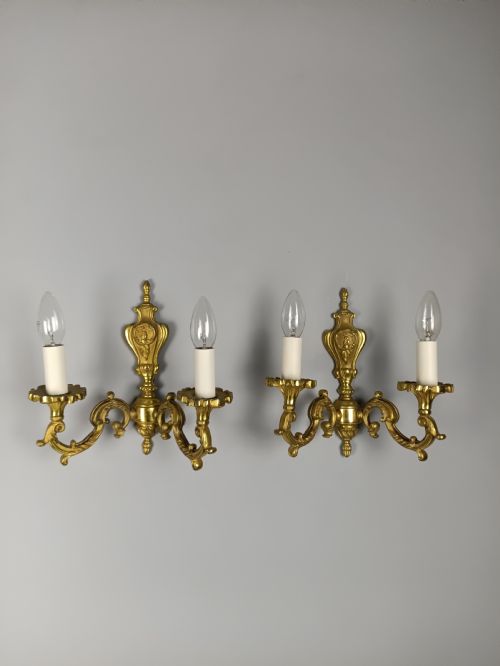
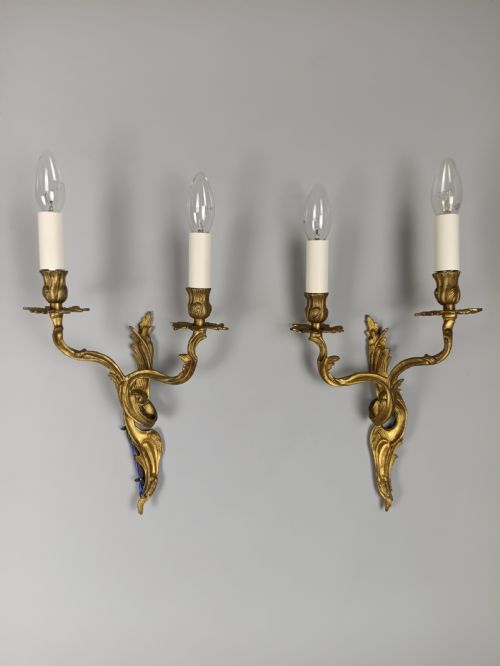
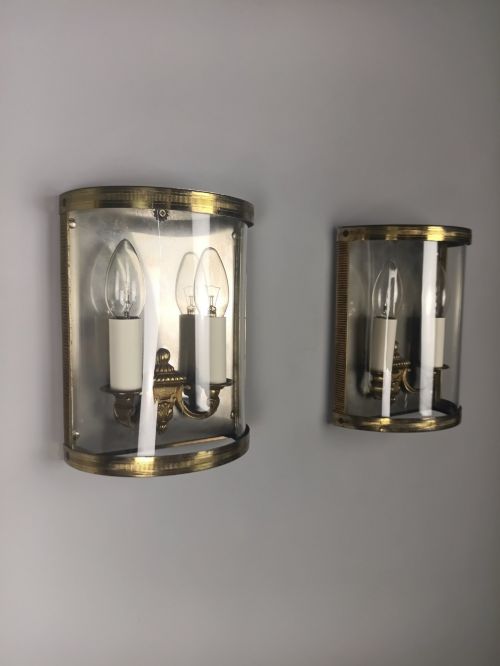
Pair French Candle Sconces
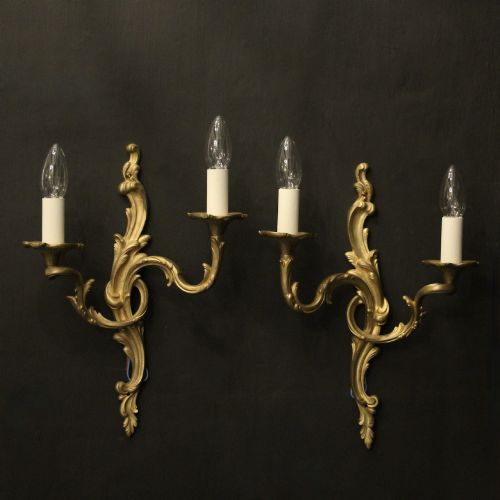
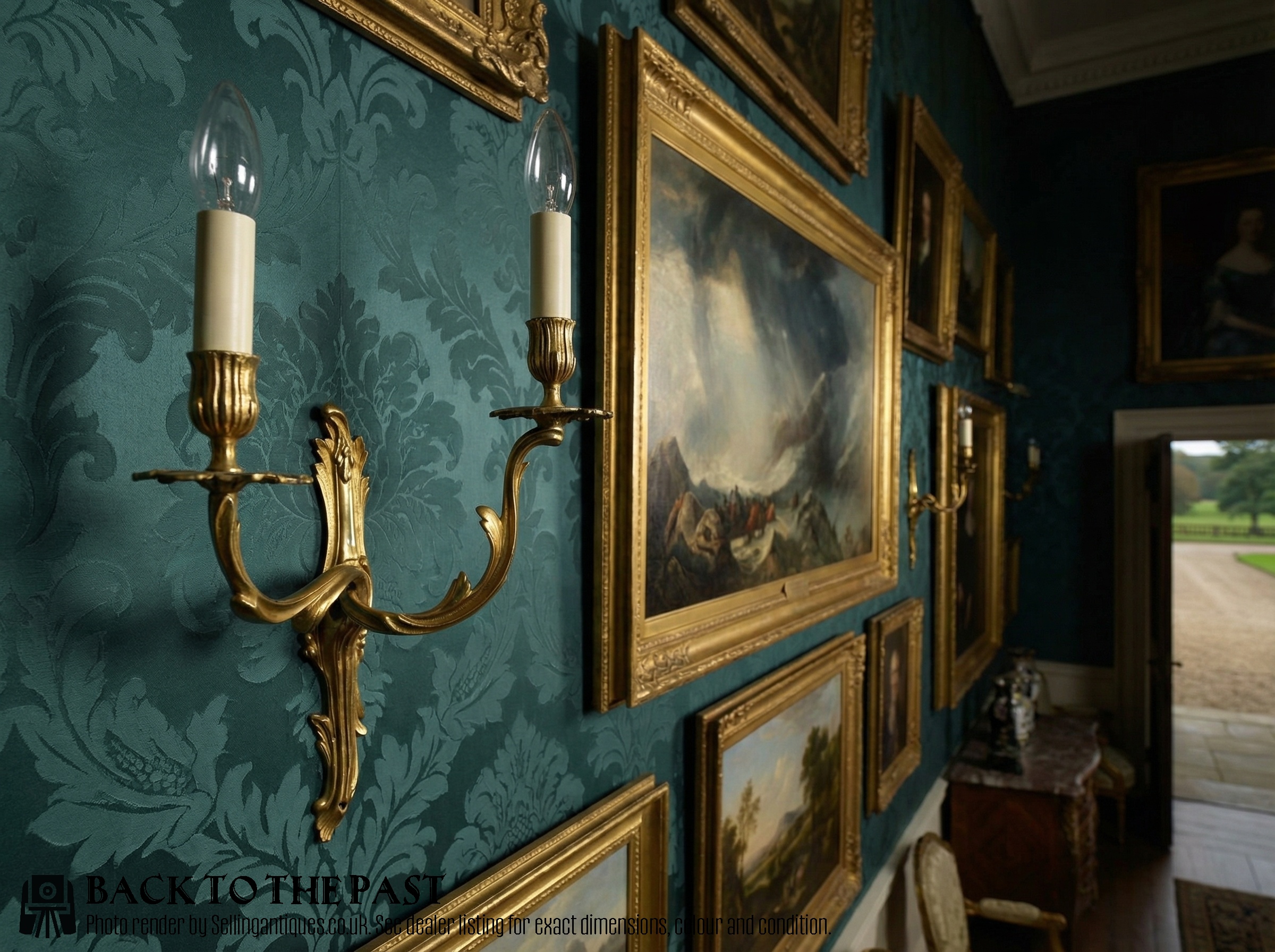
Pair french candle sconces provide dramatic wall illumination through heavy gilded metalwork that reflects flickering candle flames across domestic interiors.
Pair French Candle Sconces
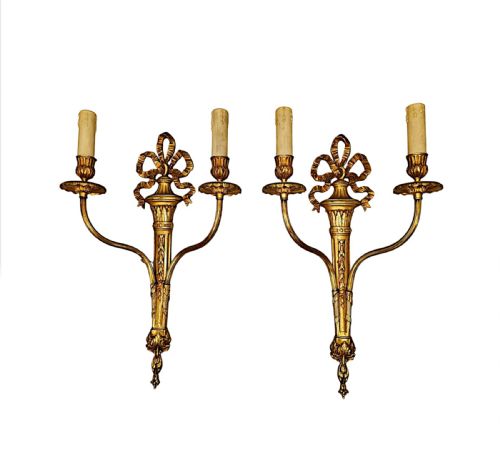
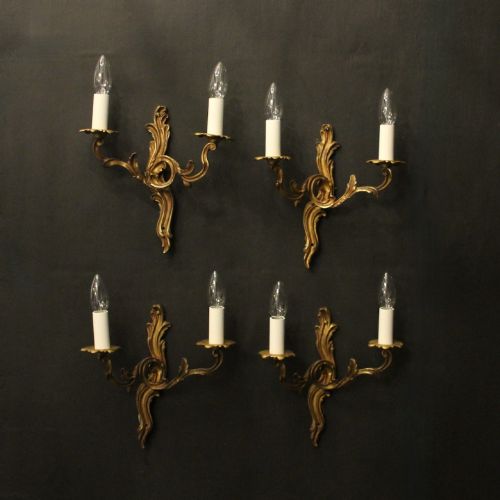
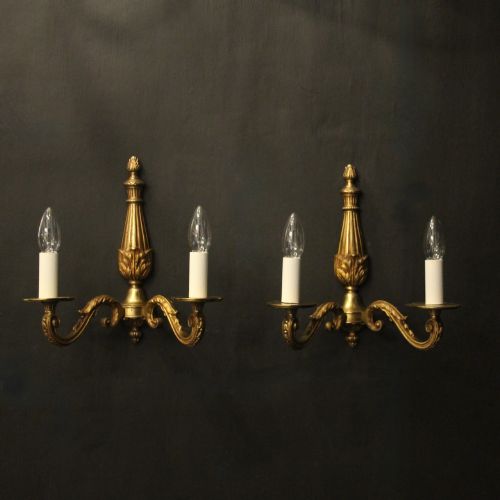
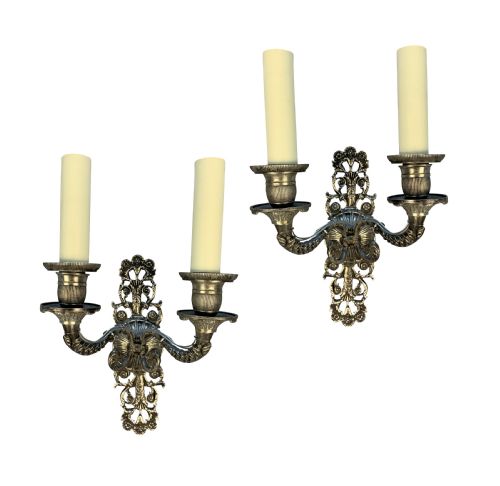
Pair french candle sconces are decorative wall-mounted lighting fixtures designed to hold multiple candles, originating mainly from the nineteenth and early twentieth centuries. These pieces appear frequently in styles such as French Rococo, Louis XVI, and French Empire, bringing classical architectural motifs directly onto domestic walls.
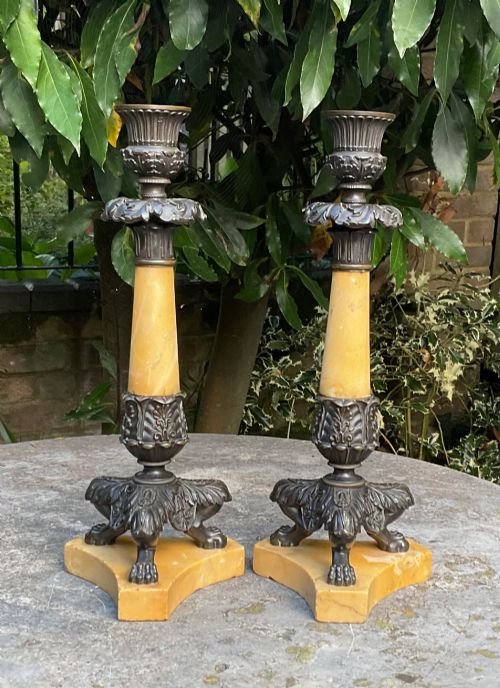
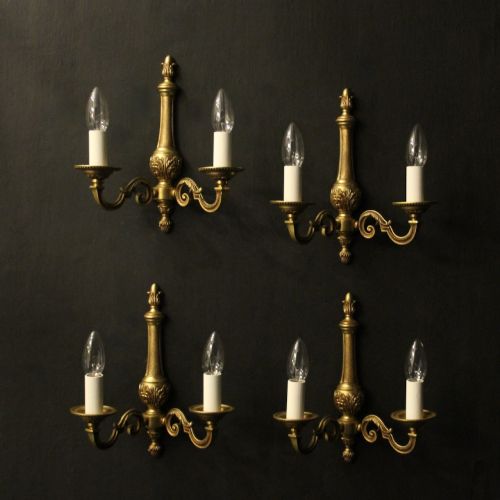
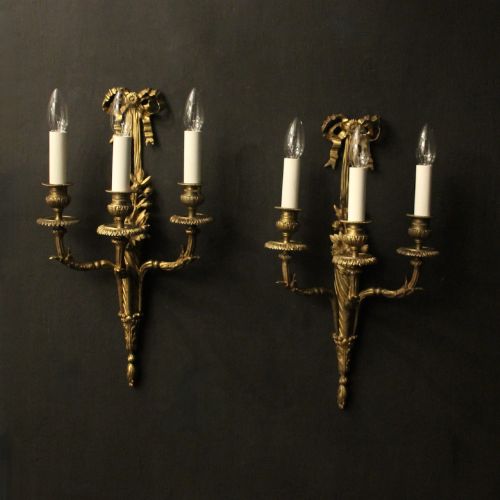
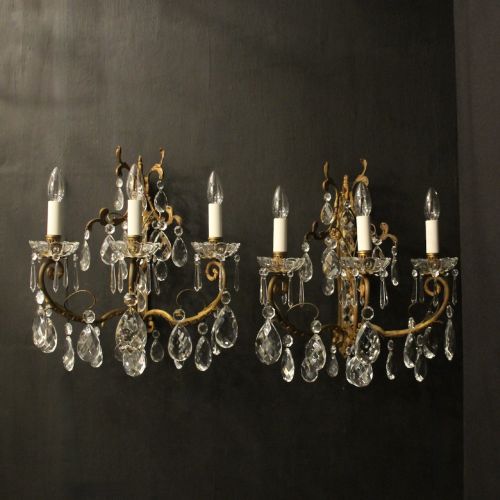
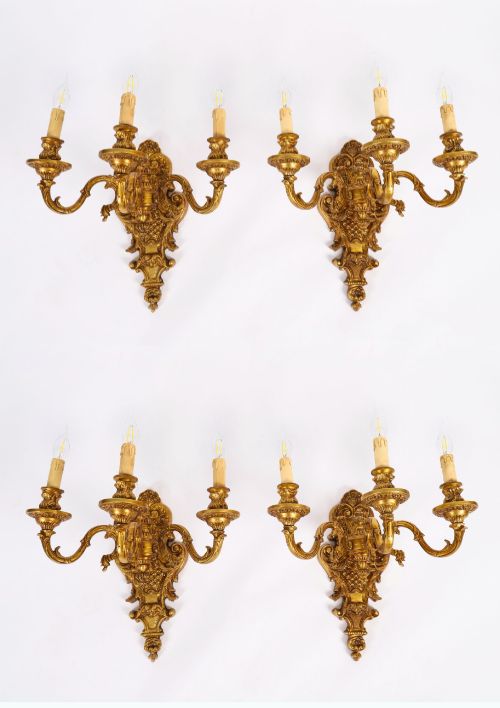
The selections available range from twin-arm gilded brass fixtures dating to the 1930s to ornate nineteenth-century examples incorporating bronze, marble, and porcelain elements. Buyers encounter various configurations, including single-arm designs, twin-arm brackets, and substantial triple-arm variants fitted with backplates.
Originating from French workshops and salons, these wall lights often feature decorative ribbons, cherubs, or classical caryatids that define their distinct aesthetic. They transform plain wall surfaces into focal points while maintaining the traditional functionality of historic candle illumination.
How They Were Made
Casting forms utilised base metals such as brass, bronze, and white metal, which were subsequently shaped into intricate backplates, scrolling arms, and drip pans. Artisans applied mercury gilding or modern electroplating to achieve the characteristic ormolu surface finish seen on superior examples.
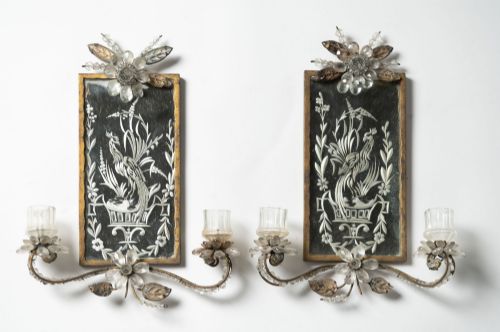
Many fixtures integrate secondary materials like carved marble, onyx, porcelain flowers, and crystal drops to add texture and catch the ambient light. Surface detailing was often enhanced through hand-chasing, paint applications, or silver plating to enrich the visual depth of the metalwork.
Several early twentieth-century sconces incorporate delicate porcelain flowers alongside their metal leaves, bringing perennial spring blooms to dark wood walls.
What Varies in Quality
The quality of the surface finish plays a major role, distinguishing thick, durable gilding from thin or worn plating. Heavier gauge metals provide better structural integrity for multi-arm designs, preventing the drooping often seen in lighter pressings.
Maison Baguès·Dugourc
The Pair French Candle Sconces Glossary
- Ormolu
- Gilt bronze produced by applying an amalgam of gold and mercury to a bronze object before heating to drive off the mercury. This technique creates a rich, matte golden surface characteristic of fine French decorative arts.
- Girandole
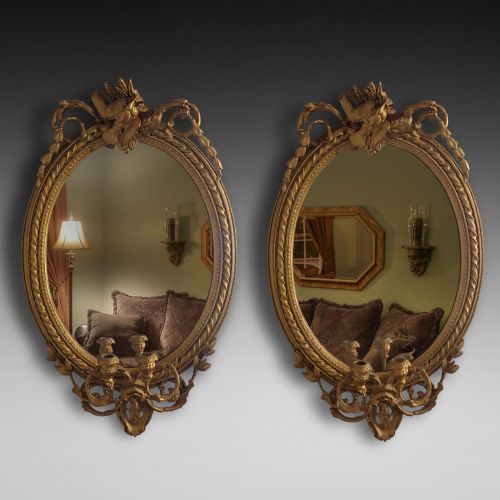
- A branched wall sconce featuring a mirrored backplate designed to reflect and multiply the light of the candles. These pieces combine reflective glass with ornate metal arms.
- Caryatid
- A sculpted female figure serving as an architectural support element instead of a pilaster or column. They appear frequently on Louis XVI and Empire style candle supports.
- Champlevé
- An enamelling technique where troughs or cells are hollowed out in the metal surface and filled with vitreous enamel before firing. This colourful decoration often accents nineteenth-century pieces.
- Toleware
- Enamelled or lacquered sheet metal items produced in imitation of oriental wares. These painted metal components add colour and decorative variety to domestic lighting.
Pair French Candle Sconces: Frequently Asked Questions
How are these wall sconces mounted safely?
Most antique wall sconces feature integrated mounting brackets or screw holes cast directly into the backplate for secure attachment to wall studs or anchors.
Heavier multi-arm bronze fixtures require proper wall plugs or direct fixing to wooden battens to support their substantial weight safely.
Can historic candle sconces be wired for electricity?
Many sconces are adapted by running discreet internal wiring through the hollow casting arms to hold small imitation candle bulbs.
Purists often prefer keeping them strictly for wax candles, while modern interiors frequently utilise professional electrical conversion for convenience.
How do I identify a Louis XVI style sconce?
Louis XVI style pieces display strict symmetry, straight tapering lines, and classical motifs such as acanthus leaves, ribbons, and urns.
They stand apart from flowing Rococo designs through their restrained geometry and adherence to ancient Greek and Roman architectural proportions.
What is the difference between brass and ormolu?
Brass is an alloy of copper and zinc with a natural golden hue that can be polished or left to develop a darker patina over time.
Ormolu specifically denotes high-status gilt bronze where a layer of gold is bonded to the bronze base, yielding a deeper and more enduring golden brilliance.