

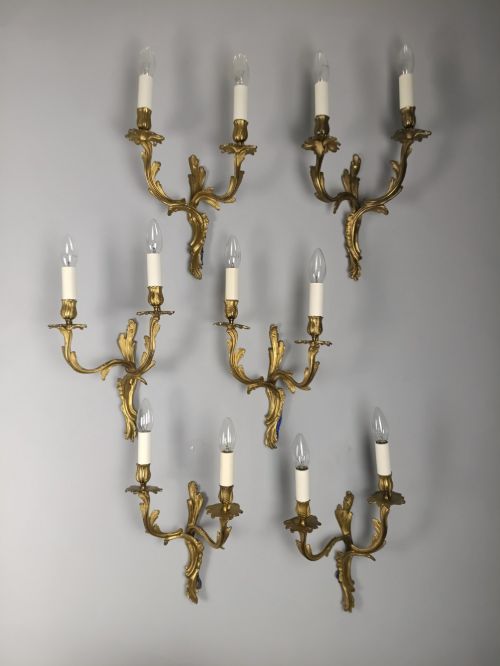
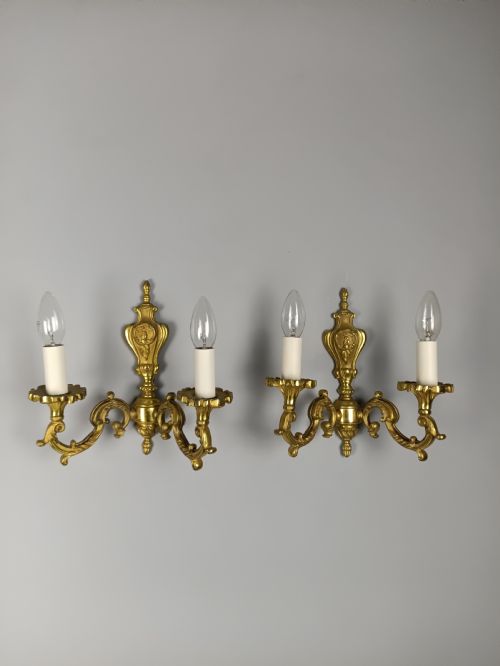
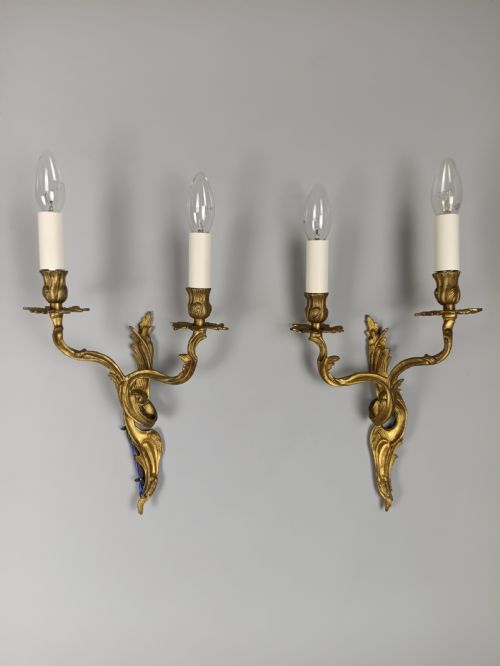
Brass Twin Light Sconces
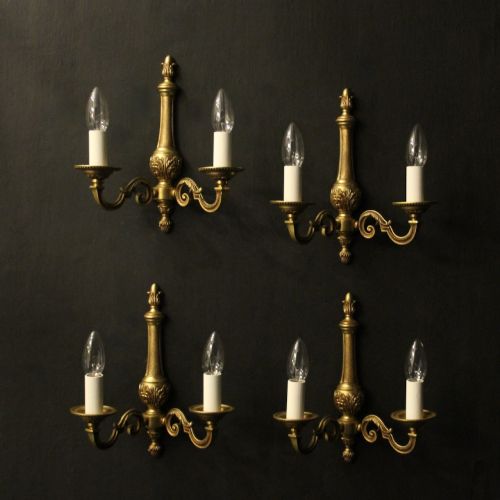
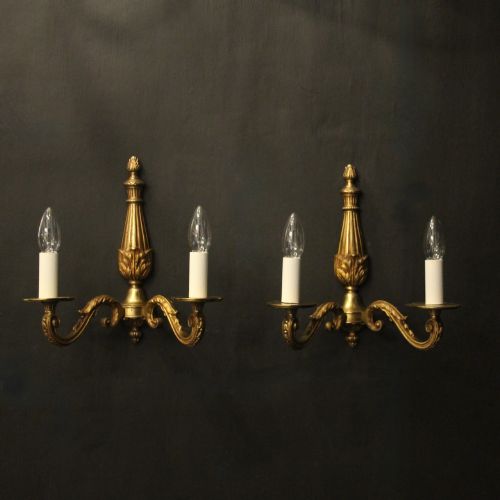
Brass twin light sconces bring historic wall lighting into rooms through dual-armed metal designs.
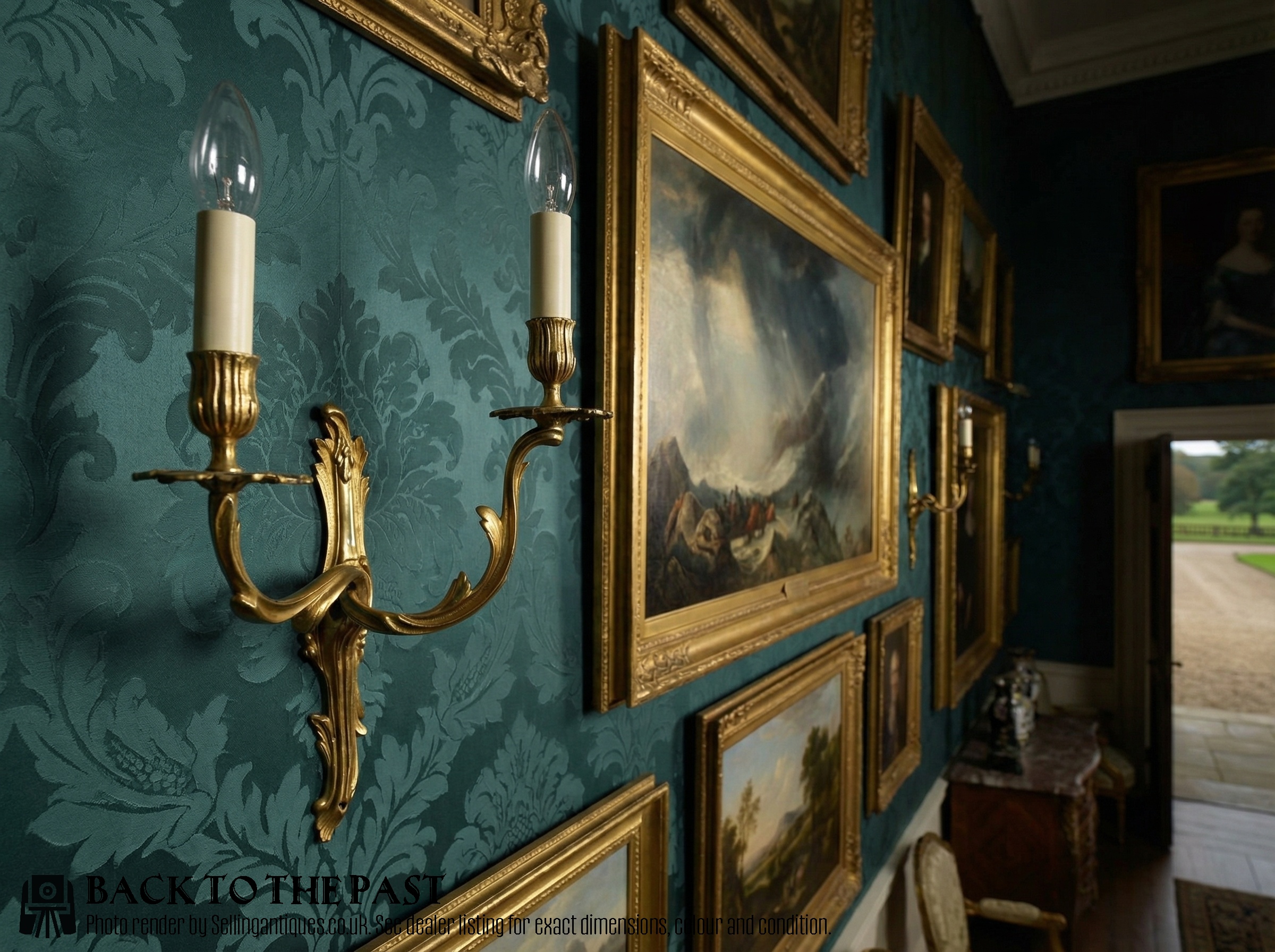
Brass Twin Light Sconces
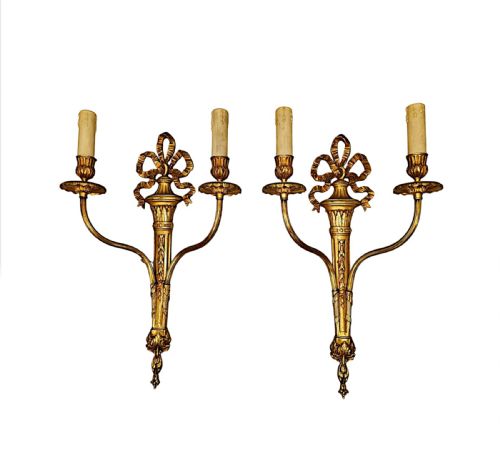
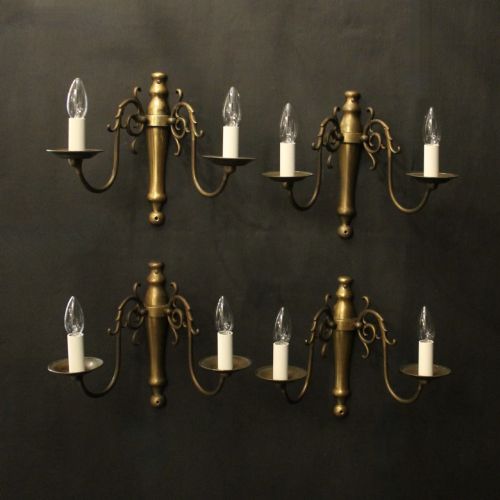
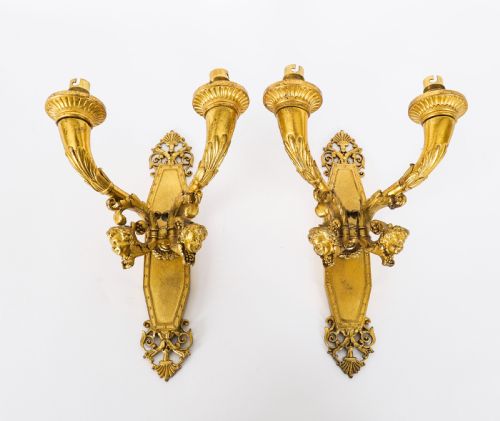
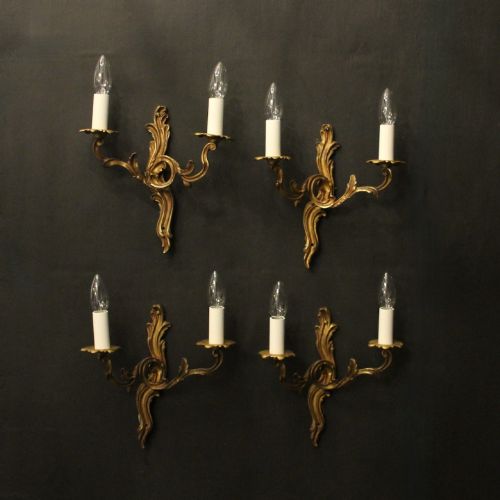
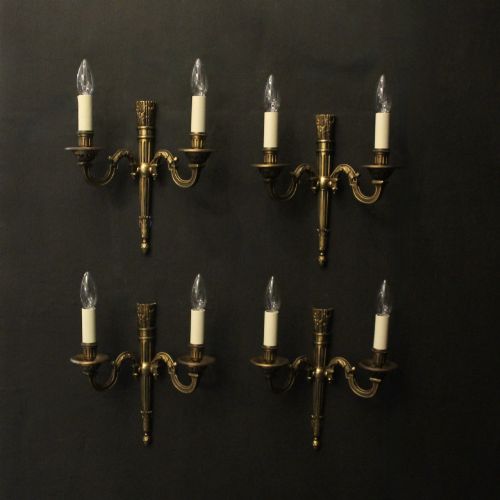
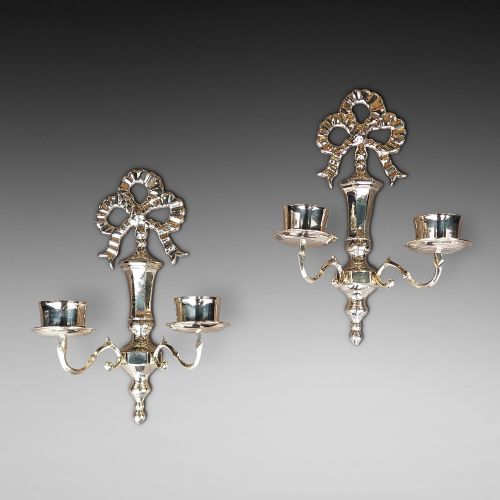
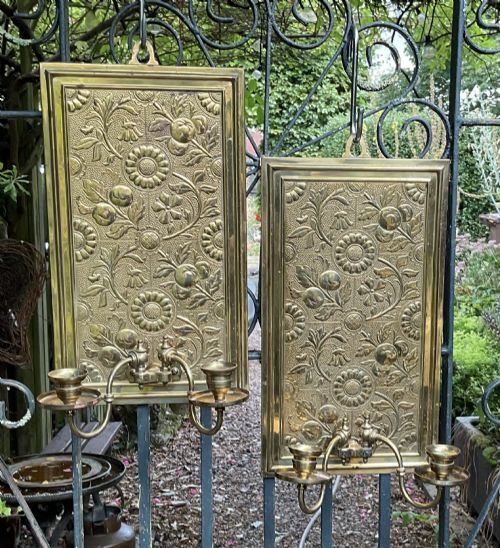
Brass twin light sconces are dual-armed wall fixtures designed to hold candles or electric bulbs, taking forms such as wall lights, wall sconces, and candlesticks. When searching this phrase, buyers encounter pieces originating from the nineteenth century, the Edwardian era, and the nineteen-twenties and nineteen-thirties.
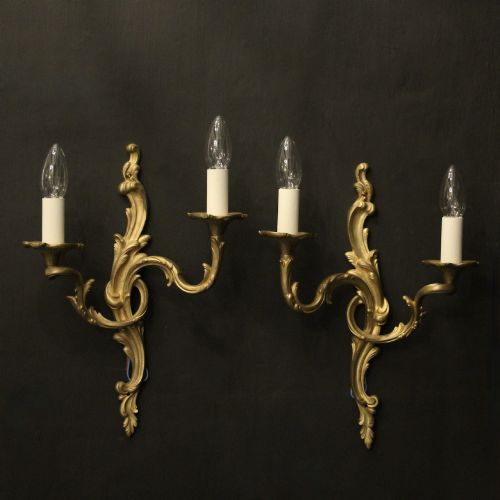
The version most commonly met on this page is the French gilded brass or bronze twin arm wall light from nineteen-thirty, alongside English brass examples and French pieces reflecting Rococo, Empire, and Louis styles.
How They Were Made
These fixtures are constructed primarily from brass, gilt bronze, ormolu, and gilded metal, utilising casting and metalworking techniques. Workshops applied mercury gilding, bronze finishes, and silvered treatments to brass surfaces to achieve decorative lustre.
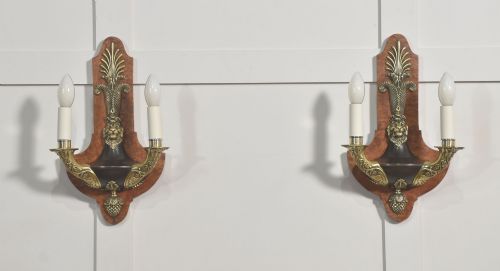
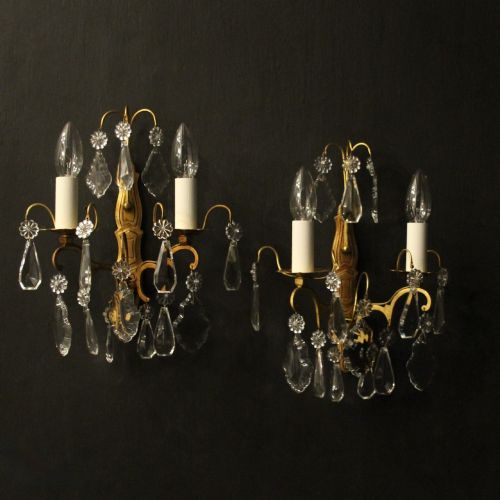
Makers integrated materials like burr walnut and crystal elements into specific designs, combining metal arms with decorative backplates and candle-holders.
Certain French half-lantern sconces let twin candles peek out from behind glass as if trying to brave a drafty hallway.
What Varies in Quality
Quality in these sconces rests upon the crispness of the metal casting and the depth of the gilding or bronze work. Finer examples display deeply chased ornamentation, sharp rococo scrollwork, and substantial metal thickness rather than flat, pressed assembly.
The integrity of the construction, from the mounting plates to the formation of the twin arms, distinguishes standard production items from master-finished works of art.
Bruce Talbert·Casier
The Brass Twin Light Sconces Glossary
- Ormolu
- Gilded bronze, where a finely ground gold-mercury amalgam is applied to a bronze base and heated. This technique creates a rich, durable golden surface seen on nineteenth-century French lighting.
- Rococo
- A decorative style characterised by asymmetrical curves, C-scrolls, and naturalistic plant motifs. It appears frequently on nineteenth-century and early twentieth-century French sconces.
- Empire style
- A neoclassical design movement drawing inspiration from ancient Roman and Greek art. Items in this style incorporate symmetrical geometry, laurel wreaths, and classical motifs.
- Gilded brass
- Brass coated with a thin layer of gold leaf or gold paint to simulate solid gold or heavy ormolu. This material provides decorative warmth at a lighter weight.
Brass Twin Light Sconces: Frequently Asked Questions
How do I install antique wall sconces?
Many period sconces require professional mounting to wall studs and wiring connection depending on whether they are converted for electricity or retained for candles.
Checking the backplate fixings ensures secure attachment to the wall surface before operating.
Can I date these sconces by their style?
Styles often reflect revival periods, such as Louis XIV or Rococo designs produced during the nineteenth and early twentieth centuries.
Manufacturing techniques and metal patination provide additional clues to whether a piece originates from the Victorian era or the nineteen-thirties.
Are these sconces wired for modern use?
Some pieces arrive freshly rewired for electrical installation, while others maintain historical fittings or suit candle usage.
Inspecting the internal wiring status helps determine if an electrician needs to adapt the fixture for home use.