

Pair French Candle Holders
When you search for pair french candle holders, you enter a world of gilt bronze and marble lighting created to illuminate classical rooms.
Pair French Candle Holders
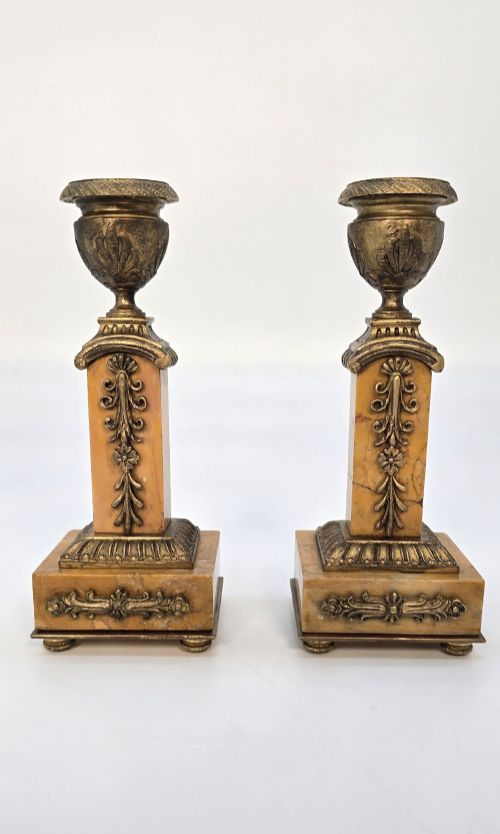
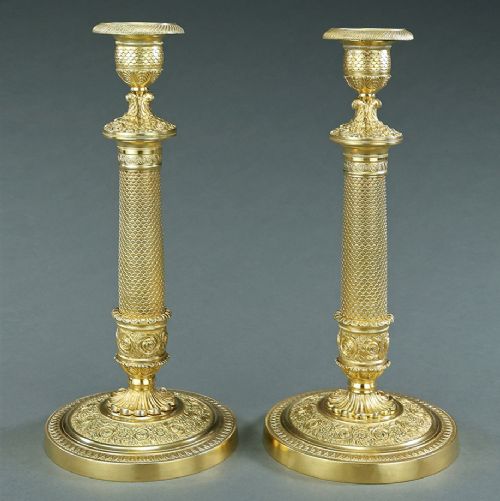
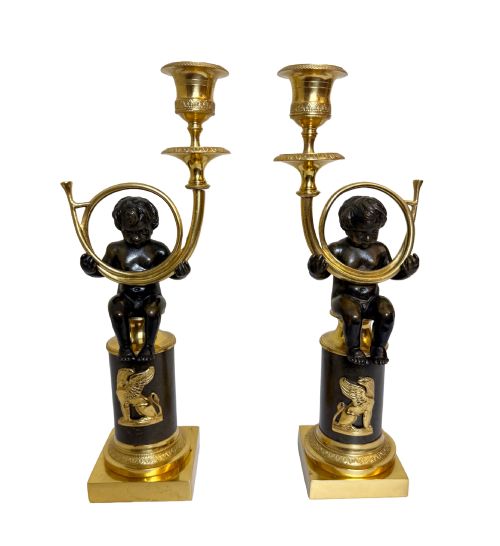
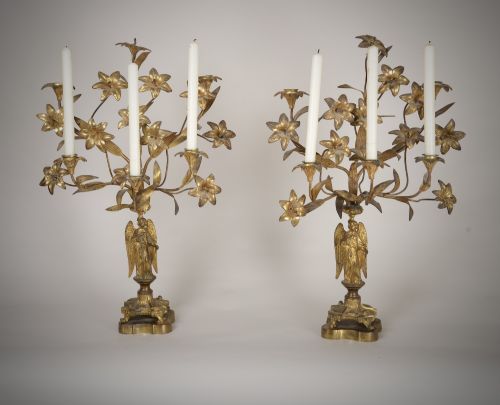
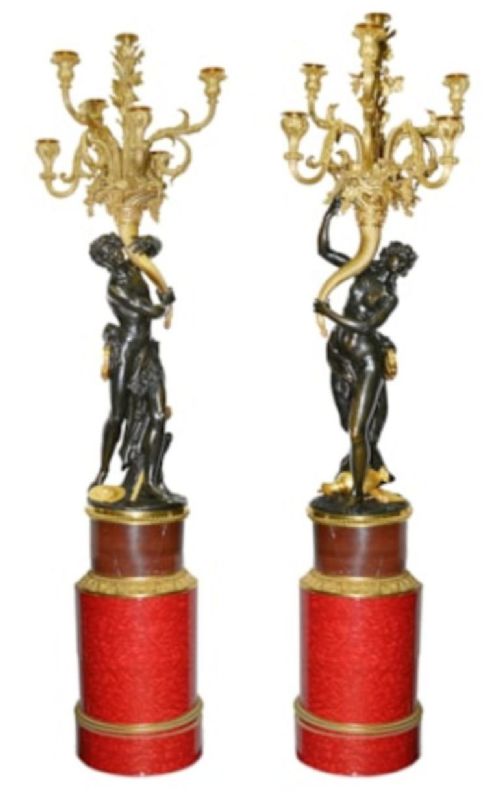
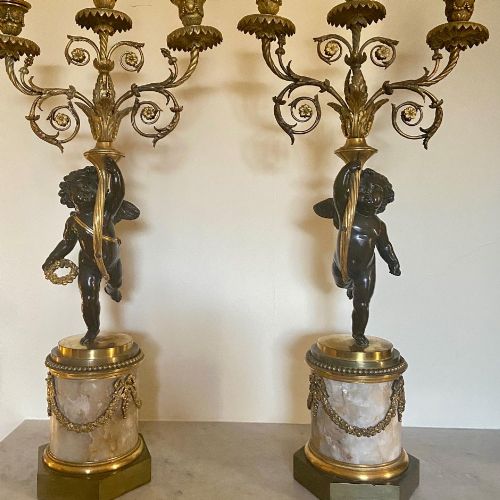
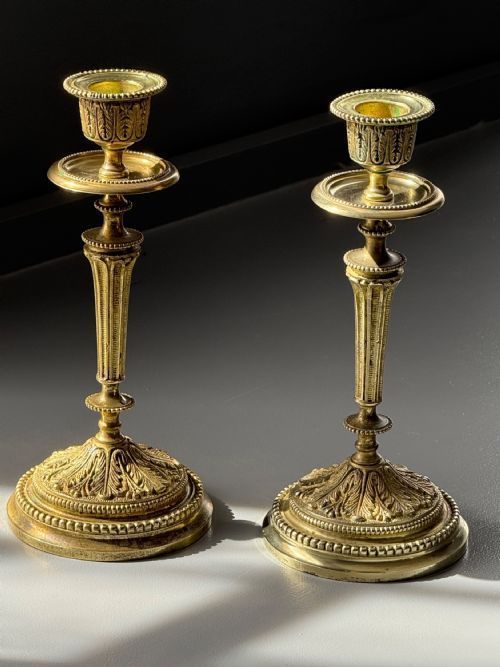
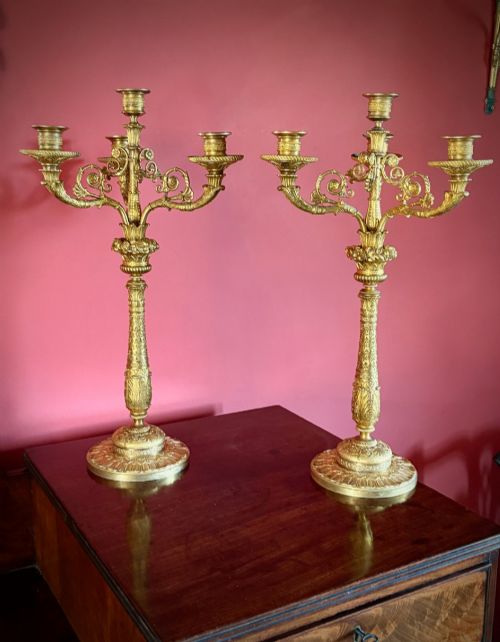
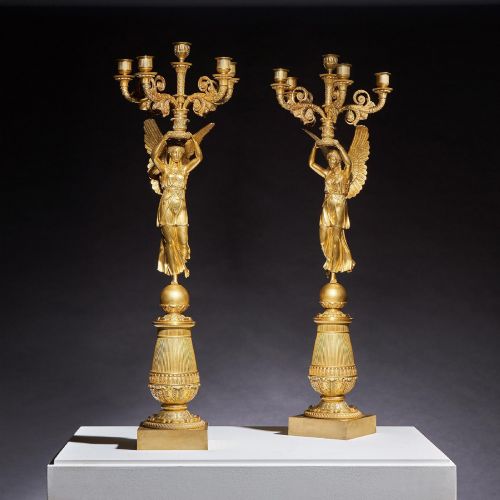
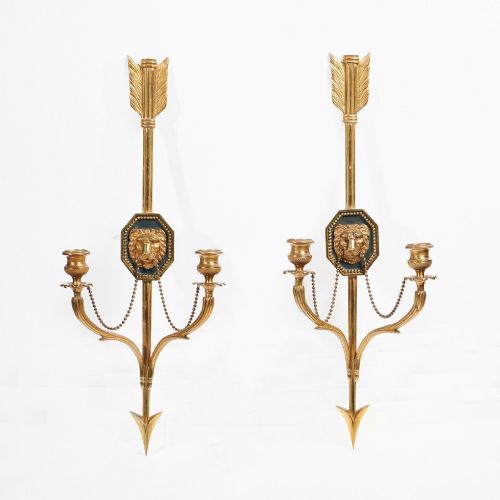
When searching for pair french candle holders, collectors encounter items spanning the eighteenth, nineteenth, and early twentieth centuries, with nineteenth-century examples dominating the selection. These pieces primarily take the form of candlesticks, multi-arm candelabra, wall sconces, and girandoles designed to bring symmetry to mantelpieces and sideboards. The designs draw heavily upon historical motifs from French Empire, Louis XVI, Rococo, and Regency styles, incorporating figural elements like putti, cherubs, and caryatids. Most examples originate from French workshops, though related styles appear across the broader European decorative arts tradition.
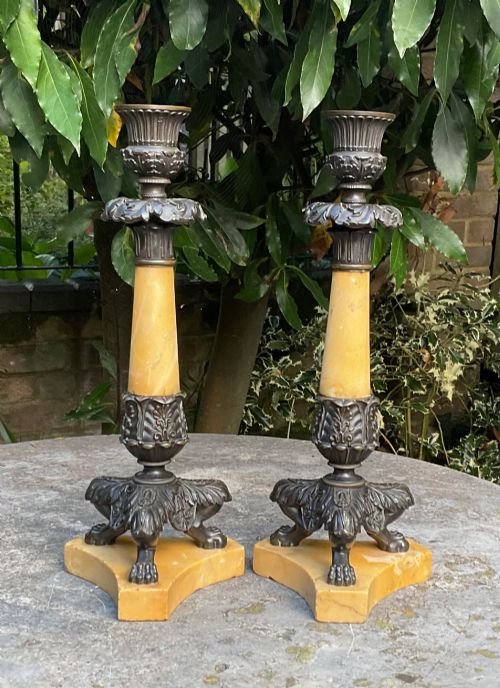
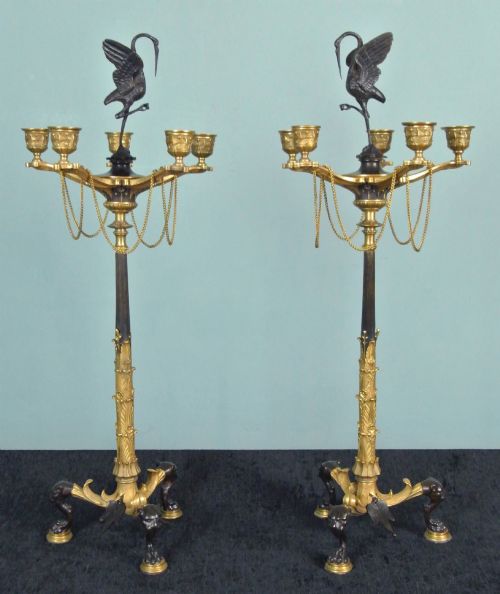
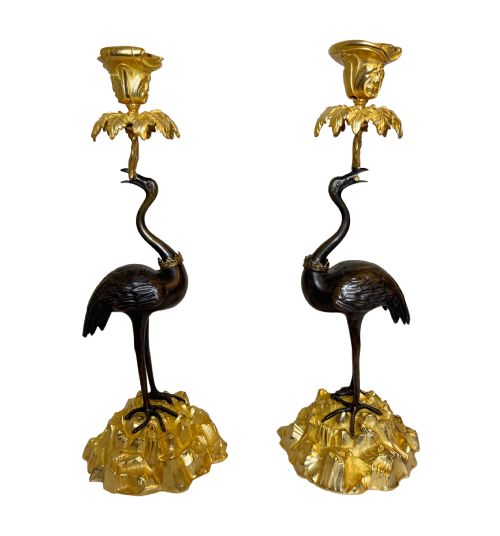
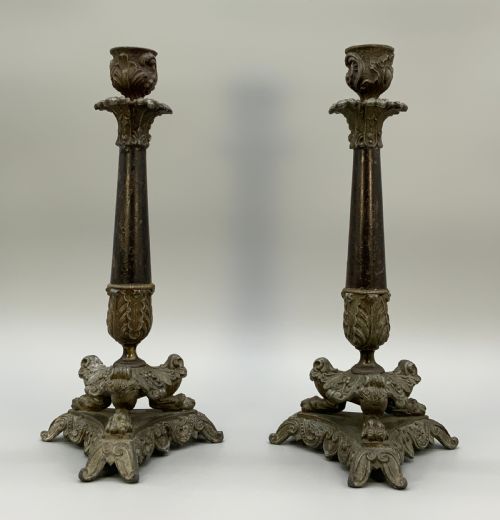
The physical forms range from simple columnar candlesticks in brass and bronze to elaborate candelabra with four or five arms, often paired with contrasting bases of white marble or onyx. Figural subjects frequently reflect mythological themes, animal motifs such as stags or flamingos, and classical architectural details. Wall lights and appliques extend this decorative vocabulary to vertical surfaces, using mirrored backs or ornate brackets to project candlelight into a room.
Materials and construction
The construction relies heavily on cast metals such as bronze, brass, and gilt bronze, frequently enhanced through mercury gilding known as ormolu to achieve a bright golden finish. Artisans combined patinated dark bronze with polished gilt components to create striking textural and chromatic contrasts within a single object. Heavier architectural pieces integrated natural stone elements, turning bases and columns from solid white marble, onyx, or fluorspar.
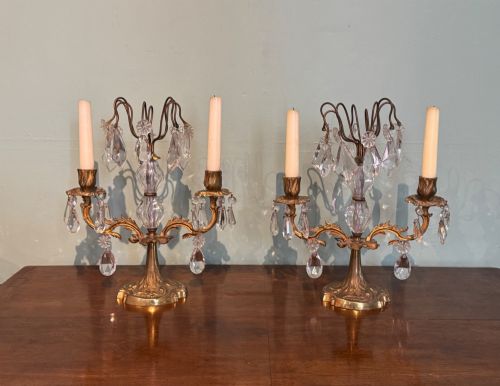
Advanced casting and chasing techniques allowed makers to produce intricate figural sculptures, floral garlands, and geometric champleve enamel panels that were fitted tightly together. Detachable nozzles and multi-arm branches required precise metalworking to ensure stability and alignment when assembled. Cut glass drops and pendants were occasionally added to reflect the flickering flame, suspended from brass or bronze armatures.
Look closely to find mischievous putti playing violins, theatrical hunchbacks, and exotic flamingos sharing the mantelpiece with classical heroes.
What separates the best from the rest
Attribution to documented bronze-makers or adherence to specific classical models elevates certain items above standard decorative production. The structural integration of multi-arm branches reveals workshop competence, ensuring that arms align symmetrically and support weight without leaning. Original patination untouched by aggressive chemical cleaning preserves the subtle tonal shifts that distinguish seventeenth- and eighteenth-century aesthetics from later revival output.
Barbedienne·Francois Redmond·Pierre Philippe Thomire·Dugourc·Rabiat·Sylvain Kinsburger
The Pair French Candle Holders Glossary
- Ormolu
- Gilt bronze produced by applying a mercury and gold amalgam to a bronze object and heating it to vaporise the mercury. This technique creates a durable, luminous golden surface characteristic of fine French decorative arts.
- Candelabra
- A branched candlestick designed to hold multiple candles simultaneously. These fixtures often feature removable central finials or matching candle arms arranged symmetrically around a central shaft.
- Patinated bronze
- Bronze treated with chemical solutions or heat to produce a specific surface coloration, usually dark brown, green, or black. It provides a deliberate contrast against polished or gilt metal elements.
- Girandole
- An ornamental branched candlestick or wall sconce equipped with a mirrored backplate. The reflective glass multiplies the flickering candlelight within dimly lit nineteenth-century interiors.
- Champleve
- An enamelling technique where troughs or cells are hollowed out of a metal surface and filled with vitreous paste before firing. The resulting coloured patterns add vibrant decoration to bronze candlesticks and bases.
Pair French Candle Holders: Frequently Asked Questions
Can these accept modern candles?
Most antique sockets and drip pans accommodate standard taper candles, though inner diameters can vary slightly due to historic hand-crafting methods.
Use beeswax tapers shaved down at the base if necessary to ensure a secure, upright fit inside the nozzle.
How do I distinguish Empire from Rococo?
Empire style relies on strict classical symmetry, military trophies, sphinxes, and dark patinated bronze balanced against bright ormolu mounts.
Rococo favour asymmetric C-scrolls, naturalistic floral arrangements, flowing organic curves, and playful figural subjects like putti or mythological figures.
Were wall sconces wired for electricity?
Surviving wall lights and appliques were built exclusively for wax candles before the widespread adoption of domestic electric lighting.
Professional conversion for modern wiring is possible, but collectors often prefer to leave the internal channels unaltered to preserve integrity.