




Pair Floral Porcelain Urns
Pair floral porcelain urns bring together botanical hand painting and symmetrical ceramic forms from the nineteenth and early twentieth centuries.
Pair Floral Porcelain Urns
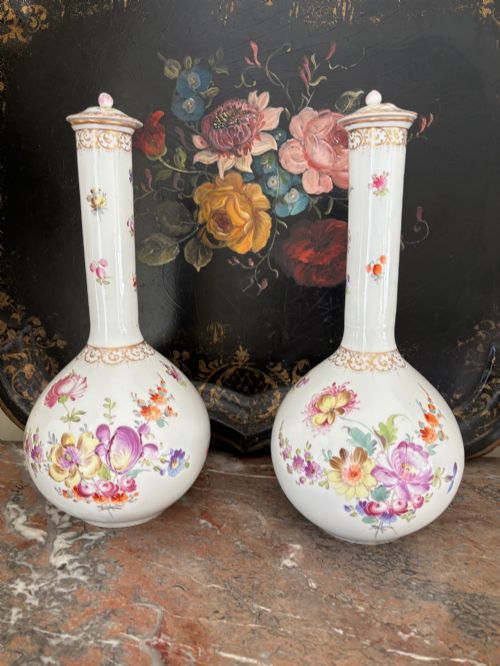
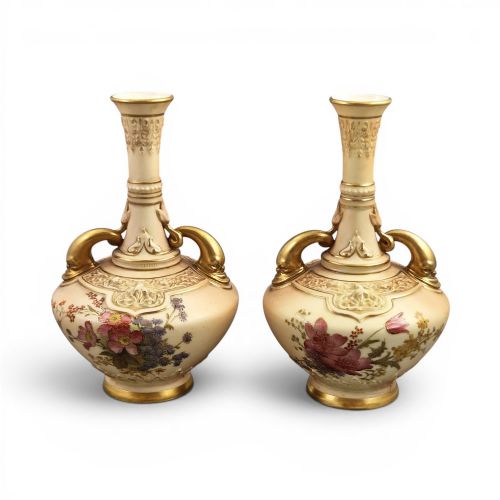
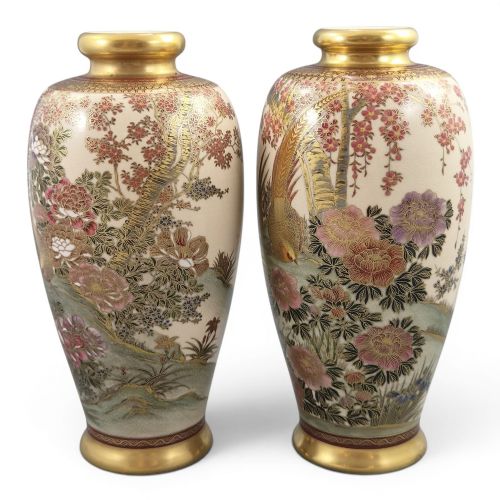
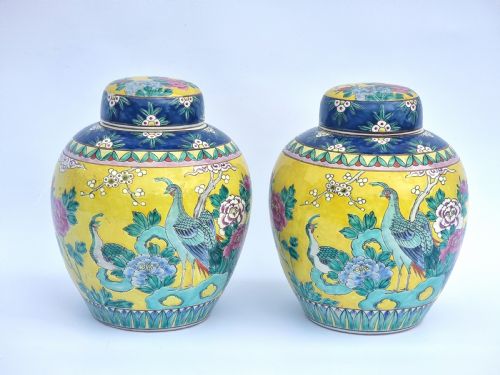
When you search for pair floral porcelain urns, you encounter matching vessels intended for domestic display across the nineteenth and early twentieth centuries. These objects take the form of lidded urns, ginger jars, bulbous vases, and posy holders originating from English, continental European, and Japanese makers.
The versions most common on this page span the Victorian, Edwardian, and Meiji periods. They combine ceramic bodies with painted botanical motifs, often incorporating handles, covers, or distinct pedestal bases.
Makers applied these floral designs to utilitarian shapes that functioned primarily as decorative garnitures for mantelpieces and console tables.
How they were made
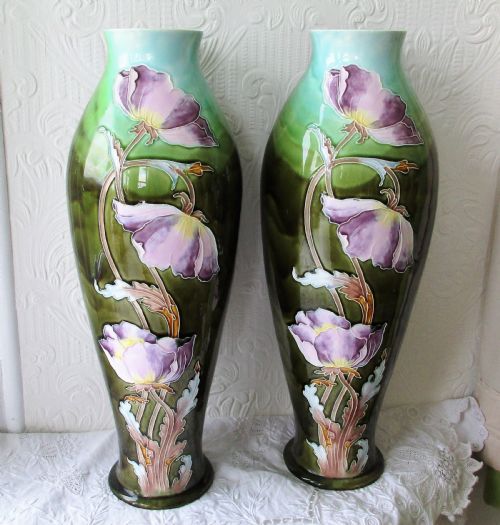
Potters shaped these vessels from porcelain, earthenware, and stoneware, frequently finishing surfaces with a smooth glaze. Artisans applied hand-painted enamel and underglaze colours to depict floral subjects across the ceramic body.
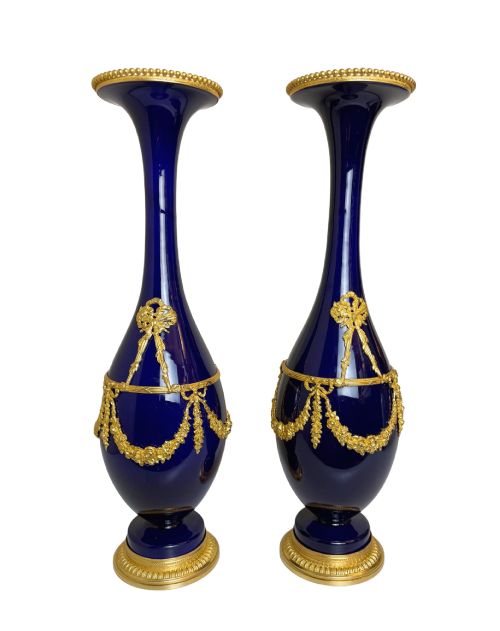
Many examples incorporate gold leaf, gilding, and ormolu or gilt bronze trim to accentuate rims, handles, and covers. Potters utilised specialised kilns to fire these complex layers of glaze and metallic decoration onto the ceramic substrate.
Listings feature porcelain, earthenware, and stoneware from the 19th Century, Edwardian, and Meiji Period.
What varies in quality
The standard of a pair floral porcelain urn depends upon the precision of the hand-painted botanical detail and the crispness of the underlying ceramic form. Pieces produced by established factories exhibit finer brushwork and more controlled application of raised white enamel and gilding.
Heavier casting in auxiliary metal mounts such as ormolu or gilt bronze and the inclusion of original matching covers elevate the refinement of the finished pair.
Sitzendorf·Royal Worcester·Manpei·Tagawa·Hododa·Samson·Doulton Burslem·Ernst Wahliss·Royal Dux Bohemia·Royal Crown Derby
The Pair Floral Porcelain Urns Glossary
- Blush ivory
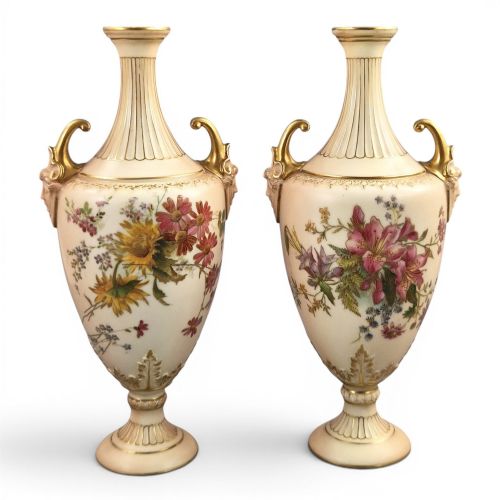
- A soft cream-coloured ceramic ground used by potteries like Royal Worcester to simulate the tone of ivory. This surface provided a subtle background for hand-painted floral decorations.
- Imari
- A style of Japanese export ceramics characterised by a palette of underglaze blue, iron red, and added gold. These pieces often feature dense geometric and floral panels.
- Ormolu
- Gilded bronze mounts applied to the bases, rims, or handles of ceramic vessels. This French technique added architectural structure and decorative metallic contrast to porcelain bodies.
- Satsuma
- Earthenware originating from Japan featuring a crackled creamy glaze decorated with polychrome enamels and gold. These wares frequently depict floral subjects and figures.
- Potpourri
- A lidded vessel designed with pierced openings in the cover to release the scent of dried flower petals held within. Such urns combined decorative ceramic forms with functional room fragrance.
Pair Floral Porcelain Urns: Frequently Asked Questions
What were these urns used for?
These vessels served primarily as decorative garnitures placed on mantelpieces, sideboards, or console tables within nineteenth and early twentieth century interiors.
Some lidded forms functioned specifically as potpourri containers, releasing fragrance through pierced covers while others remained purely ornamental.
How do I care for antique porcelain?
Maintain these ceramic pieces by dusting them gently with a soft, dry brush to prevent the accumulation of particles on delicate enamel or gilded surfaces.
Avoid using water or chemical cleaners on items with exposed gold leaf or hand-painted enamel to preserve the original decoration.
How do I distinguish Victorian from Edwardian pieces?
Victorian examples often display heavier ornamentation, rich gilding, and formal symmetrical layouts influenced by revivalist styles.
Edwardian pieces tend to favour lighter colour palettes, such as blush ivory grounds, alongside more fluid Art Nouveau floral motifs.
Are these pieces always marked?
Many factory-produced urns carry printed or impressed factory culls, pattern numbers, or artist signatures on the underside of the base.
Undeorated or older continental and export pieces frequently lack maker marks, requiring attribution based purely on technique and material.