



Pair Classical Statuettes
Pair classical statuettes bring mythological figures and allegorical subjects into domestic rooms in balanced symmetrical pairs.
Pair Classical Statuettes
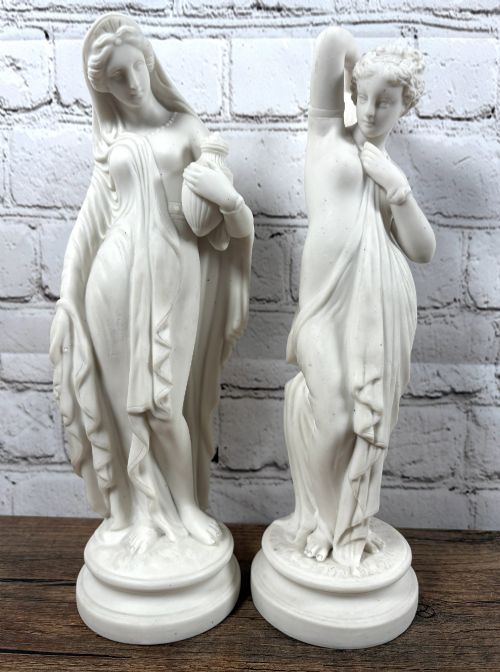
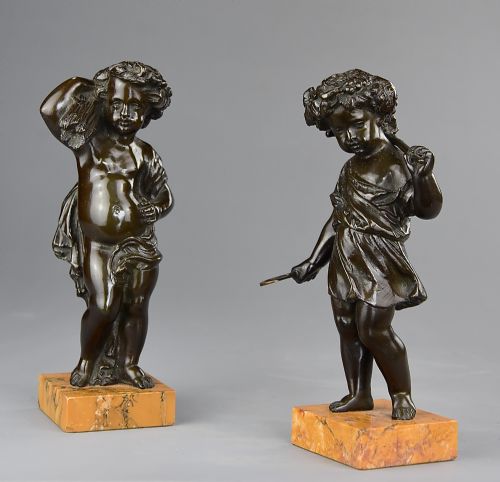
When you search for pair classical statuettes, you encounter sculptural works produced mainly in the nineteenth century, drawing heavily on ancient mythology and Renaissance models. These decorative objects frequently depict allegorical figures, classical deities, and putti designed for display on mantelpieces, desks, or console tables.
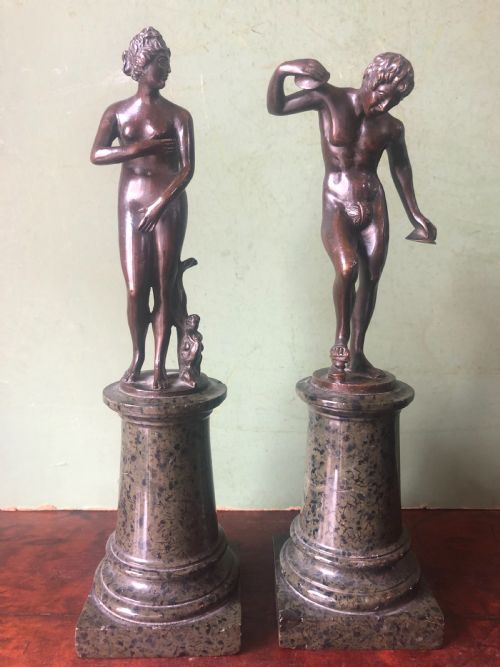
The pieces appearing on this page span several decades from the eighteenth century to the early twentieth century, with nineteenth-century French and Italian examples predominating. Materials range from cast bronze and spelter to porcelain and marble bases, reflecting both grand tour souvenirs and domestic ornaments.
How they were made
Many metal sculptures are mounted onto integral or separate bases of black slate, white marble, or wood to provide stability and visual contrast. Porcelains from factories such as Bow, Chelsea styles by Samson, and Royal Worcester employ slip casting and hand-modelling before glazing and firing.
Pair Classical Statuettes Retail Price Guide 2026
Typical asking prices for pair classical statuettes among the pieces listed under this phrase on Sellingantiques today, from the lower quarter to the upper quarter. They describe what is for sale here now, not the wider market.
Several pairs depict busy children engaged in harvest dances or keeping company with cats and dogs.
What varies in quality
The crispness of the chase work after casting distinguishes finer metal sculptures from softer, more generalised production. Superior examples retain sharp facial expressions and distinct fingers, whereas lower-quality casts lose definition in repetitive finishing.
The quality of the material substrate and the stability of the mounting matter greatly. Heavy marble bases and deeply patinated bronze carry more visual and physical weight than lighter spelter alternatives finished with surface paint.
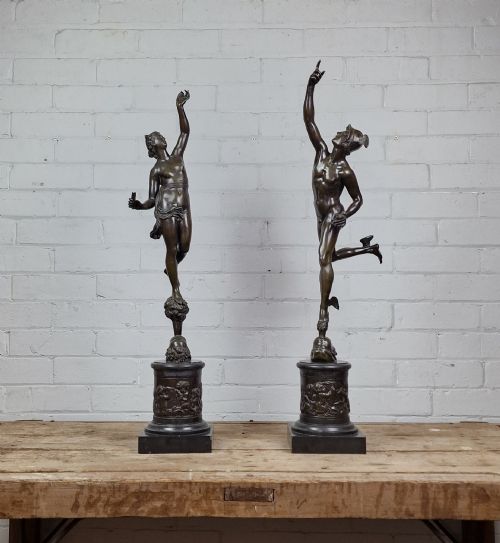
Claude Michael Clodion·Giambologna·Francisque Joseph Duret·Samson of Paris·Royal Worcester
The Pair Classical Statuettes Glossary
- Grand Tour
- A traditional trip through Europe undertaken by upper-class young men in the eighteenth and nineteenth centuries. Souvenirs purchased on these journeys often included small bronze copies of classical antiquities.
- Spelter
- An alloy of zinc and copper used as a cheaper alternative to bronze in nineteenth-century figure casting. It is softer than bronze and generally coated with a metallic bronze-coloured paint.
- Putto
- A representation of a plump, naked child, often winged, derived from classical art and widely used in Renaissance and later European sculpture. Pairs of putti frequently depict allegories of seasons or arts.
- Patina
- The surface coloration and sheen that develops on metal through age or chemical treatment. Artists and founders applied deliberate patination to accentuate the contours of sculptural figures.
- Neoclassical
- A style originating in the mid-eighteenth century inspired by the art and culture of classical antiquity. It emphasises symmetry, restraint, and direct references to Greek and Roman forms.
Pair Classical Statuettes: Frequently Asked Questions
What subjects do these figures typically depict?
These decorative sculptures commonly portray figures from classical mythology, such as Mercury, Fortuna, Athena, and Zeus. Other popular subjects include allegorical representations of seasons, elements, harvest dancers, and putti.
Maker interpretations frequently reference renowned Renaissance sculptors and antique models acquired during European travels. The resulting pairs offer balanced decorative symmetry for domestic interiors.
How do I distinguish bronze from spelter?
Bronze is heavier, harder, and cooler to the touch than spelter, displaying a durable metallic grain underneath its patination. Spelter is softer, more prone to surface scratching, and often reveals a greyish metal beneath worn paint.
Lighter figures with visible casting seams or flaking metallic finishes usually indicate spelter construction rather than solid bronze. Careful examination of the underside or base edges often clarifies the material composition.
Where were these statuettes displayed originally?
In nineteenth-century homes, such figures occupied prominent positions on mantelpieces, pier tables, and library bookshelves. They served as conversation pieces reflecting the owner's classical education and refined taste.
Grand tour souvenirs specifically commemorated travels through Italy and France, bringing classical antiquity into Victorian drawing rooms. Today they function similarly as focal points on sideboards and desks.
How should I care for antique bronze and porcelain figures?
Dust bronze sculptures gently with a soft, dry brush to prevent accumulation in recessed details. Avoid using commercial metal polishes, which can strip away the historic patination.
Porcelain figures require careful cleaning with a damp cloth if glazed, avoiding unglazed biscuit areas where moisture might cause staining. Keeping them away from direct sunlight preserves hand-painted enamel colours.
What is a grand tour souvenir sculpture?
Grand tour sculptures are reduced-scale copies of famous classical statues produced in bronze, marble, or terracotta during the eighteenth and nineteenth centuries. Travellers bought them in Rome, Florence, and Paris to remember their educational journeys.
These souvenir pieces often feature inscribed titles on the base and demonstrate high standards of metal casting. They capture the enduring fascination with classical antiquity among collectors of the period.