



Pair Chippendale Side Tables
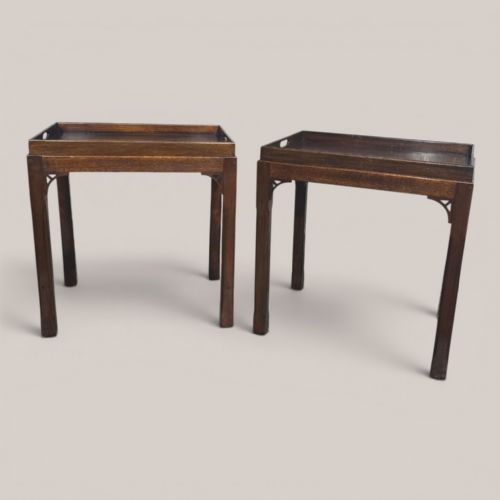
Pair Chippendale side tables bring solid timber and carved proportion to a room, dominated here by Edwardian and revival mahogany examples.
Pair Chippendale Side Tables
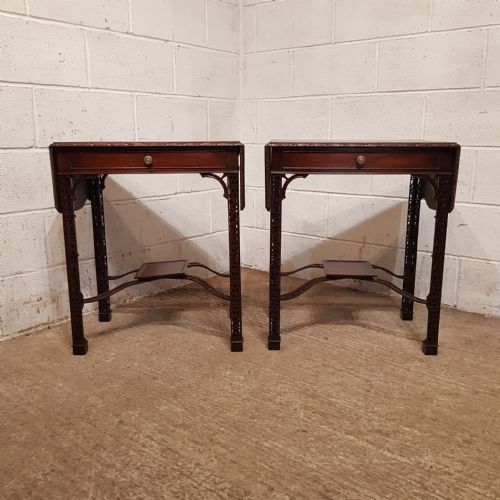
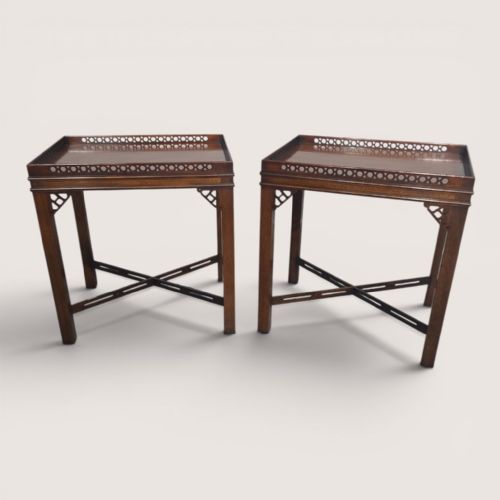
When you search for pair chippendale side tables, you are looking at matching dual pieces built in the manner of eighteenth-century London workshops. The versions most commonly met on this page belong to the revival periods spanning from the late nineteenth century through the 1930s, including Edwardian interpretations.
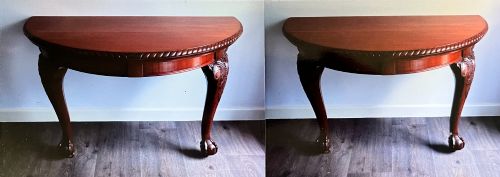
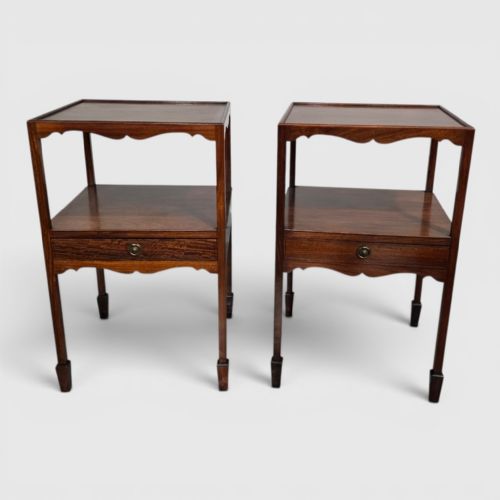
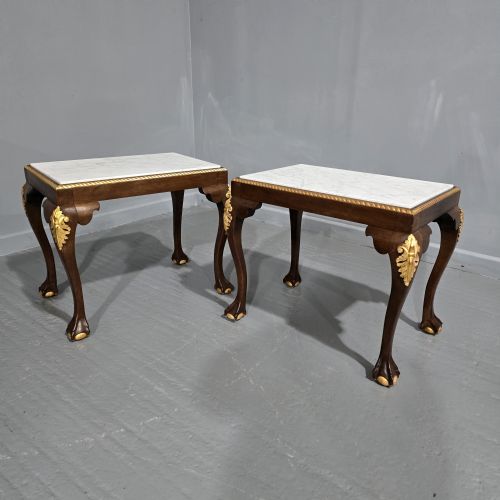
The assortment extends across console tables, lamp tables, wine tables, bedside tables, and coffee tables rather than a single fixed form. Mahogany serves as the primary timber, complemented by painted timber, scarlet finishes, and occasional marble or gold leaf details.
Stylistic influences range from direct Chippendale revival to Georgian style and George II Irish Chippendale, alongside Chinoiserie decoration in the archive. These pieces offer symmetrical balance for flanking a fireplace, sofa, or hallway entrance.
How they were made
Makers of these revival tables relied primarily on mahogany, selected for its grain and structural stability. Workshops shaped the timber into drop-leaf mechanisms, round coffee formats, and console bases.
Surface treatment involved polishing the natural wood to a warm sheen, alongside painted timber and scarlet finishes found on specific decorative examples. Gold leaf and marble inserts were applied to elevate select tables.
Joinery techniques matched the period of production, ensuring stability across dual items designed to match precisely.
Object types span side tables, console tables, wine tables, bedside tables, and coffee tables.
What varies in quality
Quality in these tables rests upon the crispness of the timber carving and the fidelity of the proportions to eighteenth-century originals. Finer examples display deeper hand-carved detailing along the edges and legs, whereas simpler pieces rely on plain turned or tapered supports.
The choice and preparation of the mahogany also set pieces apart, with superior items showing rich figuring in the wood grain. Surface finishes range from carefully maintained traditional polish to simpler painted or gilded applications.
The Pair Chippendale Side Tables Glossary
- Chippendale Revival
- A late nineteenth and early twentieth-century movement recreating eighteenth-century designs. It draws directly on the pattern books associated with Thomas Chippendale.
- Console Table
- A table designed to stand against a wall, frequently secured with brackets. In pairs, they provide symmetrical surface space in living rooms or hallways.
- Drop Leaf
- A table top featuring hinged flaps that can be folded down to reduce the footprint. This mechanism allowed furniture to adapt to room layouts.
- Wine Table
- A small freestanding table traditionally used for holding glasses or bottles. These typically feature a central pillar resting on tripod legs.
- Chinoiserie
- European artistic style reflecting Chinese motifs and decorative techniques. It appears on painted furniture from the revival eras.
Pair Chippendale Side Tables: Frequently Asked Questions
Where do I place pair chippendale side tables?
These tables find a natural home flanking a fireplace, sofa, or grand doorway where symmetry matters. Their matching design anchors a room visually.
Smaller formats such as lamp or wine tables also serve beside armchairs or beds while maintaining a cohesive aesthetic.
How do I date revival furniture?
Dating relies on timber handling, secondary woods used in construction, and the style of the carving. Revival pieces from around nineteen hundred often show distinct machine assistance alongside hand finishing.
Comparing the turned elements and finish to documented pieces from the Edwardian era helps narrow the decade of manufacture.
Are painted finishes period correct?
Painted finishes and Chinoiserie decoration appear on specific revival examples from the early twentieth century. These variations reflect the decorative tastes of the Edwardian and interwar periods.
While mahogany remains the dominant material, painted timber offers an alternative aesthetic within the same stylistic tradition.
How do I care for mahogany tables?
Mahogany requires stable indoor humidity to prevent timber movement or splitting in the top panels. Regular dusting with a dry cloth protects the polish.
Avoiding direct sunlight preserves the rich colour of the wood grain over decades of daily use.