


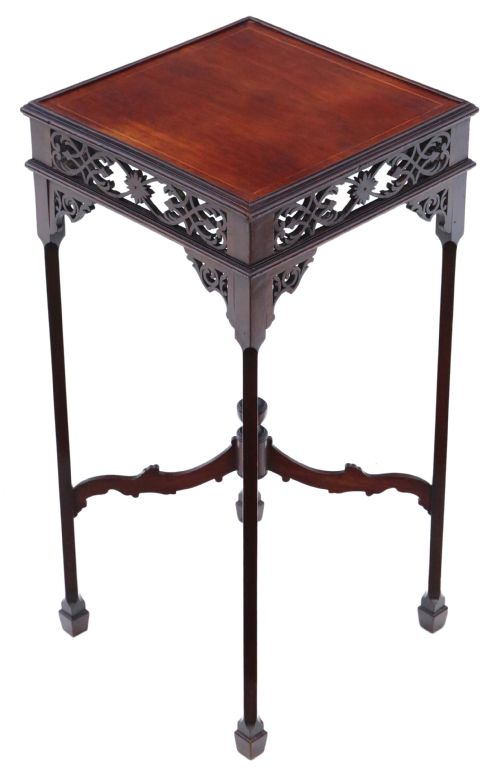


Chippendale Fretwork Lamp Tables
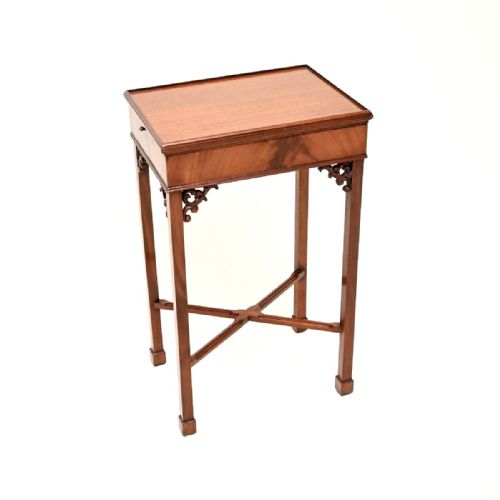
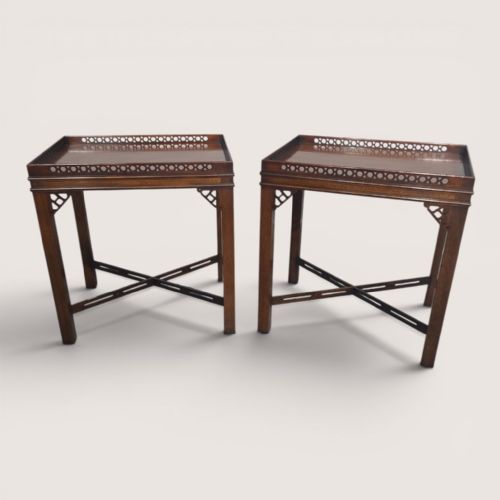
These chippendale fretwork lamp tables combine elegant surface space with intricate pierced woodwork, offering a classic silhouette that suits both period and traditional interiors.
Chippendale Fretwork Lamp Tables
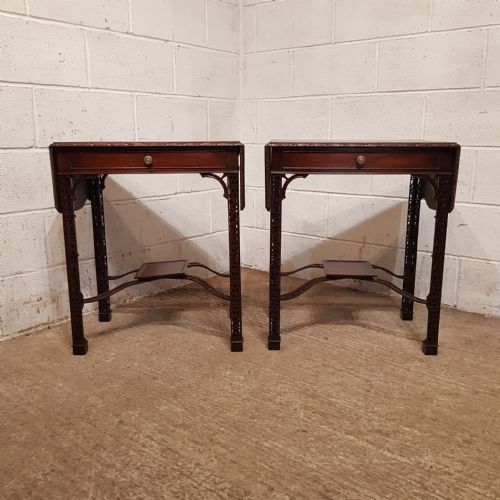
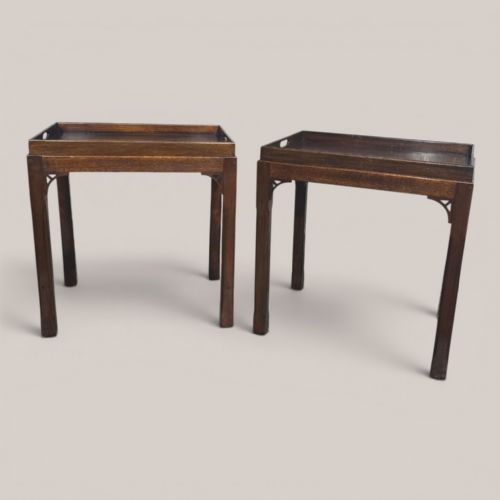
Chippendale fretwork lamp tables provide functional surface areas for illumination and display, rooted in eighteenth-century design principles. Buyers exploring this category encounter side tables, occasional pieces, and drop-leaf formats designed for versatile placement within a room.
The pieces listed on this page predominantly reflect the Chippendale Revival movement spanning the late nineteenth and early twentieth centuries. Alongside these revival works, specific examples incorporate Gothic Revival influences, broadening the decorative range within the category.
Materials and construction
Makers utilised solid mahogany to achieve the structural integrity and rich grain required for intricate pierced detailing. Brass hardware occasionally supplements the timber construction on specific formats like drop-leaf side tables.
Cabinetmakers executed open fretwork through precise hand-piercing techniques, creating complex geometric and interlaced patterns. These delicate wooden galleries and brackets demand careful joinery to support daily use while maintaining a light visual profile.
Listings feature items spanning several decades from the late nineteenth century through the 1930s, constructed primarily in mahogany with occasional brass elements.
Assessing craftsmanship and design
Superior examples demonstrate crisp execution in the pierced fretwork, where edges remain sharp and symmetrical without splintering or clumsy repairs. The depth of the mahogany grain and the balance of the proportions further distinguish finer pieces from simpler production.
The sophistication of the stylistic references dictates the upper tier of the range, particularly when cabinetmakers integrate complex Gothic Revival motifs or heart-shaped tops. Consistency in the timber selection across both the structural frame and the decorative elements separates standard tables from exceptional ones.
The Chippendale Fretwork Lamp Tables Glossary
- Chippendale revival
- A stylistic movement spanning the late nineteenth and early twentieth centuries that reinterpreted eighteenth-century Thomas Chippendale designs. Cabinetmakers produced these revival items using contemporary workshop standards while retaining historical ornamentation.
- Fretwork
- Ornamental perforated woodwork cut into flat panels or borders to create geometric patterns. This technique provides decorative lightness to otherwise solid timber furniture.
- Drop leaf
- A table top configuration featuring hinged flaps that fold down to reduce the overall surface area. This mechanism allows the table to fit into compact spaces when full extension is not required.
- Occasional table
- A small, movable table intended for specific, intermittent use rather than central daily dining. These pieces function easily as lamp stands or display surfaces around a room.
Chippendale Fretwork Lamp Tables: Frequently Asked Questions
What is a chippendale fretwork lamp table?
These pieces are small standalone tables featuring pierced wooden ornamentation inspired by eighteenth-century cabinetmaking designs. They provide convenient surface space for lighting while introducing decorative character to a room.
Most examples found in this category date from the revival periods of the late nineteenth and early twentieth centuries. They incorporate classic timber construction alongside intricate fretwork panels.
Where should I place these tables?
Their compact dimensions make them suitable for positioning beside sofas, armchairs, or in empty corners where surface space is useful. They function well as dedicated lamp stands or small display units for decorative objects.
Drop-leaf versions offer additional versatility because the folding flaps allow the footprint to adjust according to available space. This adaptability helps them integrate smoothly into various room layouts.
How do I date these tables?
Dating relies on examining the timber characteristics, construction methods, and stylistic cues present in the woodwork. Pieces originating from the revival eras display specific machine and hand tool marks typical of late nineteenth and early twentieth-century workshops.
Comparing the specific decorative motifs, such as Gothic Revival elements or standard Chippendale fret patterns, helps narrow down the period of manufacture. Hardware style and secondary timbers also provide reliable indicators of age.
Are these tables sturdy?
Solid mahogany construction provides durable structural support for everyday items like reading lamps and decorative accessories. The intricate fretwork requires gentle handling to prevent damage to the delicate pierced sections.
Regular placement on level flooring ensures the frame remains stable and balanced during use. Proper care preserves both the structural integrity and the decorative fretwork over time.