




Pair Cherub Sconces
Pair cherub sconces bring sculptural illumination to interiors, uniting winged figures with functional arms for candles or electricity across several revival styles.
Pair Cherub Sconces
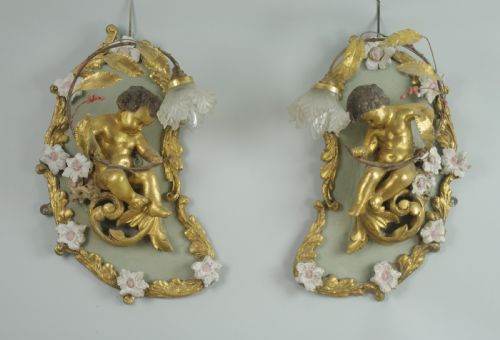
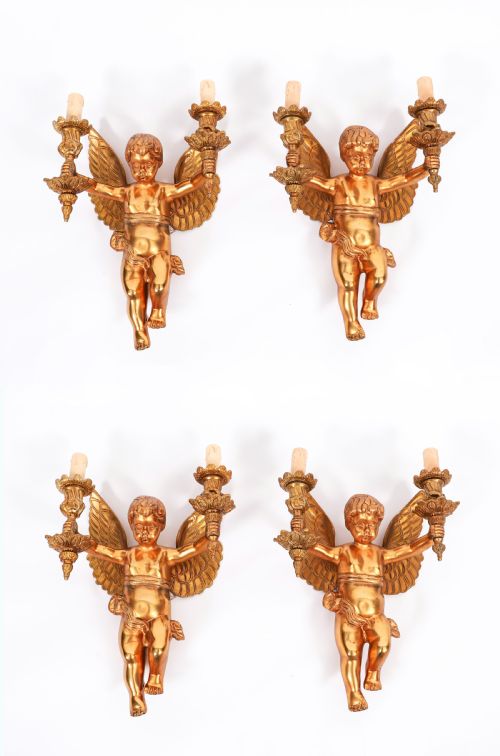
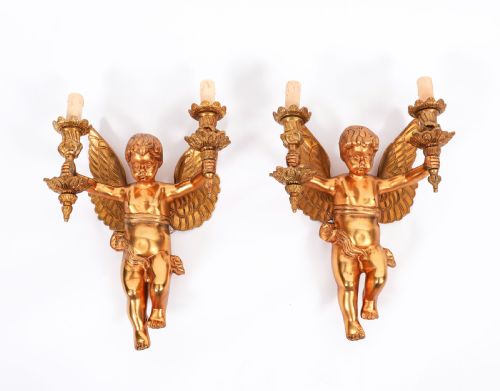
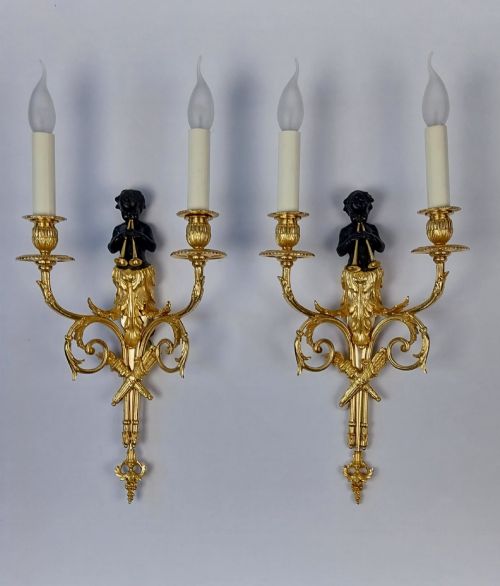
When you search for pair cherub sconces, you encounter matched sets of wall-mounted lighting and architectural supports featuring carved or cast figures of putti. The selections span the nineteenth century into the twentieth century, drawing heavily on French and Italian design vocabularies.
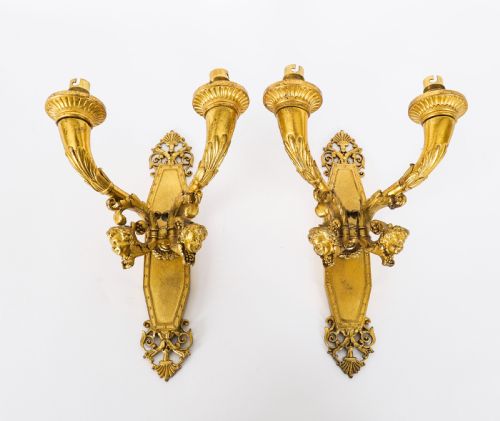
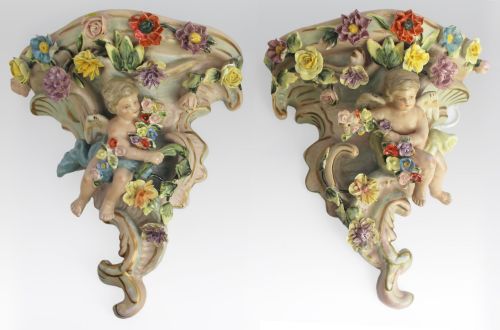
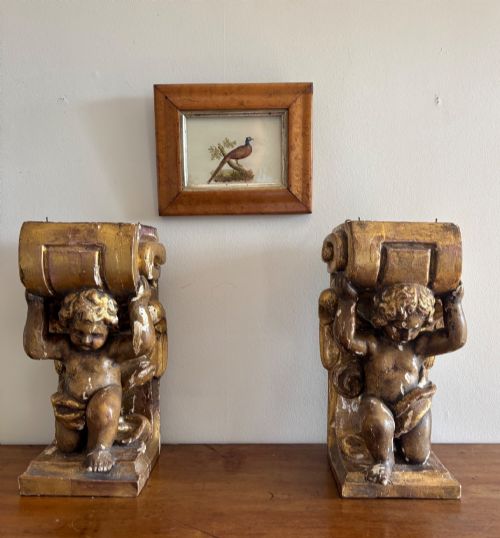
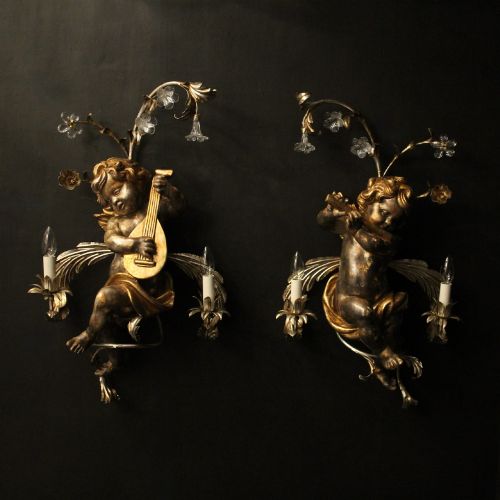
The pieces on this page take the form of wall lights, twin branch sconces, and carved wood brackets or corbels. Styles range from Rococo Revival and Baroque Revival to Louis XIV and French Empire.
Most examples originate from French and Italian workshops, utilising metals like ormolu and bronze alongside carved giltwood. You also find porcelain and brass variations produced during the Victorian era and the early twentieth century.
How they were made
Wooden alternatives employ carved wood, limewood, and giltwood, where craftsmen shape the timber before applying gold leaf over a prepared gesso ground. Porcelain examples involve moulded ceramic bodies, sometimes paired with glass elements such as lustres.
Assembly typically joins separate cast or carved elements, including backplates, candle arms, and the figures themselves, secured with threaded pins or screws.
Some winged cherubs stare outward with mildly startled expressions, as though interrupted mid-flight by the sudden lighting of a candle.
What varies in quality
The crispness of the chasing on bronze and ormolu surfaces dictates the definition visible in the hair, feathers, and drapery of the cherubs. Finer castings retain sharp contours and deep relief, whereas secondary productions appear softer and more generalised.
In carved wooden examples, the depth of the carving and the preservation of the original giltwood surface determine the visual impact. Hand-carved limewood or giltwood displays individual chisel work and subtle asymmetries absent in mass-produced or heavily restored pieces.
The integration of the lighting arms with the backplate and the weight of the metal components indicate the original grade of manufacture.
The Pair Cherub Sconces Glossary
- Ormolu
- Gilded bronze, where a layer of gold amalgam is applied to a bronze base through heat processing. This technique creates a durable, rich golden surface typical of French decorative arts.
- Putto
- A plump, often winged infant depicted in classical art and revival styles. They appear frequently on these wall lights and brackets.
- Sconce
- A wall-mounted lighting fixture designed to hold candles or electric lamps. Historical versions project forward from a backplate fixed directly to the wall.
- Giltwood
- Timber, such as carved wood or limewood, coated with thin sheets of gold leaf over a prepared base. It provides a bright decorative finish for wall brackets and appliqués.
- Rococo Revival
- A nineteenth-century design movement mimicking the asymmetrical scrolls, shell motifs, and naturalistic curves of the eighteenth-century French Rococo style.
Pair Cherub Sconces: Frequently Asked Questions
How were pair cherub sconces originally mounted?
These wall lights were secured to interior walls using mounting plates or screw holes integrated into the back of the brass, bronze, or wooden structure. They were positioned in pairs flanking mirrors, doorways, or fireplaces to distribute candlelight evenly across a room.
Today, many examples retain their original mounting points, though wiring requires adaptation if converting historical candle sconces for modern electrical use.
What is the difference between ormolu and gilt bronze?
Ormolu specifically denotes bronze objects gilded with a mercury-gilding process that bonded gold to the metal surface. Gilt bronze is a broader term that can encompass various methods of applying gold leaf or plating to a bronze base.
In historical listings, the terms often overlap, but ormolu typically indicates a higher standard of French or Italian metalworking from the eighteenth and nineteenth centuries.
Can these wall lights be wired for electricity?
Many historical wall sconces and lights have been adapted over time to house electrical fittings within the candle cups or drip pans. The conversion process generally involves running discreet wiring through the existing hollow arms or backplates.
Professional rewiring ensures the fixtures comply with modern safety standards while preserving the antique metal or wooden structure.
How do I identify a nineteenth-century piece?
Nineteenth-century examples frequently exhibit heavy cast bronze or ormolu construction, hand-chased surface details, and specific revival idioms such as Louis XIV, French Empire, or Rococo Revival. The patination of the metal and the construction of the backplates offer clues to the manufacturing period.
Comparing the weight, casting seams, and fastening methods helps distinguish nineteenth-century production from later twentieth-century interpretations.
Where should I hang cherub wall brackets?
Carved wood and giltwood wall brackets are suited for placement in principal reception rooms, hallways, or libraries, often designed to support small decorative objects or urns. Their projection from the wall creates architectural interest and shadow.
Placement depends on the scale of the pair, ensuring they harmonize with surrounding furniture and eye-level sightlines.