



Pair Ceramic Jardinieres
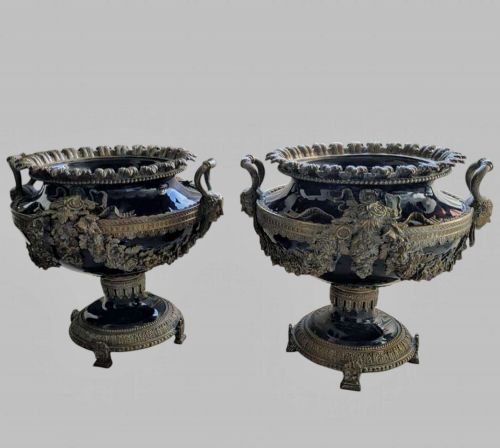
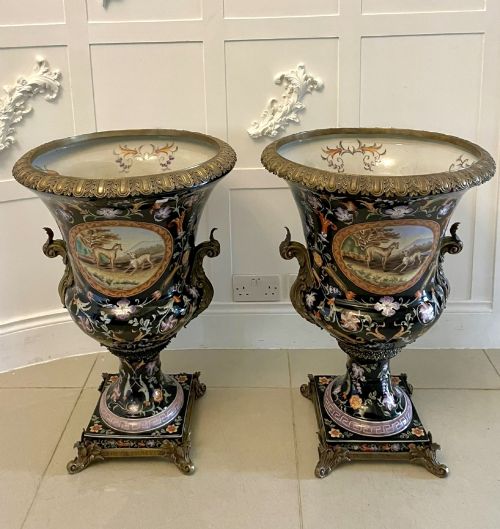
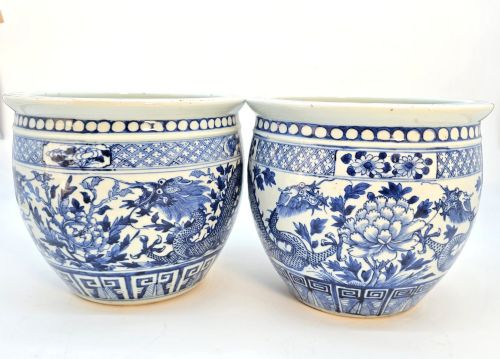
These pair ceramic jardinieres bring instant botanical presence to a room, offering matched vessels for dramatic indoor planting.
Pair Ceramic Jardinieres
A search for pair ceramic jardinieres reveals matched plant holders designed to display indoor foliage, herbs, or flowers in domestic spaces. These decorative vessels appear across several periods including the nineteenth century, with Victorian and Edwardian examples sitting alongside Japanese Meiji and Chinese Qing pieces.
The selections available here span diverse regional traditions, from French porcelain and brass mounts to English pottery and Japanese Imari wares. Buyers frequently encounter forms decorated in cobalt underglaze blue and white, alongside heavier earthenware and art pottery creations.
Many examples arrive with accompanying stands, such as associated hardwood supports or mounted brass bases that elevate the planters. The forms range from traditional circular bowls to oval vessels and square planters with specific ceramic panels.
How they were made
Many European and Asian examples incorporate metal mounts, uniting glazed ceramic bodies with brass or gilt bronze collars and handles. Certain nineteenth century and art pottery pieces utilise faience techniques or specialised gres pottery bodies.
Pair Ceramic Jardinieres Retail Price Guide 2026
Typical asking prices for pair ceramic jardinieres among the pieces listed under this phrase on Sellingantiques today, from the lower quarter to the upper quarter. They describe what is for sale here now, not the wider market.
Listings feature periods spanning from the nineteenth century through the Art Deco era, encompassing Japanese Meiji, French Rococo revival, and Arts and Crafts styles.
What varies in quality
Quality rests on the crispness of the glaze application and the precision of hand-painted or transferred decoration. Pieces featuring integrated metal mounts or original panels demonstrate higher levels of decorative ambition.
The integrity of the ceramic body and the precision of the matched pair separation determine desirability. Workshop execution in the painting and the stability of the glaze define the upper tier.
Minton·Woodlesford Art Pottery·Samson
The Pair Ceramic Jardinieres Glossary
- Jandiniere
- A large ornamental pot or receptacle used for holding flowers or decorative plants indoors. They often stand on tables or directly on the floor.
- Imari
- A style of Japanese export porcelain characterised by a palette of underglaze blue, iron red, and gilt. It originated in the Edo period and inspired European imitations.
- Faience
- Tin-glazed earthenware produced in Europe, known for its smooth opaque surface. It allows for detailed painted decoration applied directly to the unfired glaze.
- Cobalt Underglaze
- A blue pigment applied to ceramic pieces before the glaze is added and fired at high temperatures. This technique ensures the colour remains permanent and protected beneath the glassy surface.
- Gres
- A French term for stoneware, denoting a dense and impermeable ceramic body fired at high temperatures. It resists moisture and provides a sturdy foundation for architectural or decorative vessels.
Pair Ceramic Jardinieres: Frequently Asked Questions
What are pair ceramic jardinieres used for?
These matched vessels hold large indoor plants, ferns, or floral arrangements to decorate drawing rooms, hallways, and orangeries. They function as symmetrical focal points when placed on tables, pedestals, or directly on the floor.
Historically, they protected fine interior surfaces from water damage while displaying prized botanical specimens. Today, collectors utilise them both for planting and as decorative objects in their own right.
How do I care for my jardinieres?
Protect the interior ceramic glaze by placing potted plants inside a separate plastic nursery pot with a saucers rather than planting directly into the vessel. This prevents standing water from exerting pressure on antique ceramic walls.
Dust the exterior surfaces gently with a dry cloth and avoid harsh chemical cleaners that might damage aged glazes or metal mounts. Handle any associated metal fittings or brass mounts with care to preserve their finish.
How do I distinguish nineteenth century pieces?
Nineteenth century examples often display characteristic glaze pooling, hand-painted brushwork inconsistencies, and traditional potting marks on the unglazed bases. Examining the weight of the ceramic body and the style of decoration helps align a piece with Victorian, Meiji, or French Rococo revival periods.
Metal mounts on nineteenth century French pieces typically show period-appropriate patination and construction methods. Comparing the decorative motifs to documented wares from the same era confirms attribution.
Can I place these pieces outdoors?
Most antique ceramic and porcelain jardinieres are designed strictly for indoor domestic environments. Frost and extreme weather fluctuations can easily crack historical earthenware, faience, and delicate porcelain bodies.
Keep them inside protected rooms where temperature and humidity remain stable to preserve the glaze and ceramic structure. Using them outdoors risks irreversible damage to the antique material.