





Pair Art Deco Light Tables
These pair art deco light tables bring the geometric symmetry and striking materials of the interwar years straight into your home.
Pair Art Deco Light Tables
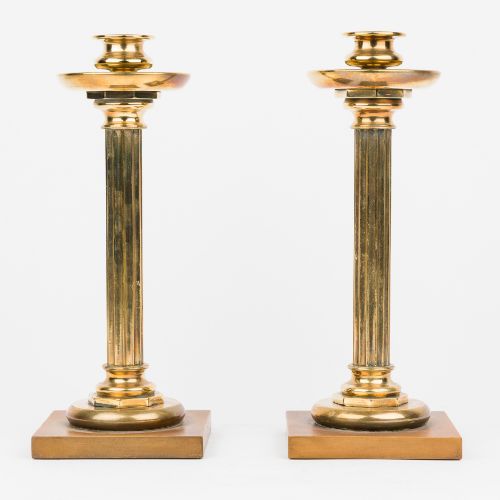
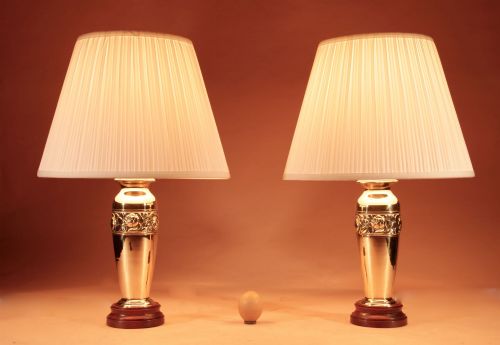
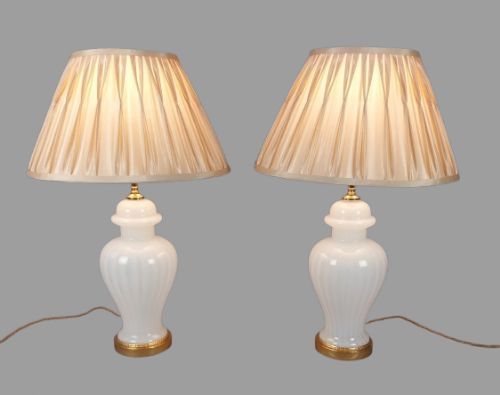
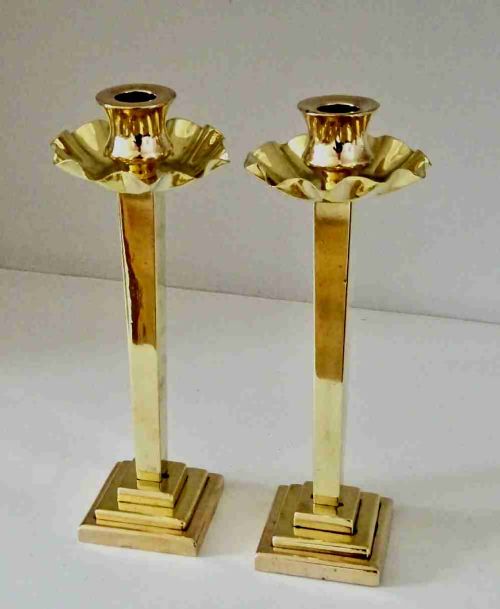
When you search for pair art deco light tables, you encounter a distinct mix of lighting and low furniture designed in symmetrical sets. The pieces you are most likely to meet on this page span table lamps, desk lamps, candlesticks, and tiered modern tables from the early decades of the twentieth century.
These items originate predominantly from the 1920s and 1930s, capturing the transition from ornate revivals towards sleek industrial and modernist forms. Alongside conventional lighting, the selection includes bedside cabinets and low occasional tables that anchor a room with matching dual elements.
Materials and construction
Makers utilised a deliberate combination of metals and glass, casting brass, bronze, and chrome to form the rigid structures of the lighting and furniture. Frosted and opaline white glass components provide the characteristic soft diffusion associated with the period.
Woodwork relies on blonde maple and tiered modern construction, whilst specific pieces incorporate hand wrought silver and glazed gres pottery. Fabric shades and bakelite detailing complete the primary construction methods recorded in the evidence.
Pair Art Deco Light Tables Retail Price Guide 2026
Typical asking prices for pair art deco light tables among the pieces listed under this phrase on Sellingantiques today, from the lower quarter to the upper quarter. They describe what is for sale here now, not the wider market.
Listings span the decades from 1910 to 1950, with the 1930s representing the most frequent production period for these matching forms.
Factors of quality
The distinction between standard production and top tier pieces rests on the ambition of the design and the weight of the materials. Monumental proportions, intricate cast metalwork, and substantial cut glass separate exceptional items from simpler utilitarian objects.
Integrity of the matching pair remains paramount, where uniformity in finish and proportion dictates the standing of the pieces within the decorative range.
Hille·Robert Edgar Stone·Jumo
The Pair Art Deco Light Tables Glossary
- Art Deco
- A design style emerging in the early twentieth century characterised by streamlined geometric forms, stylised motifs, and modern industrial materials. It dominated decorative arts between the First and Second World Wars.
- Opaline Glass
- A milky, semi-translucent glass popular for diffusing light evenly without harsh glare. It was frequently moulded into shades and lamp bodies during the period.
- Ormolu
- A metallic alloy used as a gold-coloured surface finish on bronze or other base metals. It provides a decorative metallic sheen to period mounts and bases.
- Gres
- A type of dense, high-fired ceramic pottery with a vitreous body. It offers robust durability and a distinctive tactile surface finish.
- Bakelite
- An early synthetic plastic renowned for its dark lustre and electrical non-conductivity. It appears frequently on switches, bases, and desk lamp fittings from the interwar era.
Pair Art Deco Light Tables: Frequently Asked Questions
How do I style pair art deco light tables?
Place matching lamps or small tiered tables symmetrically on either side of a bed or sideboard to establish visual balance. Their strong geometric lines work best against neutral walls that allow the metallic and glass finishes to catch the light.
Keep surrounding accessories minimal so the dual forms retain their architectural impact without visual clutter.
What materials define these pieces?
Brass, chrome, bronze, and cast metal form the primary structural elements, often paired with opaline or frosted glass shades. Blonde maple wood and glazed gres pottery also appear among the furniture and larger decorative objects.
These materials were chosen for their modern industrial sheen and ability to reflect artificial light cleanly.
How do I date these items?
Dating relies on the presence of typical interwar design markers, such as stepped profiles, chrome plating, and bakelite fittings. Most pieces date from the 1920s and 1930s, though occasional items bridge into adjacent decades.
Examining the construction methods, such as hand wrought silver versus industrial casting, helps narrow the production era.
Were these items meant to match originally?
The majority of pieces listed are offered as intentional pairs, sharing identical materials, heights, and decorative motifs. Matching sets were produced for balanced interior schemes, particularly for bedside and desk placement.
Even near-pairs share close design lineage, though slight variations in manufacture can occur in hand-finished pieces.