





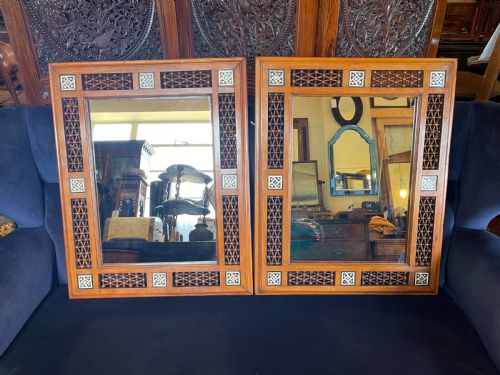

Pair Carved Wooden Mirrors
Pair carved wooden mirrors bring depth and historic character to a room, offering matched reflections framed in traditional craftsmanship.
Pair Carved Wooden Mirrors
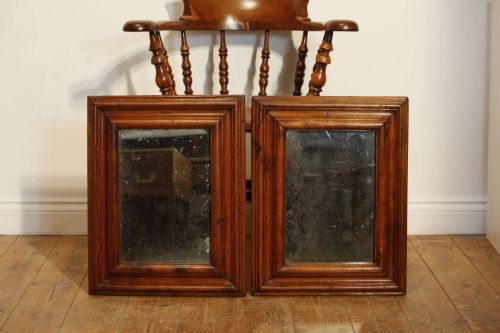
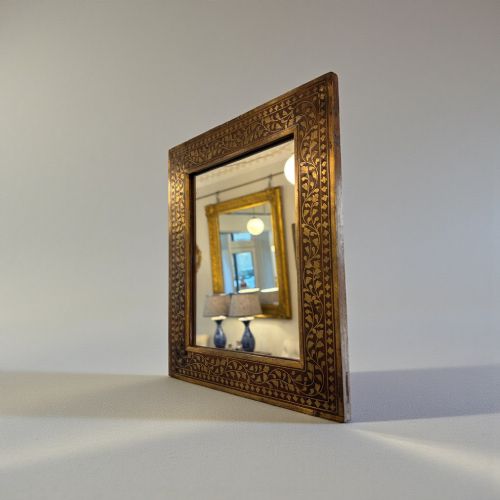
When searching for pair carved wooden mirrors, you are looking at dual mirrored panels housed in intricately worked wooden frames. These items range from wall mirrors and sconces to frames and decorative boards, originating across various historic periods.
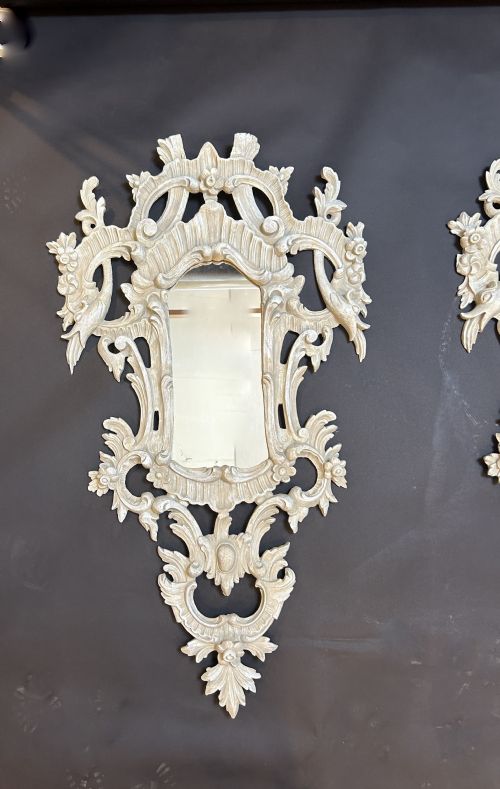
You are most likely to meet nineteenth-century examples and twentieth-century revivals on this page, often finished in giltwood, gesso, or paint. The forms span French Rococo, Italian Baroque, and Anglo-Indian styles, reflecting a wide geographical spread of woodworking traditions.
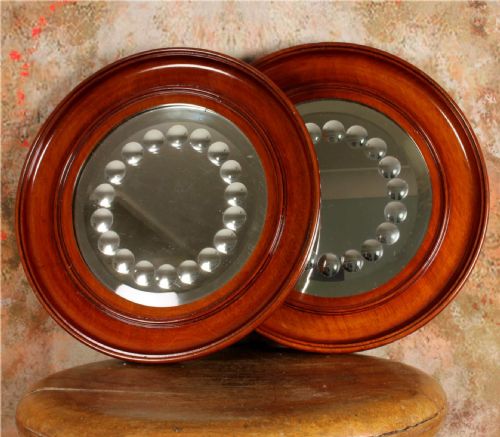
The selection includes circular convex shapes, oval frames, and rectangular wall hung formats. Each pair demonstrates the symmetry and decorative ambition characteristic of matched interior furnishings from past centuries.
How they were made
Frames rely on hardwoods and softer timbers like pine or oak, carved by hand before receiving decorative surface treatments. Artisans applied layers of gesso to smooth the wood substrate prior to gilding with gold leaf or applying paint.
Reflective surfaces utilise traditional mirror glass, sometimes taking the form of convex plates that distort the room in the manner of historical witch mirrors. Brass elements occasionally appear as structural or decorative fixings within the assemblies.
Pair Carved Wooden Mirrors Retail Price Guide 2026
Typical asking prices for pair carved wooden mirrors among the pieces listed under this phrase on Sellingantiques today, from the lower quarter to the upper quarter. They describe what is for sale here now, not the wider market.
Some nineteenth-century convex mirrors were historically believed to protect households by keeping watch over the entire room.
What varies in quality
The depth and crispness of the hand carving distinguish finer examples from simpler production. Crisp undercut foliage and sharply defined scrollwork demonstrate superior workshop skill compared to softer, shallower moulding.
The integrity of the original surface finish defines the visual success of a pair. Intact layers of early gold leaf or period paint display an authentic patina that mechanical cleaning or modern repainting obscures.
The Pair Carved Wooden Mirrors Glossary
- Giltwood
- Wood that has been coated with thin sheets of gold leaf. This finish was favoured for formal reception rooms to maximise candlelight.
- Gesso
- A plaster-like mixture applied to wooden frames as a base for gilding or painting. It allowed craftsmen to achieve smooth contours before carving finer details.
- Convex mirror
- A curved glass plate that reflects a wide, fish-eye view of the interior. These are frequently associated with nineteenth-century sorcerer or witch mirror designs.
- Rococo Revival
- A nineteenth-century design style emulating the asymmetric scrolls, shell motifs, and natural curves of the eighteenth century. It appears frequently on Continental and French frames.
Pair Carved Wooden Mirrors: Frequently Asked Questions
Where should I hang them?
Matched frames work effectively when placed above sideboards, flanking a fireplace, or positioned to reflect natural light from a window. Their symmetry helps balance the proportions of a wall.
Ensure the fixings chosen are appropriate for the weight of the timber and glass combination. Wall sconces and heavier giltwood frames require secure support.
How do I clean the frames?
Dust the carved wooden surfaces gently using a soft, dry brush to prevent dirt accumulation in the recesses. Avoid using commercial polishes or water on gilt and painted finishes.
Glass panels can be cleaned with a minimal amount of glass cleaner applied to a cloth rather than sprayed directly. This prevents moisture from seeping behind the plate and damaging the backing.
Are convex mirrors period items?
Convex circular mirrors, often termed witch or sorcerer mirrors, appear in nineteenth-century interpretations of earlier forms. They were designed to offer a wide-angle view of the surrounding space.
The curved glass creates a distinct optical effect that differentiates them from flat wall mirrors of the same era.
How do I identify Italian Baroque styles?
Italian Baroque frames typically feature dramatic, heavy scrollwork, deep relief carving, and exuberant foliate motifs. They project a strong sense of theatricality and visual weight.
These pieces often utilise extensive gilding over gesso to highlight the dynamic curves characteristic of seventeenth and eighteenth-century Italian workshops.