



Pair Carved Wood Plinths
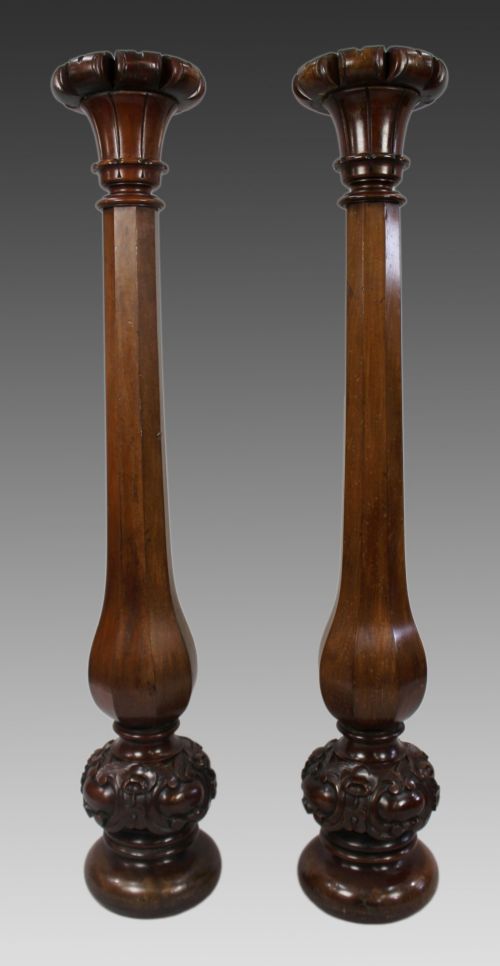
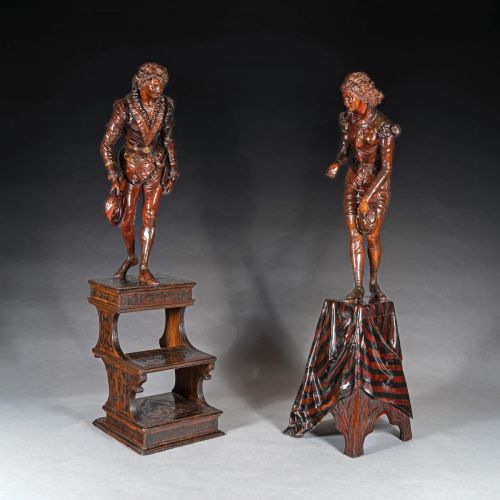
Pair carved wood plinths lift figures, busts and urns above the room, offering sturdy timber architecture for display.
Pair Carved Wood Plinths
When you search for pair carved wood plinths, you enter a category defined by matched supports and pedestals shaped from timber. These objects function primarily to elevate sculptures, architectural elements or decorative items within a room.
The pieces on this page span the nineteenth century, including Victorian examples alongside Georgian and rustic folk art interpretations. Forms range from classical columns and pedestals to wall brackets and side tables.
You are most likely to meet mahogany, oak and painted wood constructions shaped into spiral columns, fluted pillars or architectural pedestals. Many incorporate carved details such as griffins or gilded finishes.
How they were made
Carvers shaped these plinths from solid timbers like mahogany, oak, limewood and amboyna, utilising both dense tropical hardwoods and native varieties. Artisans employed hand-carving techniques to produce decorative motifs, fluted columns and spiral twists.
Surface treatments include gold leaf, gesso, paint and parcel gilt applications over the wooden structures. Cabinetmakers also incorporated functional elements such as secret compartments within the pedestals.
Pair Carved Wood Plinths Retail Price Guide 2026
Typical asking prices for pair carved wood plinths among the pieces listed under this phrase on Sellingantiques today, from the lower quarter to the upper quarter. They describe what is for sale here now, not the wider market.
Materials recorded across the current inventory include solid mahogany, oak, amboyna, limewood, beech, gold leaf and gesso.
What varies in quality
Quality rests in the ambition of the carving and the selection of the timber, distinguishing standard turned supports from grand scale exhibition pieces. Dense exotic woods like amboyna and ebony sit at the upper end of the material scale.
The precision of the architectural proportions and the crispness of details like carved griffins or Medici lions separate basic utilitarian stands from sculptural works. Original gilding and integrated mechanisms such as secret compartments elevate the standing of a piece.
The Pair Carved Wood Plinths Glossary
- Plinth
- A heavy base supporting a statue, column or pedestal. It forms the solid foundation that anchors the elevated object to the floor.
- Pedestal
- An upright architectural support used to raise a sculpture, urn or vase. These tall stands are often cylindrical or square in section.
- Gesso
- A plaster mixture applied to wood as a smooth base for painting or gilding. It provides a crisp surface for intricate relief decoration.
- Amboyna
- A highly decorative wood prized by cabinetmakers for its rich, speckled grain. It appears on high-status nineteenth-century pedestals.
- Volute
- A spiral scroll ornament characteristic of classical architecture and revival furniture. It often decorates the capitals of columns and pedestals.
Pair Carved Wood Plinths: Frequently Asked Questions
What held up on wooden plinths?
Sculptures, urns, busts and heavy decorative objects sit atop these wooden columns and pedestals to display them at eye level. The elevated position gives prominent placement to important decorative items in a room.
Heavier architectural pieces and stone carvings also utilise sturdy timber plinths to distribute weight evenly across the floor while maintaining a classical presentation.
How to arrange matching plinths?
Matched pairs typically frame doorways, fireplaces, large artworks or focal points within a grand interior scheme. Placing identical columns on either side creates formal symmetry.
Alternatively, use them in corners or at opposite ends of a sideboard to display corresponding pairs of sculptures or urns at uniform heights.
How to date carved wood plinths?
Dating relies on identifying the prevailing revival style, such as Georgian, Rococo, Gothic or Victorian Renaissance Revival, combined with timber choices like mahogany or amboyna. Construction methods and tool marks visible on the underside also indicate the period of manufacture.
Nineteenth-century examples frequently feature heavy classical proportions, hand-applied gesso and distinct regional carving characteristics.
Where to place antique pedestals?
Tall columns and pedestals suit hallways, reception rooms and spacious living areas where vertical height adds architectural interest. Ensure the base has stable contact with the floor to support whatever sits on top.
Keep wooden stands away from direct heat sources and strong sunlight to protect the timber grain and any applied gilding.