



Pair Carved Console Brackets
These pair carved console brackets bring immediate architectural rhythm to a room, supporting ornamental objects or filling difficult wall spaces with historic presence.
Pair Carved Console Brackets
When you search for pair carved console brackets, you are looking at architectural supports designed to project from walls and hold objects like urns, clocks, or busts. The examples appearing on this page span several centuries, reaching back to the eighteenth century through the nineteenth and twentieth centuries.
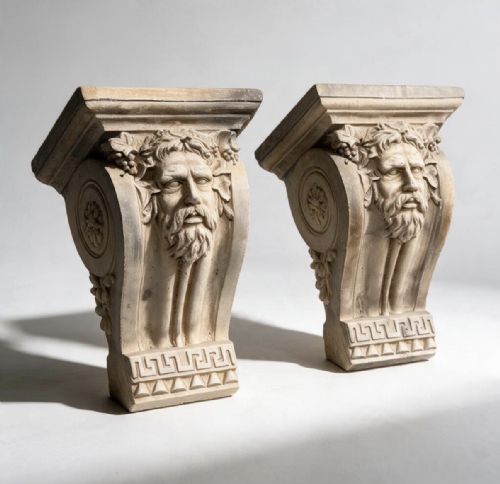
The most common forms you will meet here are wall brackets and console tables, originating primarily from Italian and French workshops. These pieces appear in materials ranging from carved wood and walnut to giltwood and gesso finishes.
Makers drew on distinct stylistic traditions, notably Rococo, Baroque Revival, and Italian Neoclassical designs. Many retain their original gold leaf or antique white paint finishes, showing the varied decorative tastes of their respective periods.
How they were made
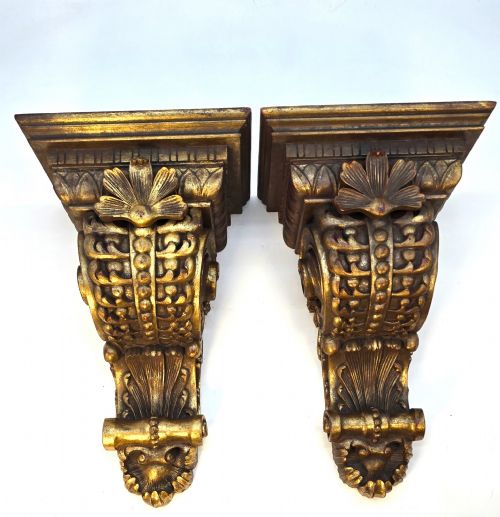
Carvers shaped solid timber such as walnut and general wood blanks by hand before applying layers of gesso to prepare surfaces for gilding. Artisans then laid fine gold leaf over the prepared ground, burnishing portions to create contrast against matte areas.
Other pieces received paint finishes, including antique white or polychrome schemes, while select examples incorporate marble tops or terracotta components. The joinery and carving reflect the prevailing furniture-making standards of the eighteenth, nineteenth, and early twentieth centuries.
Pair Carved Console Brackets Retail Price Guide 2026
Typical asking prices for pair carved console brackets among the pieces listed under this phrase on Sellingantiques today, from the lower quarter to the upper quarter. They describe what is for sale here now, not the wider market.
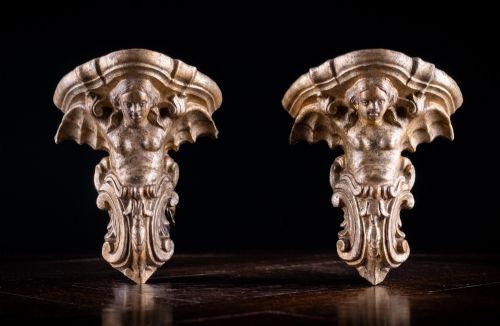
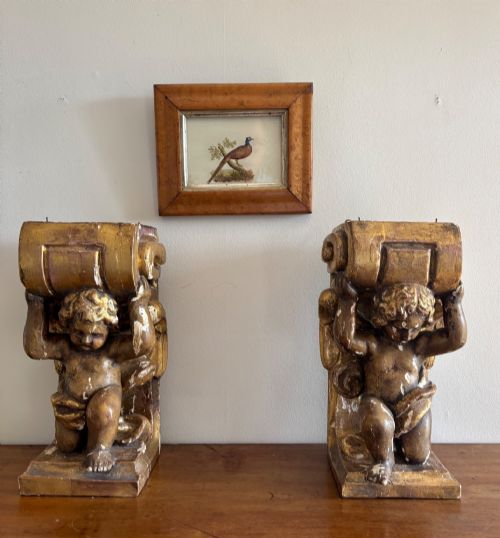
Winged sirens and chubby cherubs keep a permanent, silent watch over your hallway from their perch on these antique brackets.
What varies in quality
The integrity of the surface finish also determines standing. Original giltwood retaining its subtle tool marks and genuine wear holds greater decorative and material authority than later repainting or heavy restoration.
The Pair Carved Console Brackets Glossary
- Giltwood
- Wood that has been coated with thin sheets of gold leaf. This technique creates a luminous, reflective surface popular in formal interior decoration.
- Gesso
- A plaster mixture applied to wood surfaces as a base for gilding or painting. It provides a smooth ground that carvers can refine before applying gold leaf.
- Console
- An ornamental bracket or table fixed to a wall and supported by scrolls or legs. These items served both structural and display functions in historic rooms.
- Rococo
- An exuberant decorative style characterised by asymmetry, scrollwork, and organic plant forms. It flourished across Europe during the eighteenth century and saw numerous revivals.
- Parcel-gilt
- Partially gilded woodwork where gold leaf highlights specific carved details while other areas expose the natural wood grain or painted finish beneath.
Pair Carved Console Brackets: Frequently Asked Questions
How were console brackets used originally?
These pieces were mounted directly to walls in formal rooms to display valuable porcelain, clocks, or small sculptures. They functioned as architectural ledges that raised decorative objects to eye level.
In grand interiors, matched pairs framed doorways, mirrors, or fireplaces to create symmetrical balance along the walls.
How do I secure them to the wall?
Wall brackets require robust fixings suited to the weight of the timber and the plaster or masonry behind them. Historic pieces often feature integrated mounting plates or brackets designed for secure screw attachment.
Consult a professional installer to ensure the wall structure can support the combined weight of the bracket and any displayed object.
Can they support heavy objects?
Capacity depends entirely on the construction, material, and method of wall attachment. While solid carved wood and walnut brackets offer strong structural support, heavily gilded gesso examples require more careful load management.
It is prudent to check the historic joins and test the stability before placing heavy decorative items upon them.
How do I date a pair of brackets?
Dating relies on identifying the characteristic motifs of styles such as Baroque Revival, Rococo, or Neoclassical design. Tool marks, wood species, and the composition of the gesso layer also provide clues to the period of manufacture.
Comparing the carving execution with documented pieces from the nineteenth or early twentieth centuries helps narrow down the origin.
How do I clean giltwood surfaces?
Dusting requires only a very soft, dry brush or feather duster to remove surface particles without disturbing the delicate gold leaf. Moisture and modern cleaning chemicals can strip or damage historic gilding.
Professional conservation advice should be sought if deeper cleaning or consolidation of flaking gesso becomes necessary.