

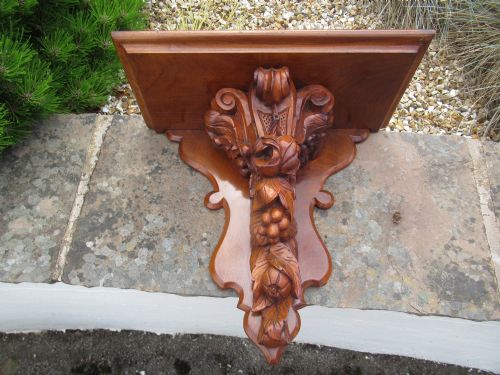


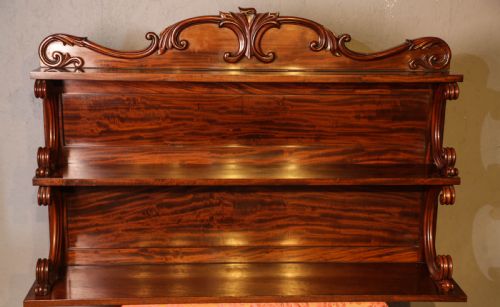


Wooden Display Bracket
These wooden display bracket selections give your walls instant architectural interest and a secure perch for small treasures.
Wooden Display Bracket
A wooden display bracket serves as a wall-mounted support for ornaments, clocks, and books, bringing vertical dimension to interiors. You will find pieces ranging from compact single-shelf designs to pairs of carved ledges and multi-tiered corner units.
The selections span the nineteenth and early twentieth centuries, drawing on Victorian, Edwardian, and Regency eras. Forms include carved cherub figures, gilded scrollwork, Sorrento inlaid olive wood, and straightforward mahogany ledges.
Makers utilised various formats such as wall shelves, corner shelves, hanging shelving units, and plate racks. These varied configurations accommodated everything from domestic crockery to grand clock cases in period homes.
How they were made
Cabinetmakers shaped these brackets using dense hardwoods like mahogany, walnut, rosewood, oak, and limewood. Selected timber provided the stable foundation necessary for deep relief carving and structural weight-bearing.
Many examples feature applied gesso finished with gold leaf, creating the gilded surfaces seen in Baroque and Rococo revival pieces. Other items incorporate intricate Sorrento marquetry and brass elements to enrich the wooden surfaces.
Wooden Display Bracket Retail Price Guide 2026
Typical asking prices for wooden display bracket among the pieces listed under this phrase on Sellingantiques today, from the lower quarter to the upper quarter. They describe what is for sale here now, not the wider market.
Period styles span Victorian, Edwardian, Regency, Baroque Revival, and Rococo across various wall brackets and shelving units.
What varies in quality
The depth and crispness of the hand carving dictate the aesthetic standing of a bracket. Crisp undercut foliage and expressive figures separate superior artisan work from machine-milled or heavily sanded production.
Material selection and joinery integrity define durability. Solid mahogany or walnut frames joined with tight corner joints endure decades of wall mounting far better than hastily assembled softwood carcasses.
The Wooden Display Bracket Glossary
- Gesso
- A plaster-like mixture applied to wood as a base for gilding or painting. It accepts fine detail work before leaf application.
- Marquetry
- The art of applying thin veneer pieces to a structure to form decorative patterns. Sorrento examples often use olive wood for this.
- Limewood
- A pale timber favoured by carvers for its fine, even grain. It permits intricate, splinter-free chisel work in high-relief ornament.
- Regency
- A British design period spanning the early nineteenth century. Pieces from this time often display classical restraint and clean lines.
- Sconces
- Wall brackets designed specifically to hold lighting or small decorative objects. They project outward from the vertical plane.
Wooden Display Bracket: Frequently Asked Questions
How much weight can a wooden display bracket hold?
Load capacity depends entirely on the wall fixings and the solidity of the timber backplate. Lighter ledges suit small porcelain figures.
Heavier hardwood brackets anchored securely into wall studs can support modest clocks or bronze sculptures.
How do I identify a Victorian bracket?
Victorian pieces frequently display Revival styles like Baroque, Italianate, or Gothic influences, often carved from dark woods. Look for dense grain and rich patination accumulated over generations.
Maker labels or stamp marks occasionally appear on the reverse.
Where should I place a corner shelf?
Corner shelves make use of neglected room angles to display small collections without cluttering floor space. They work well above side tables or flanking doorways.
Ensure the height allows safe viewing of the displayed objects.