

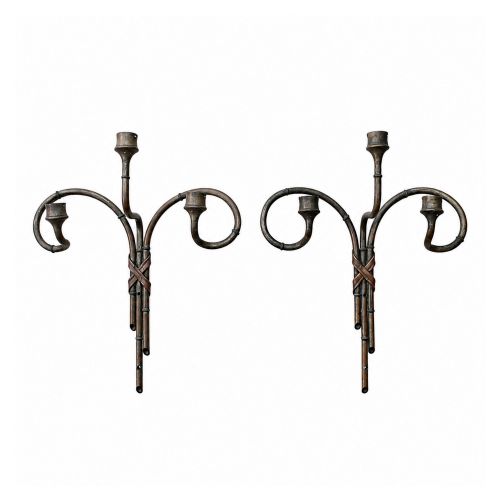
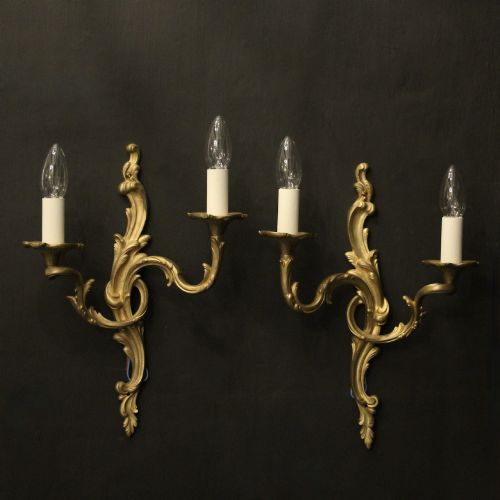
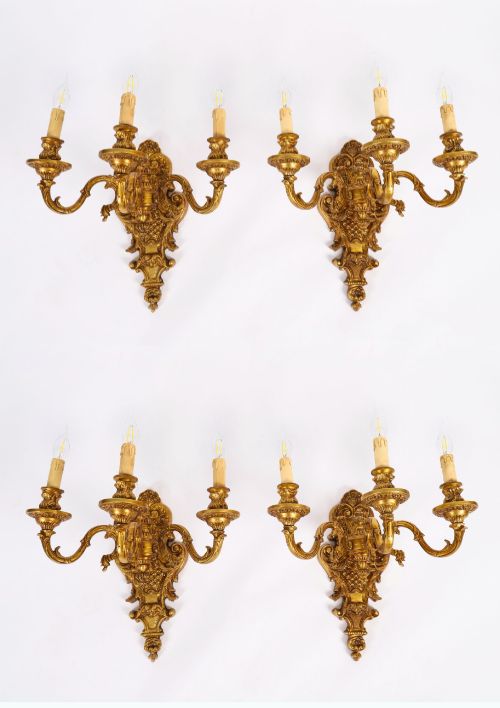
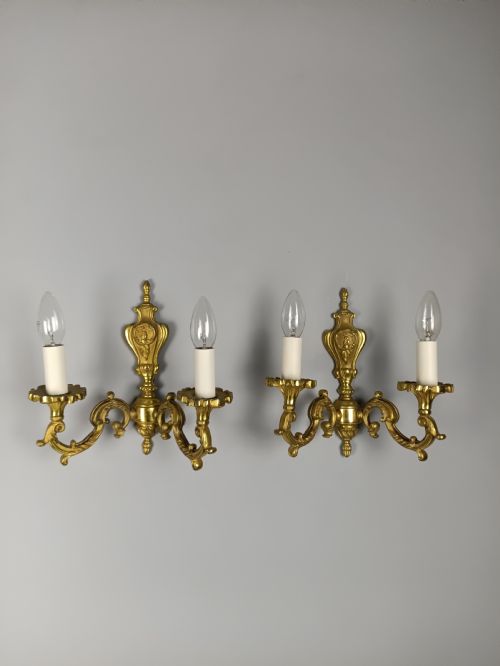
Pair Bronze Wall Lights
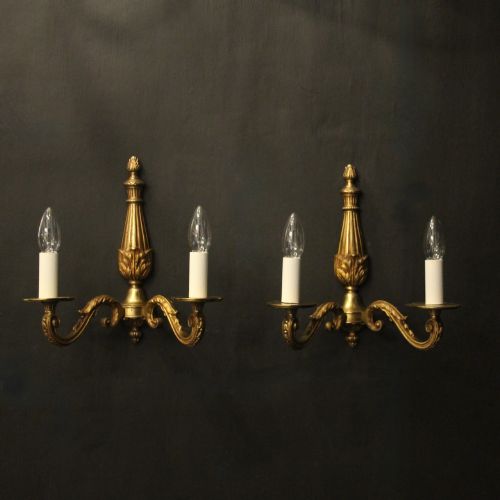
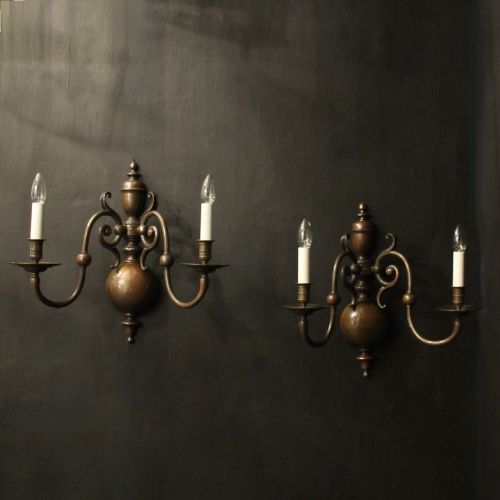
Pair bronze wall lights bring period illumination to a room, casting warm light from cast and chased metal arms.

Pair Bronze Wall Lights
When searching for pair bronze wall lights, one examines lighting fixtures designed to mount directly to a wall, often in matching configurations for symmetry. The listings show forms ranging from single-arm sconces to grand multi-branch chandeliers and candelabras meant for interior spaces.
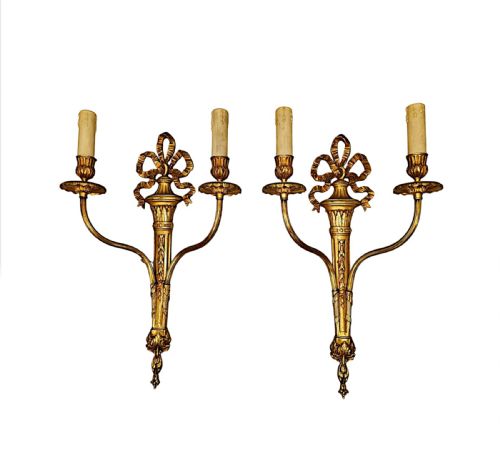
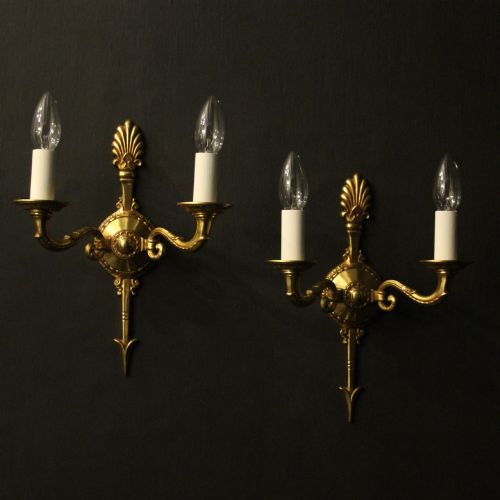
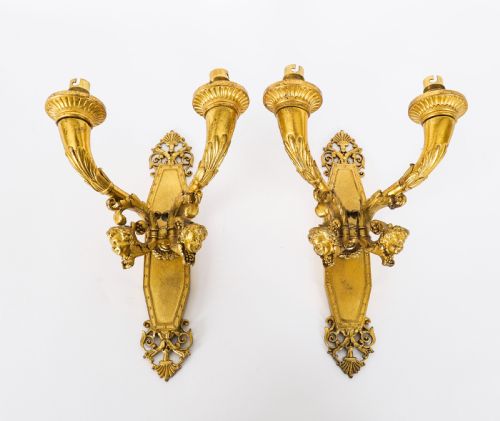
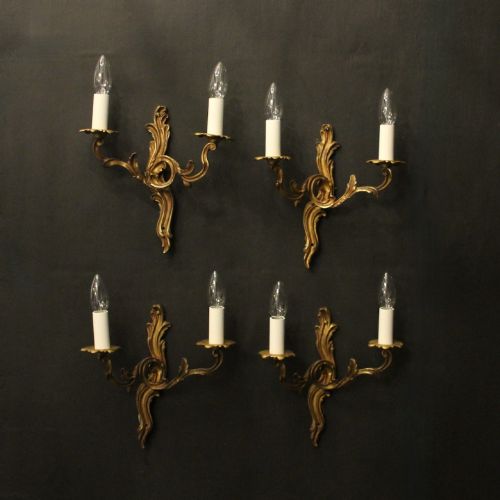
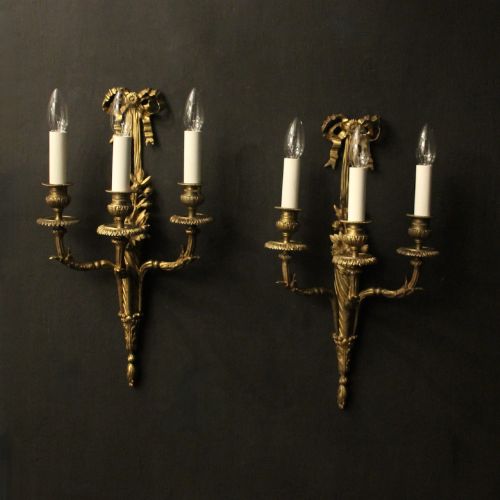
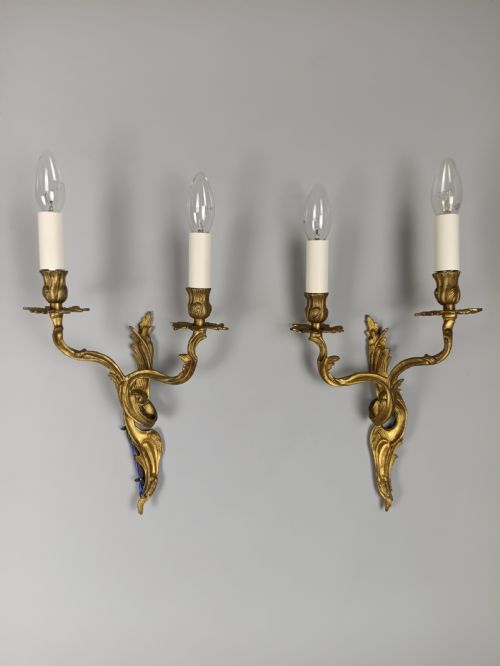
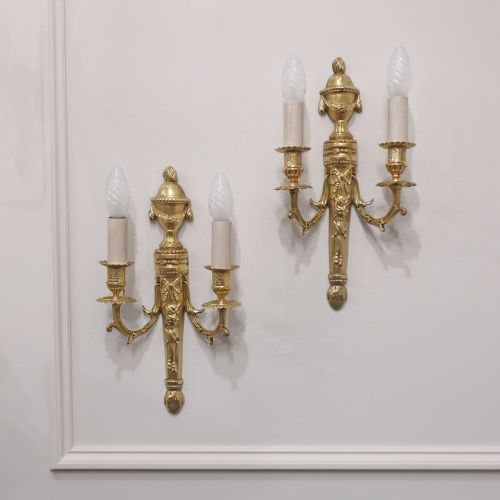
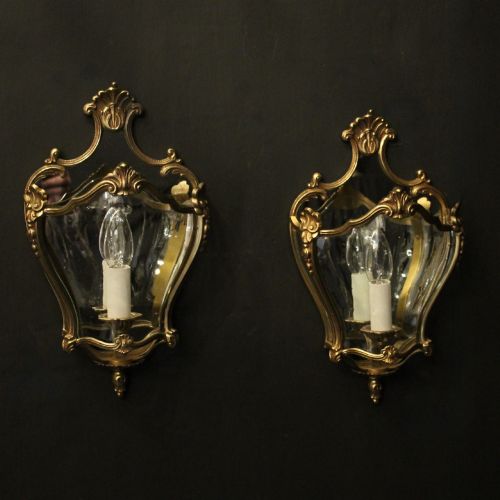
French origin dominates the selection, frequently drawing on historical design motifs such as French Rococo, Louis XVI, and Empire styles. These pieces often feature elaborate casting work, ribbons, cherubs, or foliate scrolls that reflect the decorative arts of the nineteenth and early twentieth centuries.
How they were made
Foundry workers utilised bronze, brass, and metal casting techniques to form the structural arms and backplates of these fixtures. Many examples received a surface layer of gold through fire gilding or ormolu processes, creating the rich gilt bronze finishes seen across the period.
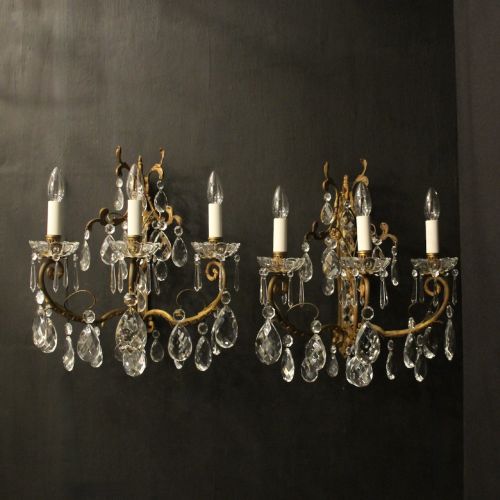
Detailing was achieved through hand chasing, where artisans refined the cast metal surfaces with chisels and punches to sharpen acanthus leaves, scrollwork, and figural elements. Glass crystals, porcelain flowers, and silvered bronze treatments occasionally augmented the primary metal structure.
Pair Bronze Wall Lights Retail Price Guide 2026
Typical asking prices for pair bronze wall lights among the pieces listed under this phrase on Sellingantiques today, from the lower quarter to the upper quarter. They describe what is for sale here now, not the wider market.
Several pairs hide delicate porcelain flowers and crystal drops among their heavy bronze acanthus leaves.
What varies in quality
The precision of the metal casting and the crispness of the hand-chasing separate standard production from superior work. Finer examples retain sharp relief in decorative elements like floral garlands and rococo scrolls, whereas lesser pieces exhibit softened details from worn moulds.
Gilding thickness and preservation also dictate worth, with durable ormolu finishes maintaining deep lustre compared to thin plating that shows base metal underneath. The structural integrity of the arm joints and the weight of the bronze components further distinguish the grade of manufacture.
Casier·Gerfaux Paris
The Pair Bronze Wall Lights Glossary
- Ormolu
- Gilt bronze produced by applying an amalgam of mercury and gold to a bronze object and heating it. This technique creates a durable golden surface frequently used in French decorative hardware.
- Applique
- A wall-mounted lighting fixture or decorative sconce. These items attach directly to vertical surfaces to provide supplemental illumination.
- Candelabra
- A multi-branched lighting fixture designed to hold several candles or bulbs. Such pieces often project further from the wall than standard single-arm sconces.
- Rococo Revival
- A nineteenth-century design style mimicking the asymmetrical curves, C-scrolls, and naturalistic shell motifs of the eighteenth century. This aesthetic appears frequently in the cast bronze arms of period wall lights.
Pair Bronze Wall Lights: Frequently Asked Questions
How were pair bronze wall lights used?
These fixtures were mounted in pairs flanking mirrors, fireplaces, or doorways to provide ambient and task illumination in formal rooms. Candles originally supplied the light before many examples were later converted for electricity.
Their reflective gilt surfaces helped bounce candle or gas light around the interior, enhancing the brightness of parlours and reception halls.
How do I tell French styles apart?
Rococo pieces feature asymmetrical C-scrolls, organic foliage, and shell motifs with fluid, twisting lines. Empire and Louis XVI styles rely on strict symmetry, classical urns, wreaths, and geometric precision.
Examining the backplate and arm junctions usually reveals whether the design leans toward ornate naturalism or restrained classical order.
Are these lights ready for wiring?
Many surviving fixtures have been rewired to modern safety standards while retaining their original brass and bronze components. Rewiring allows historical metalwork to function safely with contemporary electrical supplies.
Buyers should check individual listing details to confirm the current wiring status before installation.
What periods do these wall lights span?
The selection covers nineteenth-century production alongside early twentieth-century interpretations influenced by historical revivals. Dates range from the 1800s through the 1930s, capturing various waves of French taste.
Earlier nineteenth-century examples often display heavier cast construction, while 1920s and 1930s pieces frequently maintain traditional forms with updated mounting hardware.