
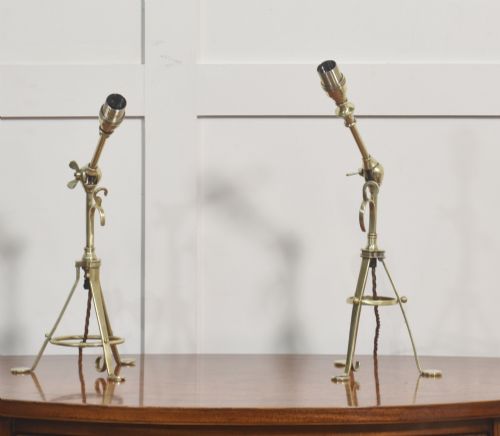
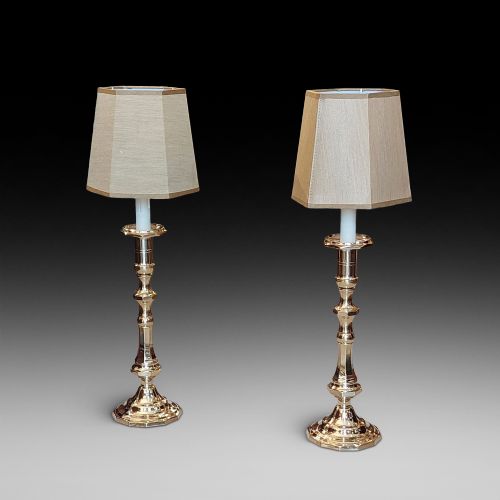
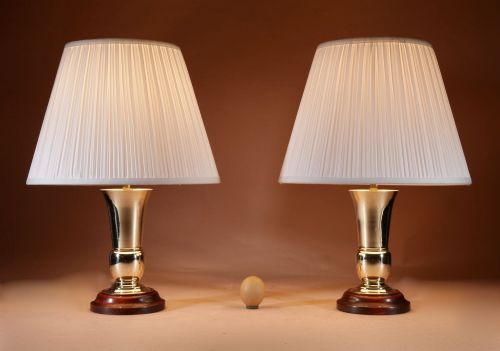
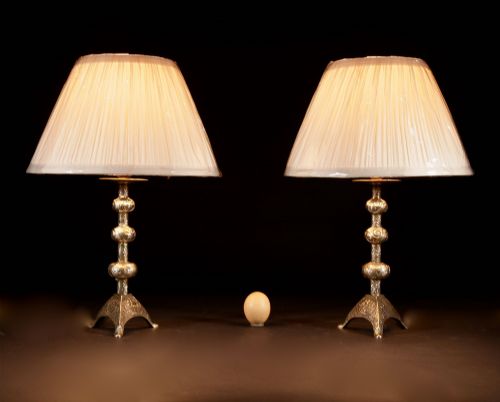
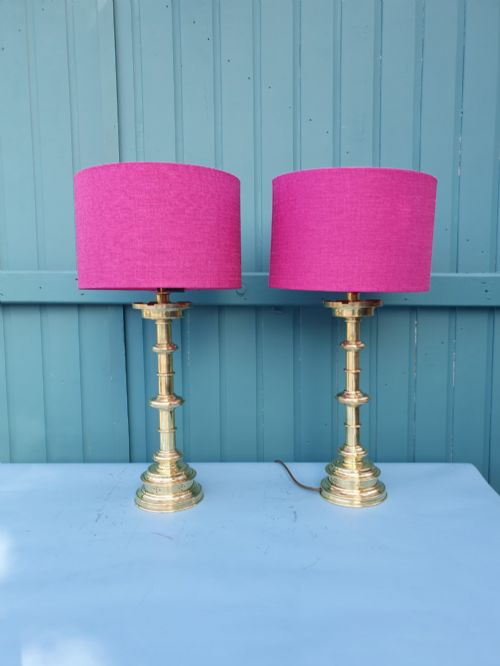


Pair Brass Reading Lamps
These pair brass reading lamps offer dual illumination, combining period metalwork with functional design for focused tasks.
Pair Brass Reading Lamps
Buyers frequently encounter adjustable table lights, swan neck desk lamps, and floor standing standards made from polished or nickel-plated brass. Candlestick conversions and gimbal lights also appear among the surviving lighting pairs.
Origins span domestic table standards to maritime gimbal lights, reflecting diverse historical domestic and functional settings. These matched pairs provide balanced illumination suited to period interiors.
Evaluating quality
Quality rests in the precision of the metal casting, the integrity of adjustable mechanisms, and the weight of the base. Finer examples display crisp decorative detailing on columns and consistent patination across both matched items.
Substantial gauge brass and well-engineered swan neck joints distinguish superior desk and table standards. The harmony between the paired components determines their suitability for symmetrical placement in a room.
The listings span the Victorian, Edwardian, and Arts and Crafts periods, featuring brass, bronze, wood, and fabric materials.
W A S Benson·Wild and Wessel·William McGeoch and Co
The Pair Brass Reading Lamps Glossary
- Gimbal light
- A pivoting lamp design utilising rings to keep the light level regardless of motion. These nautical fixtures were commonly used on ships.
- Swan neck
- A curved metal arm resembling a swan's neck, allowing adjustable directional light. This profile is typical on nineteenth and twentieth-century desk lamps.
- Ormolu
- Gilded bronze ornamentation applied to decorative metalwork. It adds a rich golden finish to select period lamp bases.
- Candlestick lamp
- A traditional candlestick converted or constructed to house electrical fittings. Many retain the classic profile of standard table tapers.
Pair Brass Reading Lamps: Frequently Asked Questions
How do I date an antique brass reading lamp?
Dating relies on stylistic clues like Edwardian proportions, Victorian column designs, or specific manufacturing marks from makers such as W.A.S. Benson. The presence of turning techniques and switch types also helps place the piece within the nineteenth or early twentieth century.
Examining the metal composition and any patent stamps provides further historical context for the manufacture date.
Are these lamps safe for daily use?
Many period lamps require rewiring or professional safety checks to meet modern electrical standards. Ensure a qualified electrician inspects older brass standards before connecting them to power.
Retaining original components is possible while upgrading internal wiring for domestic safety.
Where should I place a pair of floor lamps?
Matched floor standards suit placement flanking a sofa, framing a fireplace, or positioned behind reading chairs in a study. Their balanced height provides functional light and symmetrical visual weight in a room.
Ensure adequate clearance for cords and adjustable arms when setting up floor models.
What is a gimbal lamp?
A gimbal lamp uses concentric rings to pivot freely, traditionally designed to remain upright on moving vessels at sea. Antique ship lights bring industrial maritime character into domestic spaces.
These brass fixtures offer robust construction and adjustable illumination angles.