




Tulip Glass Shade Lamp
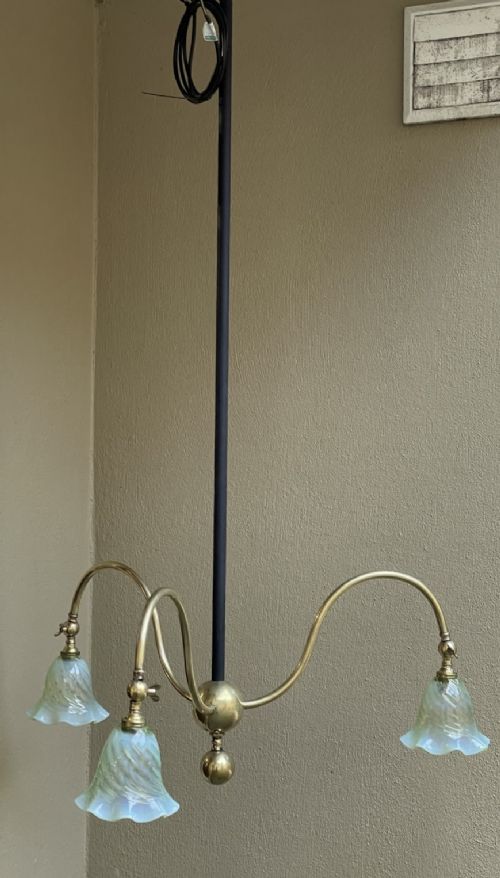
These tulip glass shade lamp pieces combine brass and coloured glass, offering period illumination for a room.
Tulip Glass Shade Lamp
A tulip glass shade lamp brings together period metalwork and floral-inspired glass forms across various room settings. When searching for a tulip glass shade lamp, buyers encounter pieces ranging from Victorian oil lamps to Edwardian desk lamps and ceiling fittings.
The most common examples on this page feature brass columns paired with green or frosted glass tulip shades. These items span eras from the late nineteenth century through to the 1930s, displaying styles such as Art Nouveau and Arts and Crafts.
Forms vary widely from standard floor lamps and chandeliers to smaller desk and table lamps. Each version retains the characteristic curved glass element that defines the group.
Construction and materials
Makers shaped glass into tulip forms using moulding and etching techniques, sometimes applying gold leaf or enamel details. Frosted and opaline glass surfaces were frequently utilised to soften the light emitted from the burner or bulb.
Metalwork components rely heavily on brass, gilt bronze and general base metals to form columns, swan neck arms and ceiling mounts. These structural elements provide the necessary weight and durability to support the glass shades.
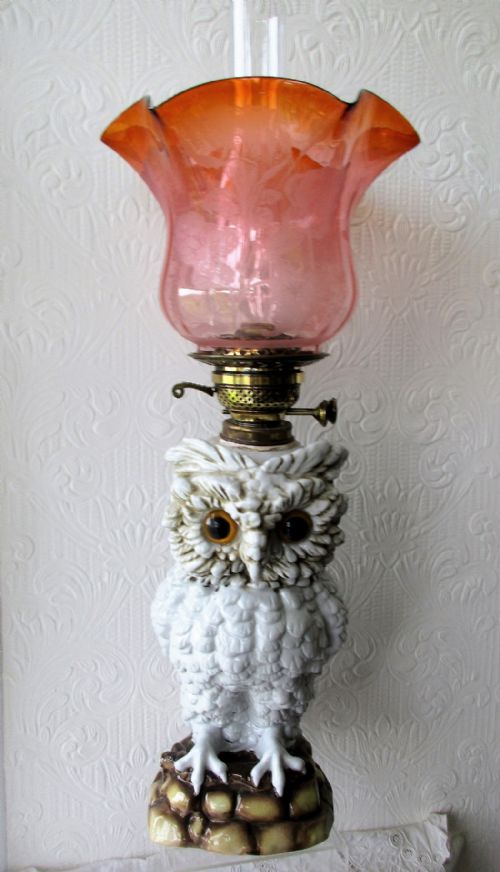
One exceptional Victorian oil lamp proudly wears an owl shape beneath its glass.
Assessing the standard
Quality in these pieces rests upon the crispness of the brass casting and the depth of the glass colour. Superior examples display refined proportions and intricate surface work, such as detailed etching or hand-painted enamel highlights.
The relationship between the metal stand and the glass shade determines the overall harmony of the piece. Higher-grade items maintain integrity across both components without clumsy repairs or mismatched fittings.
Sitzendorf
The Tulip Glass Shade Lamp Glossary
- Duplex burner
- A double-wick mechanism found on period oil lamps that provided a brighter illumination. It typically requires specific twin-wick supplies.
- Opaline glass
- A pale, translucent glass type that diffuses light softly through its milky appearance. It was frequently utilised for Victorian and Edwardian lighting.
- Standard lamp
- A tall floor-standing lighting fixture designed to illuminate a larger area of a room. These often feature heavy metal bases for stability.
- Swan neck
- A curved metal arm shape commonly seen on desk and table lamps to direct light downwards. This profile allows adjustable positioning.
- Gilt bronze
- A metal object treated with a thin layer of gold leaf or gold paint for decorative effect. It offers a rich finish distinct from polished brass.
Tulip Glass Shade Lamp: Frequently Asked Questions
What is a tulip glass shade lamp?
A tulip glass shade lamp is a lighting fixture featuring a glass shade shaped like a flower petal. These pieces utilise brass or metal bases and span several decades of design.
They appear in forms ranging from oil lamps to electric desk lamps and chandeliers. The style draws heavily on Victorian and Edwardian aesthetics.
How do I date my lamp?
Dating relies on examining the materials, manufacturing marks and overall style of the brass and glass. Pieces from the nineteenth century often show heavier cast metal components and hand-etched glass.
Later items from the Edwardian period or the 1930s incorporate different wiring methods and lighter structural frames. Comparing the shade shape to known period catalogues helps narrow the decade.
Can I convert an oil lamp?
Many period oil lamps are adapted for modern electric use while retaining their original burners and glass shades. This conversion allows historic pieces to function safely in contemporary homes.
Professional rewiring ensures the wiring meets current standards without damaging the antique metalwork. The original oil reservoir and collar usually house the modern lamp holder.
Where should I place a desk lamp?
Edwardian desk lamps and notary lamps suit study spaces, sideboards or reading tables where focused light is required. Their adjustable brass arms direct the beam precisely where needed.
Placing them on stable surfaces prevents accidental tipping of the heavy brass bases. They work well as functional reading lights or decorative accent pieces.