




Brass Library Table Lamp
A brass library table lamp brings focused illumination and warm metal tones to a desk, uniting period utility with refined desk-side presence.
Brass Library Table Lamp
When you search for a brass library table lamp, you encounter desk lamps, table lamps, and student lamps designed for reading and writing. The selection spans the nineteenth century, Edwardian era, and the nineteen-twenties, incorporating styles from French Empire to Art Deco.
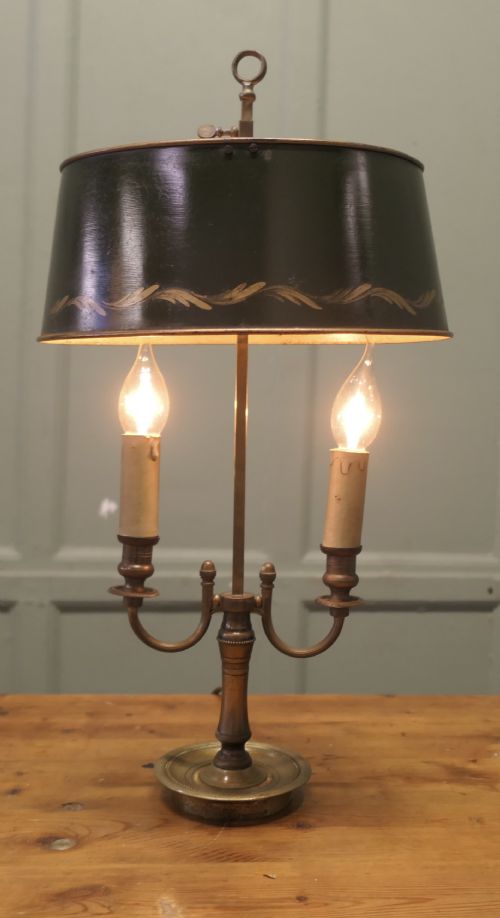
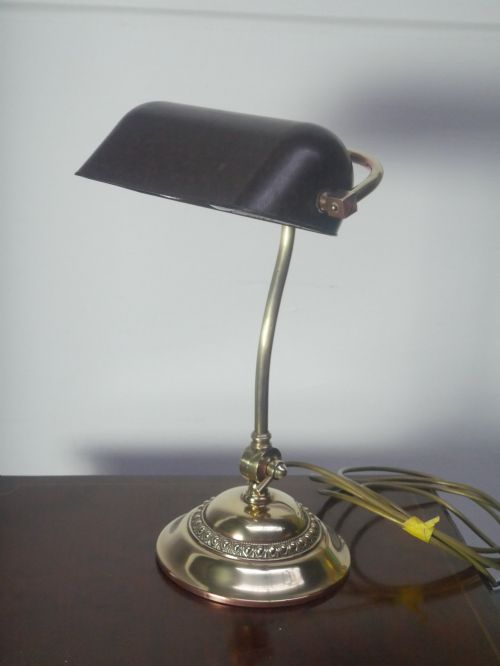
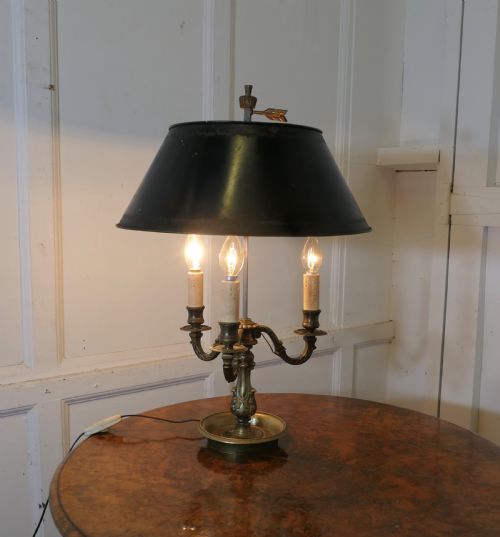
You are most likely to meet adjustable brass bankers desk lamps and green toleware and brass bouillotte lamps on this page. These pieces originate from various periods including Victorian and Edwardian times, often featuring twin or triple shades.
The forms range from simple swan neck profiles to complex articulated structures and multi-branch designs. Materials extend beyond plain metal to include opaline glass, cranberry glass, and painted toleware paired with solid brass frames.
Materials and construction methods
These lamps utilise cast and spun brass, often combined with patinated metal, bronze, or silver plate to create the primary structural forms. Metal components are frequently paired with contrasting elements such as fabric, glass, or painted toleware shades.
Makers employed mechanical ingenuity in the period pieces, incorporating adjustable joints, extending stems, and articulating arms to direct the light precisely. Complete student lamps incorporate specialised implements, while others utilise screw adjustments and weighted bases for stability.
Listings combine 19th Century, Victorian, Edwardian, and 1920 periods with materials including brass, opaline glass, and toleware.
Distinctions in quality and execution
The standard of a piece rests in the heft of the metal casting and the precision of the mechanical adjustments. Superior examples show crisp detailing in the brass work, robust articulated joints, and well-balanced proportions that maintain stability when extended.
Material selection and shade integrity define the tier of the piece. High-quality items integrate specialised glass shades like opaline or cranberry, or heavy toleware components, alongside maker-attributed elements that elevate the design beyond standard commercial production.
Messenger·Faraday and Sons·Wild and Wessel
The Brass Library Table Lamp Glossary
- Bouillotte lamp
- A traditional desk or table lamp featuring a central shaft, multiple candle-style arms, and an adjustable shade that moves down the central column. It derives its name from a French card game played in the eighteenth century.
- Toleware
- Painted or lacquered metalware, typically tin or steel, used for lamp shades to direct light downwards while adding colour to the fitting. It appears frequently in green on French desk lamps.
- Opaline glass
- A milky, semi-translucent glass developed in the nineteenth century to diffuse light softly without glare. It is commonly found in period desk and library fittings.
- Student lamp
- A nineteenth-century adjustable lamp designed for concentrated reading, often featuring a specific reservoir and burner configuration or specialised mechanical arms. Surviving examples sometimes retain their original implements.
- Articulated
- Having joints or hinged sections that allow the lamp arm to pivot, bend, or extend. This mechanism enables the user to position the light source precisely over a workspace.
Brass Library Table Lamp: Frequently Asked Questions
How do I adjust the height on these lamps?
Many period pieces feature sliding stems, thumbscrews, or hinged mechanical arms that allow you to raise, lower, or angle the light source.
Take care to support the shade and brass collar while loosening any adjustment mechanism to prevent strain on the metal joints.
Were these lamps originally electric?
Most nineteenth-century and early twentieth-century examples started as oil, gas, or candle lamps before being converted to electricity later in their lifespan.
Surviving pieces often show evidence of these earlier fuel mechanisms, such as burners, reservoirs, or specialised implements integrated into the design.
How do I clean antique brass safely?
Dust the metal gently with a dry, soft cloth to remove surface particles without disturbing the accumulated historic patina.
Avoid harsh chemical polishes that strip away the aged surface character cherished on nineteenth-century and Edwardian metalwork.
What styles dominate this selection?
The inventory encompasses Victorian, Edwardian, Art Deco, and French Empire aesthetics, alongside Jugendstil and Regency influences.
These design movements manifest through specific shade contours, decorative casting details, and the overall silhouette of the brass framework.