
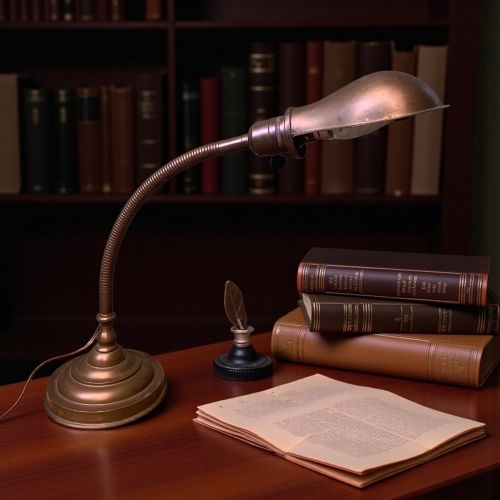


Brass Gooseneck Study Lamp
A brass gooseneck study lamp brings focused directional light and industrial utility to a desk, combining heavy metal construction with adjustable arms.
Brass Gooseneck Study Lamp
A brass gooseneck study lamp is a functional desk light designed to illuminate a workspace through an adjustable arm or swan neck column. These pieces appear most frequently from the Edwardian period, 1900, 1920, and 1930.
The inventory on this page showcases desk lamps and student reading lamps built in brass, bronze, and copper. Forms range from traditional Edwardian designs to Art Deco items with shell-shaped bases and French industrial pieces.
Buyers encounter examples paired with etched glass shades, original shades, or porcelain components, reflecting both utilitarian office use and domestic reading habits of the early twentieth century.
Materials and construction
These lamps rely primarily on solid brass, bronze, and copper to create heavy, stable bases and flexible or articulating necks. Metal spinning and casting techniques form the rigid bodies, while adjustable sections utilise flexible tubing or mechanical joints.
Electrical adaptation appears through period wiring methods and modern fabric flex replacements, ensuring the metal frames safely house internal components. Shades are integrated using brass galleries to hold glass or metal hoods securely in place.
Listings combine Edwardian, 1900, 1920, and 1930 periods with materials including brass, bronze, copper, glass, and porcelain.
Evaluating craftsmanship and condition
Quality in a brass gooseneck study lamp rests upon the weight of the metal and the integrity of the flexible joint or swan neck. Superior examples maintain firm articulation without sagging and retain matched period components such as original shades.
Finishes vary from polished brass to aged bronze patination, where the depth of natural wear distinguishes authentic twentieth-century examples from lesser or later reproductions. The inclusion of specialised elements like porcelain fittings or etched glass elevates the character of the piece.
The Brass Gooseneck Study Lamp Glossary
- Swan neck
- A curved upper metal tube resembling a swan's neck that directs the beam downward. This form allows the shade to pivot towards the reading surface.
- Art Deco
- A design style prominent by 1930 characterised by geometric symmetry and stylised motifs. Pieces from this era often feature stepped or shell-shaped bases.
- Student reading lamp
- A specific desk lamp configuration designed for concentrated reading with a focused vertical shaft and shade. These often incorporate heavy metal bases for stability.
- Fabric flex
- A woven textile-covered electrical cord used to supply power. This material appears on both period restorations and modern safety rewiring.
Brass Gooseneck Study Lamp: Frequently Asked Questions
How do I adjust the neck?
The flexible or articulated gooseneck bends by hand to angle the light directly onto a workspace.
Care should be taken not to force rigid joints beyond their intended range of motion.
Are these lamps safe to use?
Many examples are rewired with modern fabric flex to meet contemporary electrical standards while preserving the exterior appearance.
Buyers should inspect the internal wiring and consult an electrician if the cord is original.
What periods are represented?
The selection spans the Edwardian era, 1900, the 1920s, and 1930.
Design details shift from traditional brass student forms to French industrial and Art Deco styles.
Can I change the lampshade?
Shades are typically secured by screw galleries or fitters designed for specific glass or metal dimensions.
Replacing a shade requires matching the fitter size to the original brass collar.