


Brass Swan Neck Light
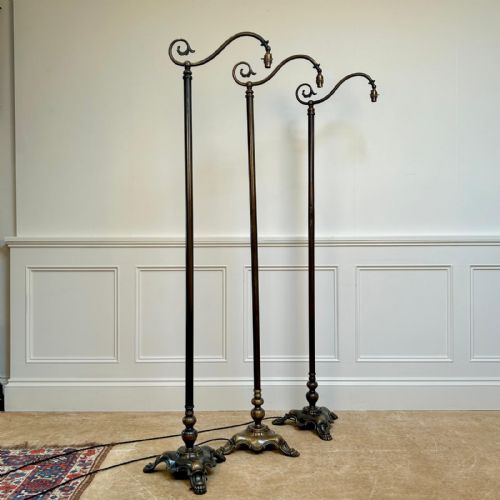
A brass swan neck light delivers directional illumination through a graceful curved arm, making it a functional choice for reading or task work.
Brass Swan Neck Light
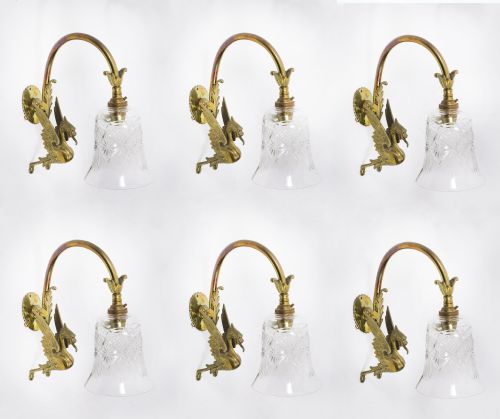
When you search for a brass swan neck light, you encounter pieces designed for practical illumination across desks, floors, and walls. The selection on this page spans desk lamps, floor lamps, and wall lights originating from periods such as the Edwardian era, the nineteenth century, and the nineteen-twenties.
The dominant forms include adjustable reading lamps, student lamps, and pairs of wall lights. These fixtures combine functional articulation with period metalwork, appearing in configurations ranging from single desk pieces to matched sets.
How they were made
These fixtures rely primarily on brass and patinated or gilt bronze, shaped through casting and fabrication techniques suited to supporting the distinctive curved arm. Associated materials include cast iron for weighted bases, cut glass shades, and fabric elements.
Surface finishes vary from polished or patinated brass to gilded bronze and painted toleware. Many surviving examples incorporate swivel mechanisms and adjustable joints to direct the light output.
Materials documented across the inventory include brass, patinated brass, gilt bronze, ormolu, cast iron, cut glass, and fabric.
What varies in quality
The standard of a piece depends on the crispness of the casting in the metalwork and the quality of the surface finish, whether patinated brass, ormolu, or gilt bronze. Heavier gauges of metal and well-executed joinery separate robust examples from lighter productions.
Design execution also plays a role, distinguishing standard utilitarian lighting from decorative pieces that incorporate classical motifs, cut glass components, or sophisticated swivel and scroll arm mechanisms.
The Brass Swan Neck Light Glossary
- Swan neck
- A curved tubular arm resembling a bird's neck that positions the light source outward and downward. This profile allows for adjustable task illumination on desks and walls.
- Ormolu
- Ground metallic bronze mounted and finished with a gold-water gilding technique. It appears frequently on decorative mounts and classical revival wall lights.
- Patinated brass
- Metal treated with chemical processes to produce a darkened or aged surface colour. This finish softens the raw glare of polished brass on older pieces.
- Toleware
- Lacquered or enamelled sheet metal items used for shades and body components. It adds colour and contrast to mixed-media desk lamps.
Brass Swan Neck Light: Frequently Asked Questions
Where should I place a desk lamp?
A brass swan neck desk lamp suits workspaces where focused illumination is required, such as a study or library table. The adjustable arm directs light precisely onto reading or writing surfaces.
Position the lamp on the side opposite your writing hand to minimise shadows while working.
How do I mount a wall light?
Wall lights require secure attachment to wall studs or appropriate wall anchors to support the weight of the metal arms and any glass shades. Many period fixtures are adapted from earlier gas configurations and need professional electrical installation.
Ensure the mounting height aligns with eye level or functional requirements for ambient or task lighting.
What periods do these lamps represent?
The pieces span several distinct eras, including the Edwardian period, the nineteenth century, and the nineteen-twenties and nineteen-thirties. Stylistic influences range from Neo-Classical and French Empire to Arts and Crafts.
Examining the construction methods and metal patination helps identify the specific era of manufacture.
Are these lamps suitable for reading?
Many examples on this page, including student reading lamps and floor-standing swivel models, were built specifically for task lighting. The curved arm extends the bulb outward to cast light directly onto a book or desk.
Check the articulation and height of the specific lamp to ensure it fits your seating arrangement.