
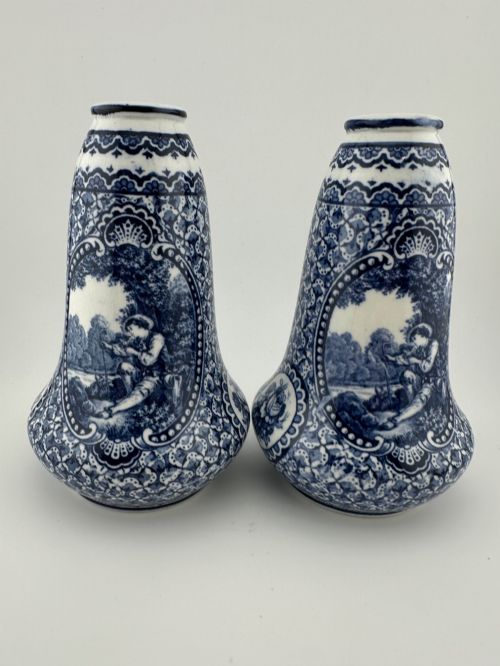
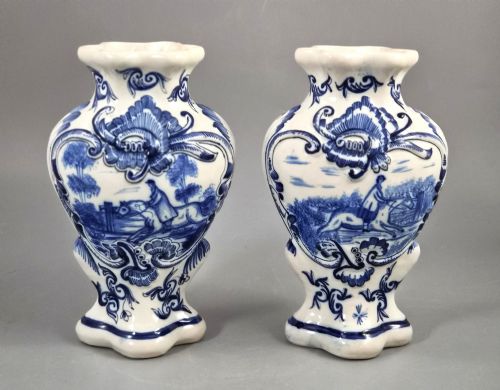
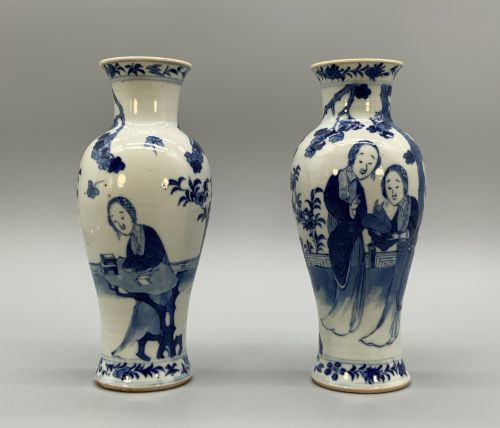


Pair Blue White Vases
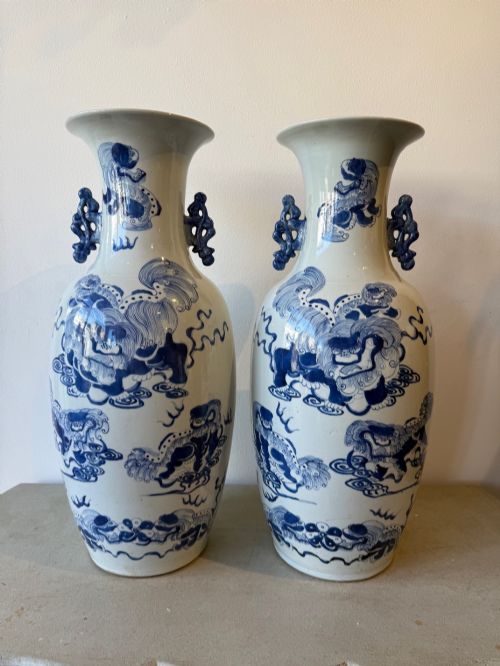
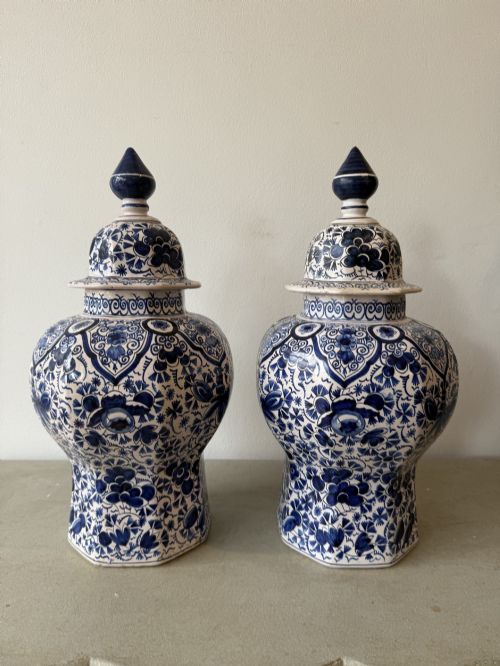
These pair blue white vases unite balanced symmetry with cobalt pigment, offering strong decorative impact for mantelpieces and tables.
Pair Blue White Vases
A buyer seeking pair blue white vases encounters symmetrical vessels created for display, often featuring cobalt decoration upon white clay bodies.
The selections span Chinese export wares, European delftware, and Japanese porcelain or earthenware from the seventeenth to the twentieth century.
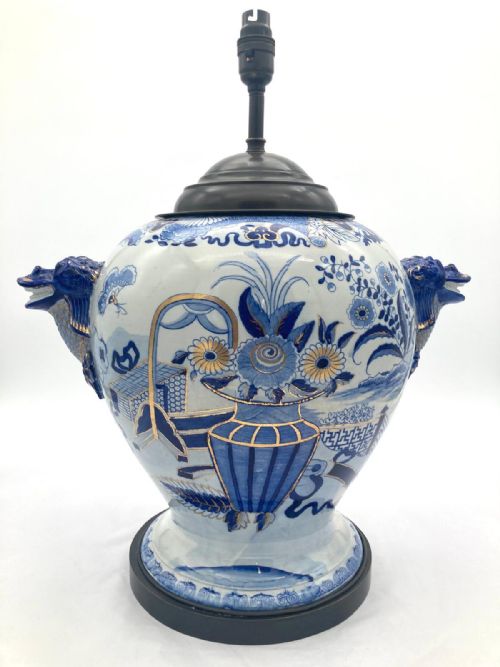
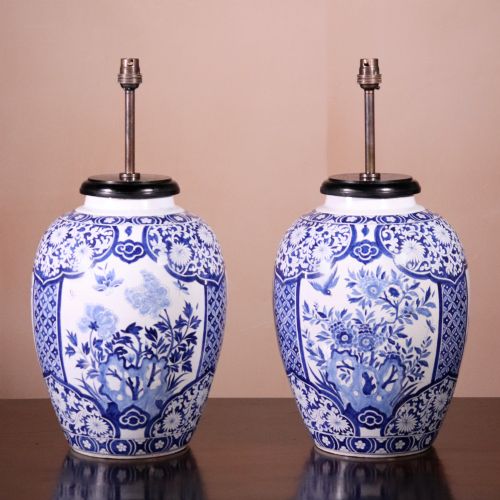
Forms range from ginger jars and lidded baluster vessels to monumental floor vases and examples adapted into table lamps.
Materials and Construction
Potters shaped porcelain, earthenware, and ironstone on the wheel or in moulds before applying cobalt oxide pigment beneath a clear or crackle glaze.
Firing took place in kilns at high temperatures to fuse the blue mineral colour permanently with the white ceramic body.
Certain European and Japanese examples incorporate supplementary enamel decoration, brass mounts, or fabric lamp fittings added during later conversions.
Several tall temple vessels stand higher than fifty inches, demanding dedicated floor space rather than a humble shelf.
Assessing Quality
Excellence rests in the crispness of the cobalt painting, the purity of the white ground, and the precise matching of the two pieces in scale and ornament.
Early periods show hand-painted fluidity and depth in the cobalt wash, whereas mass-produced transfer printing lacks individual brushwork subtlety.
The integrity of the ceramic body, retention of original covers, and harmonious proportions dictate the standing of each pair.
Royal Bonn Franz Anton Mehlem·Fourmaintraux-Courquin·Hicks and Meigh·Wedgwood·Mason's Ironstone·Moorcroft Macintyre
The Pair Blue White Vases Glossary
- Cobalt
- A metallic oxide pigment used to produce deep blue decoration on ceramics, capable of withstanding extreme kiln temperatures.
- Baluster
- A vase shape with a rounded body that tapers toward the base and swells near the lower middle.
- Crackleglaze
- A ceramic finish intentionally patterned with a network of fine microscopic cracks during cooling.
- Delftware
- European tin-glazed earthenware produced notably in the Netherlands and England, mimicking Chinese porcelain styles.
- Imari
- Japanese porcelain decorated in underglaze blue and overglaze iron red and gold.
Pair Blue White Vases: Frequently Asked Questions
How were pair blue white vases displayed?
These matching vessels traditionally stood upon mantelpieces, console tables, or architectural brackets in symmetrical arrangements.
Owners placed them to frame central mirrors or portraits, creating a balanced focal point within period interiors.
Can I use them as lamps?
Many examples on the market arrive professionally converted into wired table lamps with fabric shades.
This adaptation occurred across the nineteenth and twentieth centuries to modernise decorative ceramics for domestic lighting.
How do I date Chinese export porcelain?
Examination of the cobalt tone, base markings, and potting weight helps distinguish seventeenth-century Kangxi pieces from later nineteenth-century revivals.
Early pieces often display greater luminosity in the blue pigment and finer potting technique.
What is the difference between porcelain and faience?
Porcelain utilises hard, vitrified white clay fired at intense heat to achieve a non-porous, ringing body.
Faience employs a softer earthenware body covered in an opaque white tin glaze to receive painted decoration.