


Pair Blue Porcelain Lamps
Pair blue porcelain lamps bring balanced illumination and rich cobalt tones to a room, uniting centuries of ceramic craft with functional lighting.
Pair Blue Porcelain Lamps
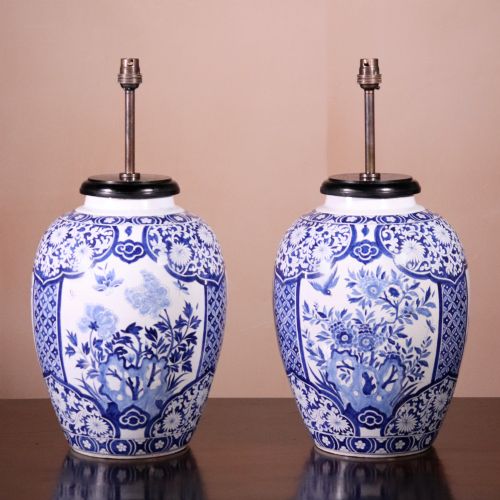
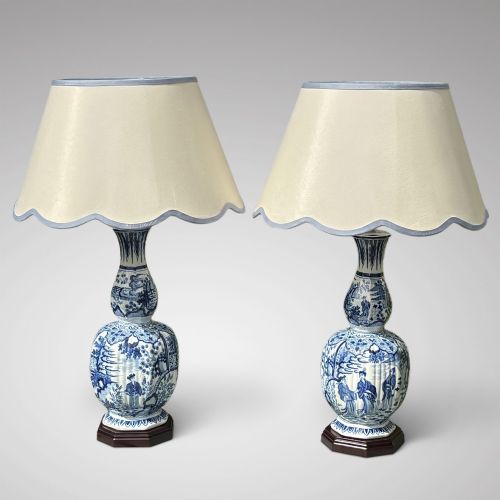
When searching for pair blue porcelain lamps, buyers encounter matched sets originating from European factories and East Asian kilns, spanning the eighteenth century through the mid twentieth century. These pieces frequently begin life as vases, jars or beakers before conversion into table lamps, retaining their original form while gaining electrical fittings.
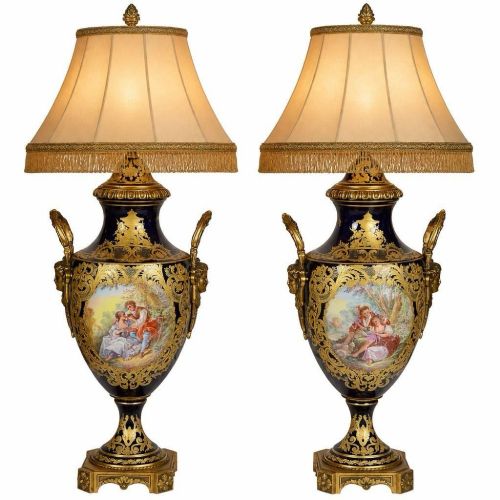
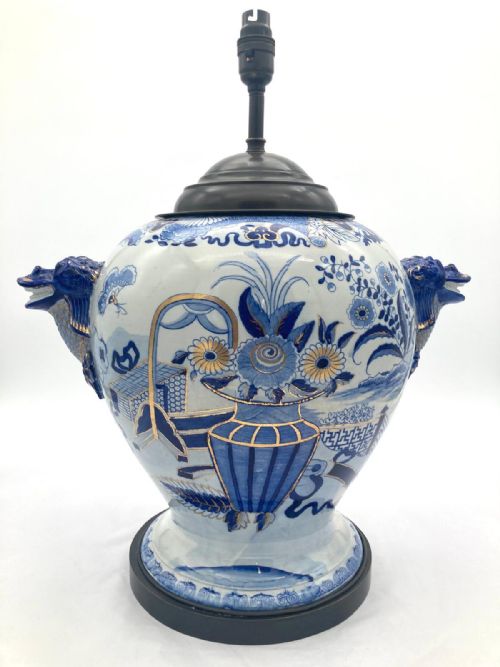
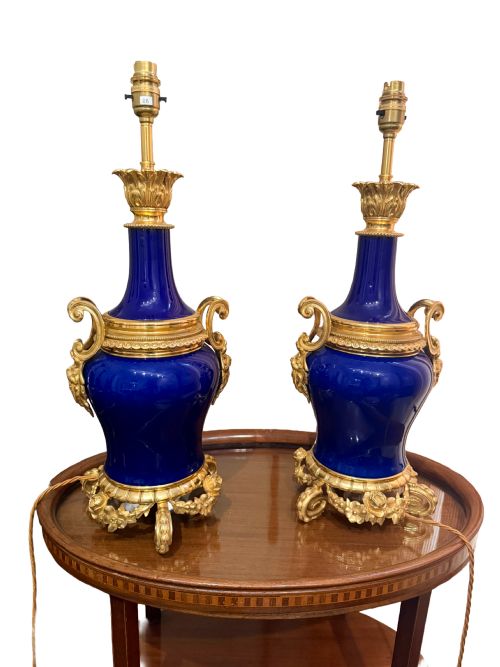
The most common examples on this page date from the nineteenth century, combining Chinese blue and white or powder blue porcelain with French ormolu and brass mounts. Other frequent variations include Japanese Imari and Satsuma wares, alongside European interpretations in the Sevres and Delft traditions.
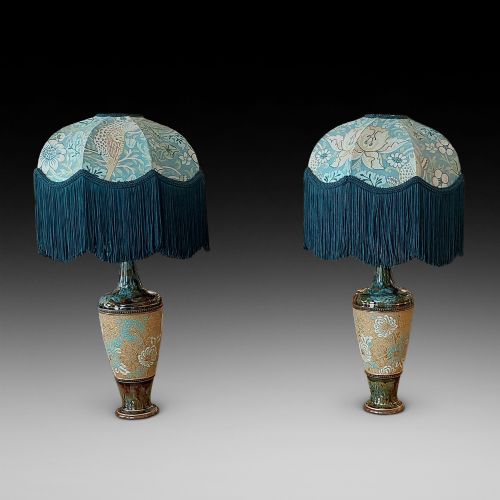
Forms range from ginger jars and twin handled vases to figural compositions and crackleware vessels, often complete with handmade fabric shades. Such lighting anchors a decorative scheme by providing symmetrical height and saturated colour.
Materials and construction
Potters shaped the ceramic bodies by hand or on the wheel, applying cobalt underglaze pigments before high temperature firing to achieve deep blue tones. Many specimens show hand painted details, crackle glazes or turquoise highlights over traditional ceramic pastes.
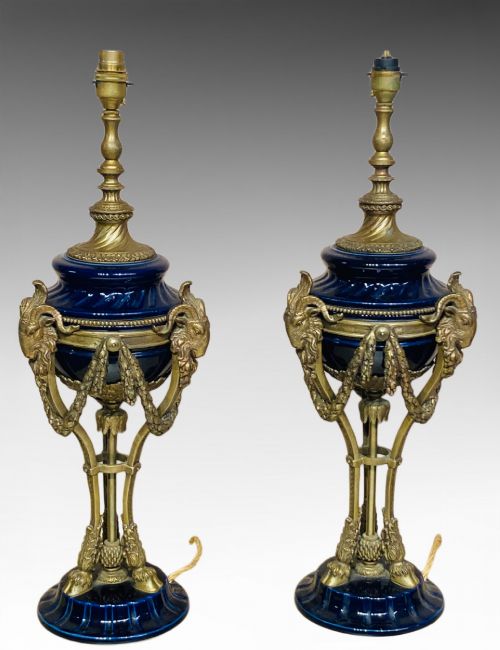
Metalworkers framed the porcelain bodies with cast ormolu, gilt bronze and brass mounts, securing the bases and necks to support electrical wiring. Fabric components like silk and cotton form the handmade shades that top these assembled structures.
Current listings feature pieces spanning the eighteenth century to the mid twentieth century, utilising porcelain, brass, silk, and ormolu.
Judging quality and craftsmanship
Quality rests upon the crispness of the porcelain body, the depth of the cobalt pigment and the precision of any hand painted decoration. Superior examples display clean potting without warping, alongside rich, unclouded glazes.
The metal mounts reveal much about the standard of manufacture, where finely chased ormolu with sharp relief work separates high grade studio pieces from simpler commercial adaptations. Harmonious matching between the two individual lamps in the pair further dictates desirability.
The Pair Blue Porcelain Lamps Glossary
- Ormolu
- Gilt bronze mounts applied to furniture, clocks and porcelain vessels, shaped and chased to provide decorative borders.
- Imari
- A style of Japanese export porcelain decorated in underglaze blue, iron red, and gold, named after the port of shipment.
- Ginger jar
- A wide bellied storage jar with a domed lid, frequently converted into a table lamp.
- Powder blue
- A finely speckled dark blue ceramic glaze applied by blowing powdered cobalt through a gauze tube onto the biscuit porcelain.
- Cloisonne
- Enamelling technique where thin metal wires form compartments on a ceramic or metal base to hold coloured glass paste before firing.
Pair Blue Porcelain Lamps: Frequently Asked Questions
How do I wire these old lamps?
Professional electricians can safely update the internal wiring and add modern lamp holders while preserving the original ceramic and metal components. Many examples already feature updated electrical cords and tested plugs for immediate use.
Ensure the brass or ormolu mounts are not compromised during rewiring, and consult a specialist if the lamp requires custom brass threading to fit modern hardware securely.
Are these lamps originally vases?
Most of these lighting pieces started life as decorative vases, ginger jars or covered vessels before being adapted for electrical use. The conversion process often involves drilling through the ceramic base or mounting the vessel with brass collars.
Collectors value this dual history, where historic ceramic forms find a practical second life as functional interior lighting.
How do I match lamp shades?
Select shades that complement the proportions of the porcelain body, ensuring the height of the fabric shade balances the height of the vase. Silk and handmade fabric shades echo traditional styling found on period examples.
Consider the colour temperature of your interior lighting to ensure the shade diffuses a warm glow that accentuates the cobalt blue pigments.
How do I clean antique porcelain?
Dust the porcelain body and metal mounts regularly with a soft, dry cloth to prevent grime accumulation. Avoid harsh chemical cleaners that can damage delicate hand painted glazes or strip the gilt finish from ormolu mounts.
Keep fabric shades separate during cleaning, brushing them gently with a soft bristle brush to remove surface dust.