


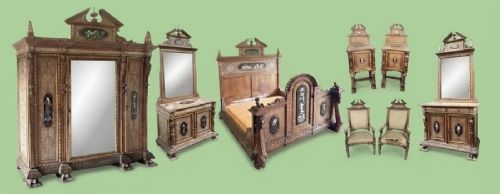


Pair Table Mirrors
These pair antique table mirrors and related standing glass bring reflective depth and period craftsmanship to interior spaces.
Pair Table Mirrors
When searching for pair antique table mirrors, buyers encounter a variety of decorative objects designed to sit upon furniture surfaces. The inventory includes console tables, side tables, plateau mirrors, and figure mirrors spanning periods from the eighteenth century to the twentieth century.
Most examples hail from the nineteenth century and the Edwardian era, incorporating styles such as Victorian, Regency, Edwardian, and Art Deco. These pieces serve functional and ornamental roles within historic and traditional interiors.
How they were made
Construction relies on traditional timbers including mahogany, walnut, rosewood, and satinwood, frequently paired with mirror glass and brass hardware. Artisans utilised marquetry, carving, and parcel-gilt techniques to ornament frames and associated furniture supports.
Materials such as marble, silver plating, and spelter also appear in the manufacturing of associated plateaux and figure mirrors. Each piece reflects the hand-made methods characteristic of its respective period.
Pair Table Mirrors Retail Price Guide 2026
Typical asking prices for pair table mirrors among the pieces listed under this phrase on Sellingantiques today, from the lower quarter to the upper quarter. They describe what is for sale here now, not the wider market.
Sorcerer type plateau mirrors bring a touch of nineteenth-century curiosity to tabletop displays.
What varies in quality
Quality separates through the precision of the carving, the richness of the wood grain, and the execution of details like marquetry and parcel-gilt finishes. Higher quality examples demonstrate superior joinery and more refined stylistic adherence to periods such as Regency, William IV, or Italian Baroque.
The choice of materials, from solid rosewood and marble tops to finely cast spelter or silver-plated stands, dictates the standing of each piece within its category.
Waring & Gillows·Lamb of Manchester·Donald Ross
The Pair Table Mirrors Glossary
- Marquetry
- Decorative veneer work forming geometric or pictorial patterns on wooden surfaces. It utilises contrasting woods such as satinwood and walnut to create visual depth.
- Parcel-gilt
- Partially gilded woodwork where gold leaf highlights specific carved details. This technique enhances architectural and decorative elements.
- Spelter
- A zinc alloy used as a substitute for bronze in decorative figures and frames. It is typically painted or electroplated to resemble more costly metals.
- Plateau
- A mirrored table centrepiece or stand historically used for displaying decorative objects or candelabra. It reflects candlelight and adds illumination to a room.
- Compactum
- A large fitted wardrobe or combination wardrobe introduced in the nineteenth century. It provides multifaceted storage within bedroom suites.
Pair Table Mirrors: Frequently Asked Questions
What periods do these mirrors represent?
The pieces span the eighteenth, nineteenth, and twentieth centuries, encompassing periods such as Regency, William IV, and the Edwardian era.
Stylistic influences also stretch from Italian Baroque to Art Deco and Art Nouveau.
Where were table mirrors placed?
Historically, table mirrors and plateau mirrors sat upon console tables, side tables, or dressing surfaces.
They functioned to reflect light around rooms and served as decorative centrepieces.
What woods were commonly used?
Cabinetmakers utilised timbers like mahogany, walnut, rosewood, and satinwood for frames and associated furniture.
These woods were often enhanced with marquetry inlay or carved gilt details.
How do plateau mirrors differ?
Plateau mirrors function as mirrored table stands rather than vertical looking glasses.
They were designed to hold objects on tabletops while reflecting light.