
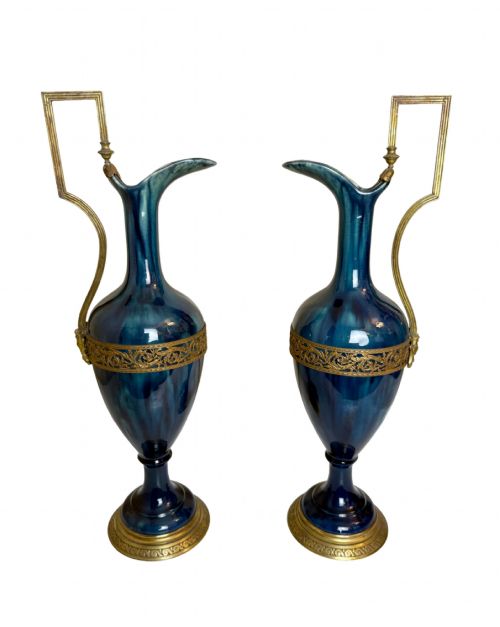
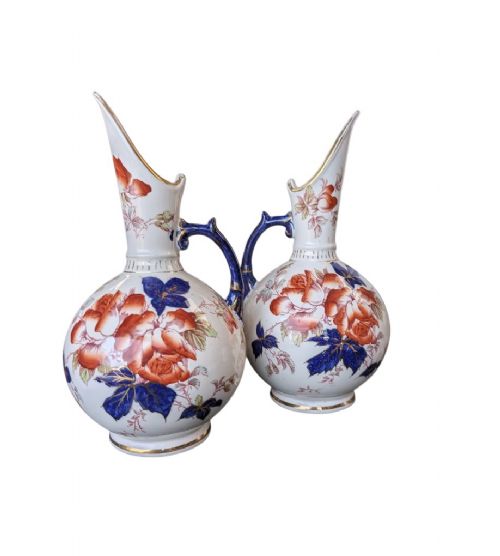


Pair Decorative Pitchers
Pair antique decorative pitchers are ornamental vessels found in porcelain, bronze, and earthenware, chosen for their sculptural form and display presence.
Pair Decorative Pitchers
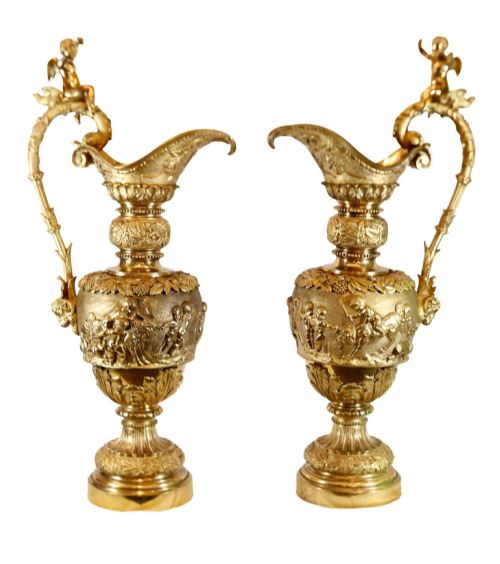
Pair antique decorative pitchers encompass ornamental ewers, claret jugs, and display urns spanning the nineteenth century through the Edwardian period. Buyers encounter these matching sets fashioned in diverse regional workshops, ranging from English potteries to continental bronze foundries.
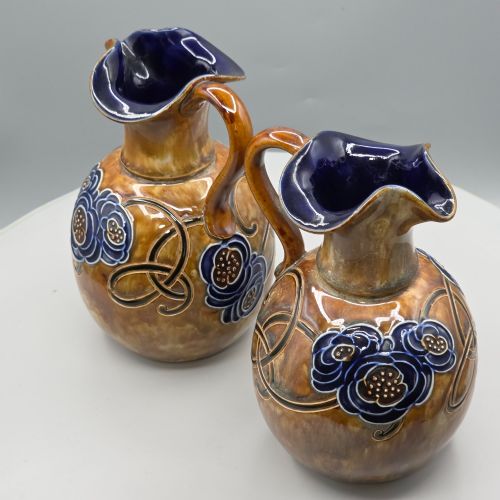
The forms vary from classical revival shapes to fluid Arts and Crafts and Art Nouveau designs. Many examples serve purely decorative functions on mantelpieces or pedestals, while others show past adaptations into table lamps.
Victorian and Edwardian iterations dominate the selection, utilising rich materials such as gilt bronze, cut glass, and hand-painted porcelain. Collectors seek these pairs to anchor symmetrical interior displays with period character.
Materials and Techniques
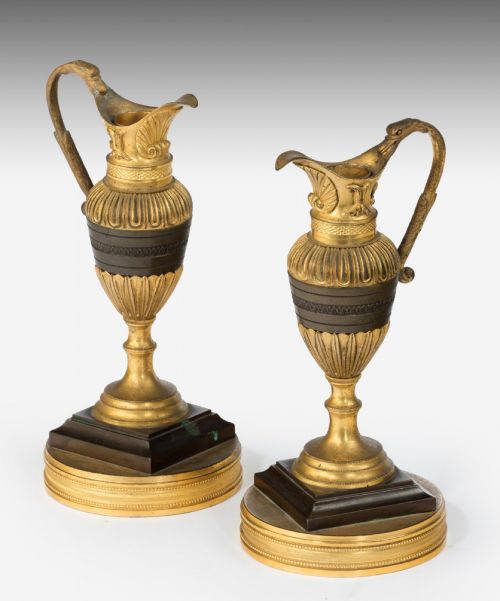
Makers shaped these vessels using traditional casting, throwing, and moulding methods across metal and ceramic bodies. Bronze and brass components frequently feature cast relief ornamentation combined with applied ormolu and gilt finishes.
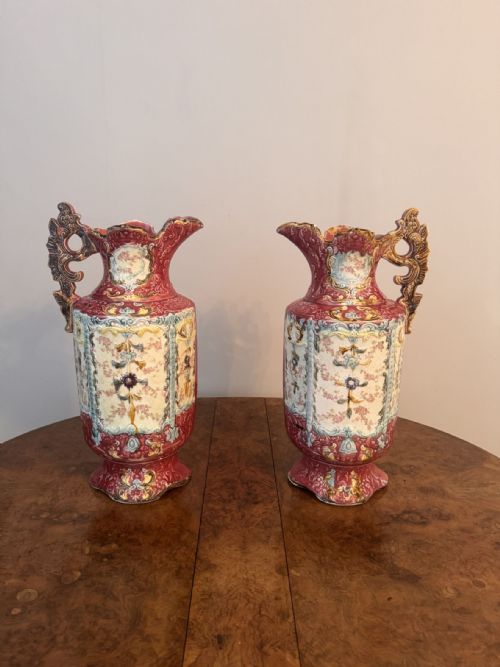
Ceramic pieces rely on earthenware and porcelain foundations finished with hand-painted glazes, enamel details, and blush ivory treatments. Glass elements incorporate cut patterns or coloured tints paired with metal mounts.
Recorded object types include ewers, claret jugs, Toby jugs, and table lamps originating from British, French, and Italian makers.
Assessing Quality
Quality rests upon the crispness of the casting in metal pieces and the precision of the hand-painting on porcelain surfaces. Finer pairs demonstrate superior balance in their proportions and deeper detailing in their ornamental mounts.
The reputation of the maker and the complexity of the decorative scheme distinguish standard production items from exceptional archival works. Original matched sets carrying factory signatures command greater interest than assembled pairs.
Royal Doulton·Royal Worcester·Doulton Burslem·Royal Crown Derby·H F Fearncombe And Co
The Pair Decorative Pitchers Glossary
- Ewer
- A large jug with a wide spout and handle, traditionally used for water but primarily decorative in nineteenth-century pairs. These vessels form the majority of ornamental pitcher listings.
- Ormolu
- Gilded bronze applied as mounts and decorative trim on ceramic and glass bodies. This French technique adds metallic contrast to porcelain and stone surfaces.
- Blush Ivory
- A cream-colored ceramic ground developed by Royal Worcester featuring soft floral hand-painting. This finish typifies late Victorian ornamental wares.
- Claret Jug
- A tabletop vessel intended for serving wine, typically constructed from cut glass with plated or metal mounts. Pairs of these items appear less frequently than standard ewers.
Pair Decorative Pitchers: Frequently Asked Questions
How should I display a pair of antique ewers?
These pieces function best when placed symmetrically on pedestals, sideboards, or large mantelpieces where their matching forms create visual balance. Ensure they sit away from high-traffic areas to protect delicate handles and gilt surfaces.
Lighting plays a key role, especially for bronze or glass models that catch ambient room light across their metallic or transparent finishes.
Were these decorative pitchers used for serving?
While certain metal water jugs and glass claret jugs served practical dining purposes, the majority of decorative pairs were created entirely for aesthetic display. Elaborate gilding, delicate hand-painted enamel, and structural conversions into lamps indicate a decorative intent.
Examining the interior condition and material fragility helps determine whether a specific pair was meant for the table or the drawing room.
How can I tell Victorian ewers from Edwardian ones?
Victorian pieces often lean towards heavy ornamentation, revivalist Gothic or Renaissance styles, and rich gilt bronze or deep porcelain glazes. Edwardian and later examples tend to introduce lighter palettes, simpler forms, and early twentieth-century ceramic bodies.
Maker marks and registration numbers stamped on the base provide the most reliable chronological markers for distinguishing between these overlapping eras.