




Painted Wooden Side Chair
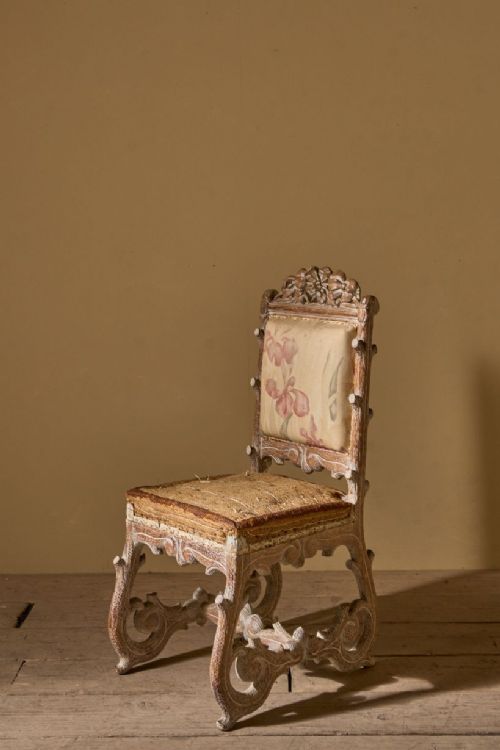
A painted wooden side chair brings pattern, colour and historic character to a room through decorative surface work on a traditional timber frame.
Painted Wooden Side Chair
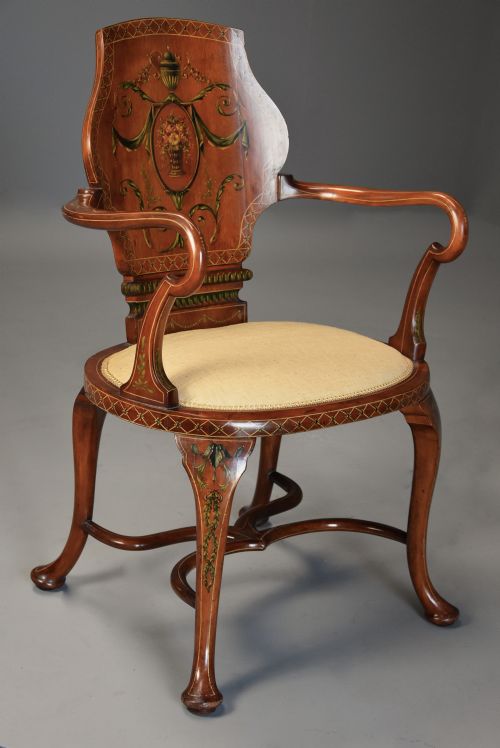
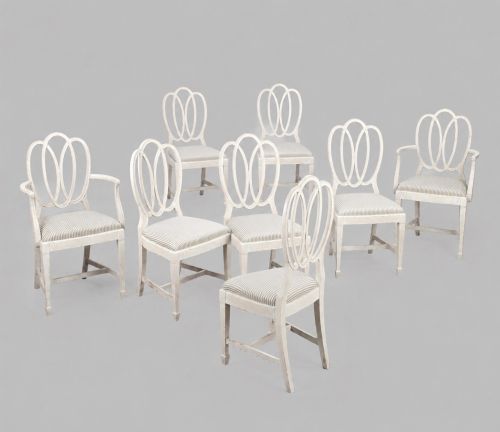
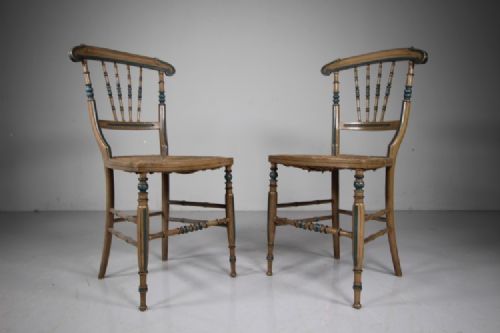
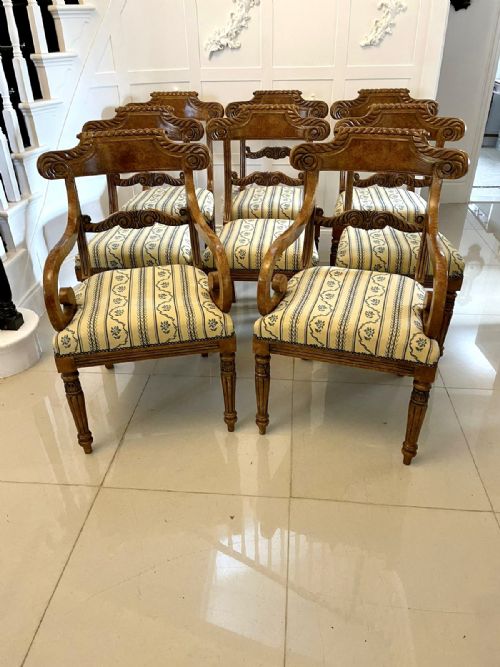
When you search for a painted wooden side chair, you encounter a wide selection of seating forms created across the eighteenth, nineteenth and early twentieth centuries. These encompass dining chairs, hall chairs and occasional seats dressed in pigment, faux finishes or hand-painted decorative schemes.
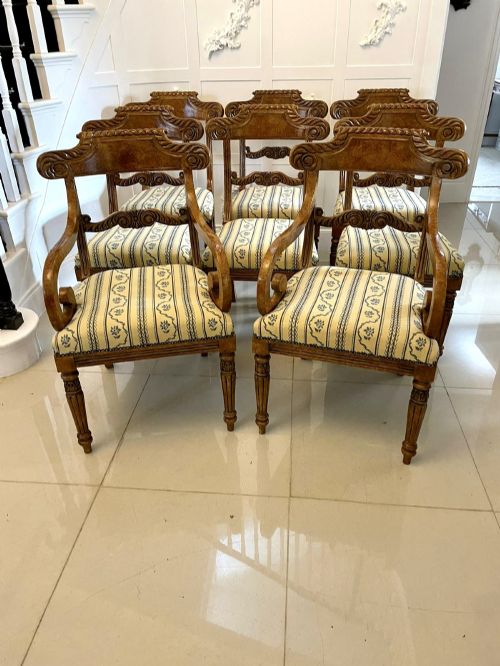
The inventory on this page spans distinct regional traditions and formal styles, including Regency, Louis XVI, Georgian and folk designs. Pieces range from simple country chairs to elaborate armorial hall seating and matched sets intended for formal dining spaces.
Materials and construction methods
Makers built these chairs using solid timbers such as mahogany, oak, satinwood and maple, frequently shaping them through traditional joinery and carving techniques. Frames were then prepared with priming and applied coats of paint, scumble, or decorative faux finishes like birds-eye maple and faux bois.
Surface decoration often involved hand-painted motifs, gilding or armorial crests, whilst seats were variously fashioned from solid wood, woven cane or upholstered pads covered in fabric and velvet.
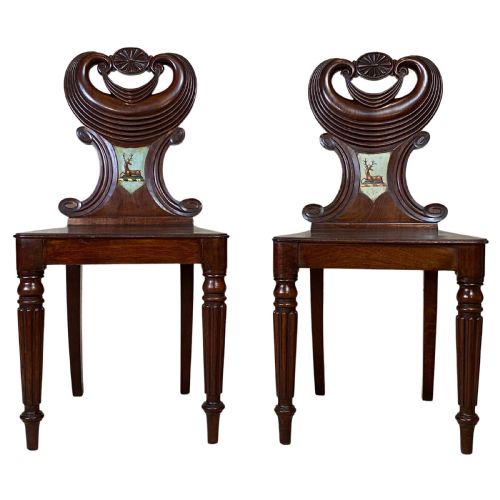
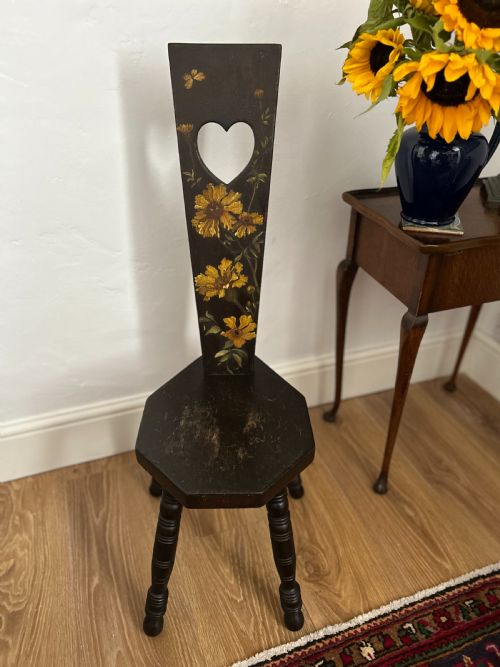
An Indian wedding chair sits alongside European folk seating and elaborate Regency hall chairs.
Judging quality and craftsmanship
Quality in these chairs rests upon the crispness of the original timber carving, the structural integrity of the frame joints, and the preservation of the decorative paint surface. Superior pieces exhibit refined proportions and careful joinery beneath their applied decoration.
The merit of the painted finish itself distinguishes standard production from exceptional work, particularly where hand-painted details, scumble glazes or simulated wood grains remain intact and well-executed over decades of use.
Gillows
The Painted Wooden Side Chair Glossary
- Sgabello
- A light wooden chair originating in the Renaissance, typically featuring a high back and trestle supports rather than four legs.
- Cockpen
- An armchair style with an open lattice grid back, popular in eighteenth-century English furniture production.
- Scumble
- A translucent layer of paint manipulated over a lighter base colour to create decorative graining or mottled textures.
- Armorial
- Bearing a heraldic coat of arms, frequently painted or carved onto the backs of formal hall chairs.
- Faux bois
- An artistic imitation of wood grain painted onto a different timber or prepared surface.
Painted Wooden Side Chair: Frequently Asked Questions
What is a hall chair?
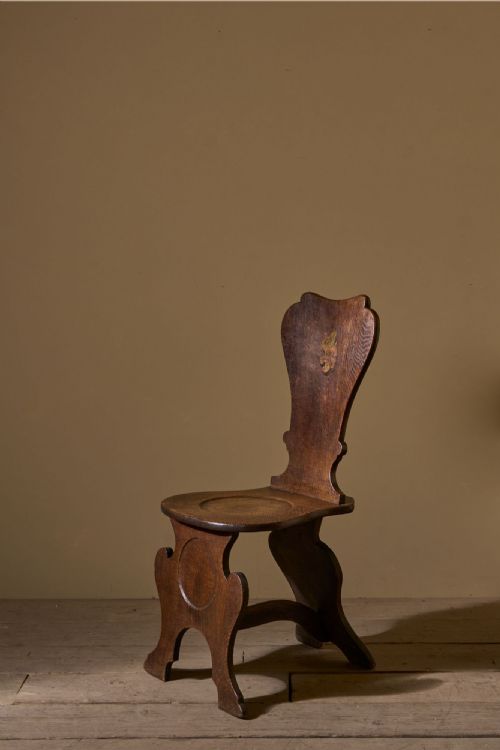
A hall chair is a rigid wooden seat designed primarily for display in an entrance hallway rather than prolonged sitting. These chairs frequently feature solid timber seats and carved or painted armorial crests.
They date largely from the eighteenth and nineteenth centuries, serving to impress visitors upon entry to a country house or townhouse.
How do I care for painted wood?
Maintain painted wooden furniture by keeping it away from direct sunlight and steady moisture fluctuations. Dust gently with a dry, soft cloth rather than chemical polishes.
Protect fragile historic paint layers from knocks and friction to preserve the original decorative surface.
Are these chairs comfortable for dining?
Many of these chairs were built with rigid wooden seats or narrow proportions intended for formal posture rather than lounging. Dining sets often include padded seats covered in fabric, velvet or cane for added comfort.
Consider the seat height and back angle when selecting pieces for regular dining use.
How do I identify French regional styles?
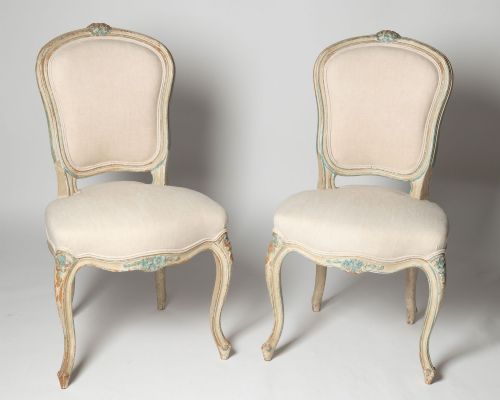
French chairs from periods like Louis XV and Louis XVI display characteristic carved details, painted grey or neutral finishes, and symmetrical framing. They often incorporate cane panels or upholstered elements.
Look at the leg shaping and carved motifs to distinguish between formal neoclassical designs and provincial interpretations.