


Painted Wooden Display Cabinet
A painted wooden display cabinet brings colour and character to a room while keeping your books and collections safe behind glass.
Painted Wooden Display Cabinet
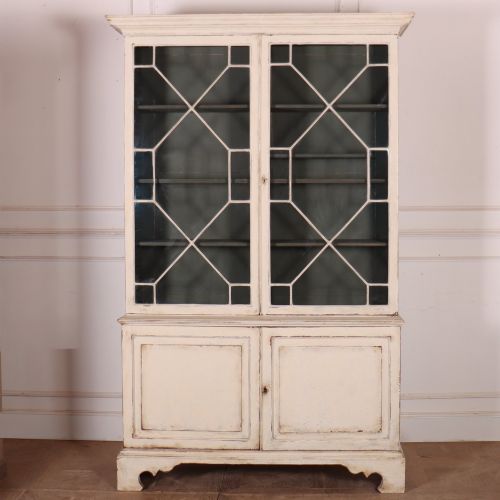
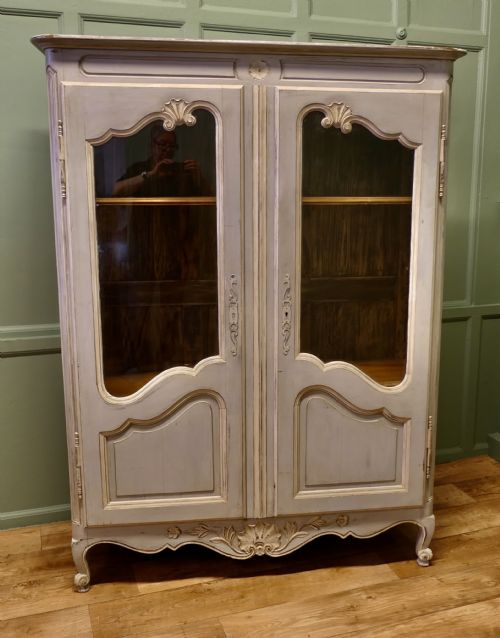
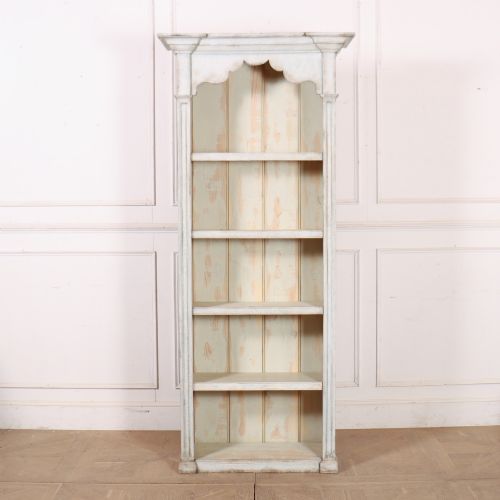
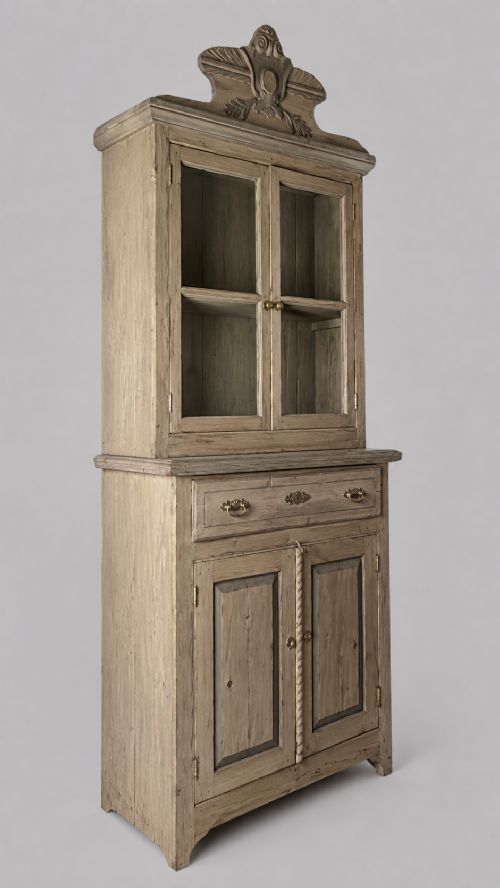
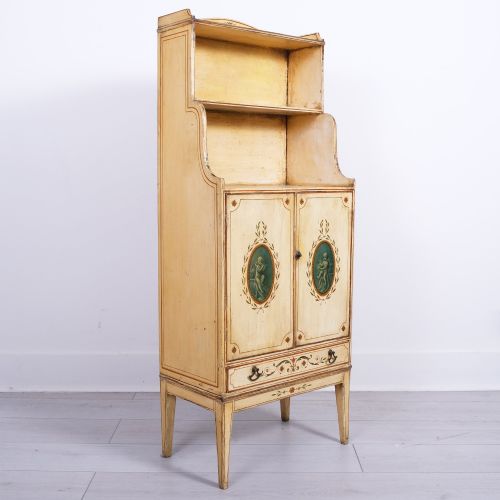
When you search for a painted wooden display cabinet, you encounter a wide selection of glazed cupboards, bookcases, vitrines, and corner cabinets spanning from the eighteenth century to the twentieth century. These pieces serve as practical storage solutions with transparent doors or open shelving designed to showcase books, china, and curated collections.
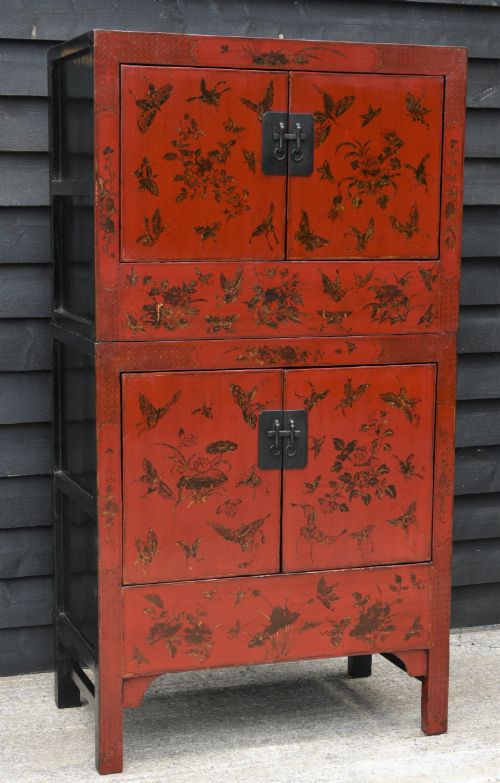
The versions you meet most often on this page range from English country pine dressers and Georgian bookcases to French provincial cabinets and Chinese lacquered wedding pieces. They arrive in various regional finishes, including scrubmed surfaces, original painted interiors, and traditional red lacquer.
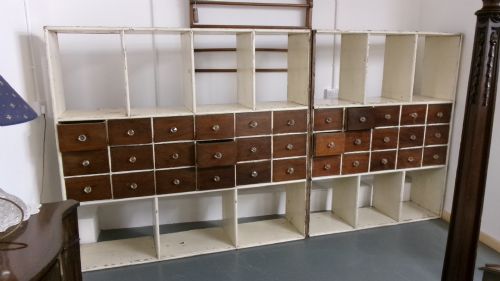
Forms extend from tall breakfront libraries and corner cupboards to low credenzas and school library book cabinets. Each type reflects the domestic or commercial storage needs of its period, whether housed in a Victorian chemist shop or a rural farmhouse.
How they were made
Makers constructed these cabinets using timber, pine, satinwood, walnut, and metal, combining solid structural frames with glazed doors and brass hardware. Wood surfaces received protective and decorative coats of paint, lacquer, or simulated rosewood finishes.
Joinery techniques varied by workshop and period, supporting heavy book collections or delicate display items through robust shelving and fitted doors. Interior components often retained original painted treatments, contrasting with the weathered or scrubbed exterior timber.
Listings feature items built from pine, satinwood, walnut, and metal, spanning the 18th, 19th, and early 20th centuries.
What varies in quality
The distinction between pieces rests upon the integrity of the original painted surface, the balance of the proportions, and the quality of the timber construction. Retaining an original interior paint scheme or authentic period lacquer elevates the character of a cabinet above one with later or heavy-handed overpainting.
Refinement in architectural detailing, such as breakfront facades, glazed door tracery, and matching brass hardware, separates standard utility cupboards from sophisticated library bookcases and vitrines.
Edwards & Roberts
The Painted Wooden Display Cabinet Glossary
- Vitrine
- A glass-fronted cabinet designed for displaying fine objects or porcelain. This French term frequently applies to decorative 18th and 19th-century display pieces.
- Breakfront
- A large piece of furniture whose central section projects forward from the flanking sides. This layout provides visual depth to large bookcases and side cabinets.
- Scrumbled
- A decorative painting technique involving the layering of translucent or opaque colours to simulate the grain of more expensive woods. It appears frequently on country pine furniture.
- Lacquer
- A durable finish applied in multiple coats and polished to a hard sheen, typical of traditional Chinese wedding cabinets. It provides both protection and a vibrant colour.
- Corner Cabinet
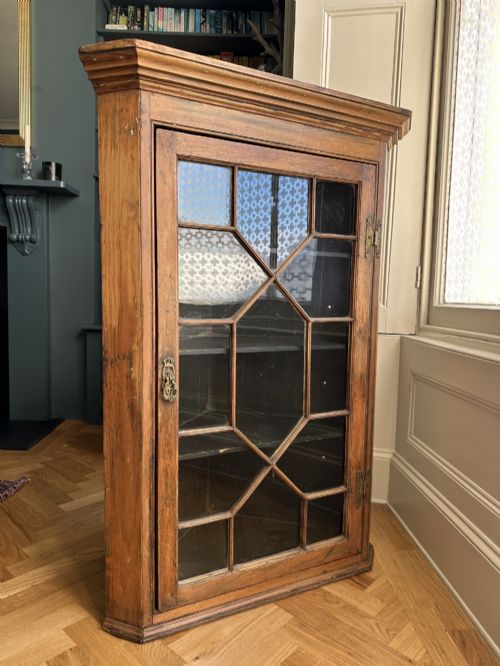
- A specialised storage unit built with an angled back to fit neatly into the corner of a room. Versions range from standing pine cupboards to hanging wall units.
Painted Wooden Display Cabinet: Frequently Asked Questions
Where should I place a display cabinet?
These cabinets suit dining rooms, living spaces, and libraries where you want to exhibit books or ceramics while protecting them from dust.
Corner units fit compactly into unused angles, while breakfront bookcases anchor large walls in traditional interiors.
How do I care for painted wooden surfaces?
Dust regularly with a soft, dry cloth and avoid harsh chemical cleaners that can damage aged paint or lacquer finishes.
Keep wooden cabinets away from direct sunlight and radiators to prevent the timber from warping and the paint from cracking.
Are the interiors usually painted?
Many cabinets feature contrasting interior paint or original treatments that highlight the items displayed on the shelves behind the glass.
Some pine cupboards retain their untouched early interiors, which adds authenticity to regional English and continental pieces.