





Painted Wooden Console
A painted wooden console brings architectural form and patinated colour into a room, offering a surface that carries the marks of its history.
Painted Wooden Console
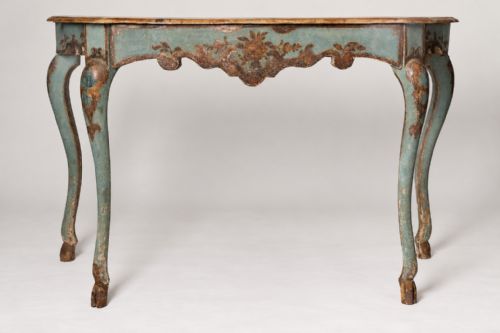
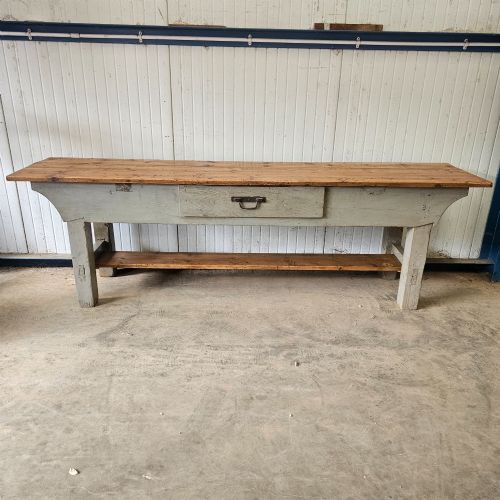
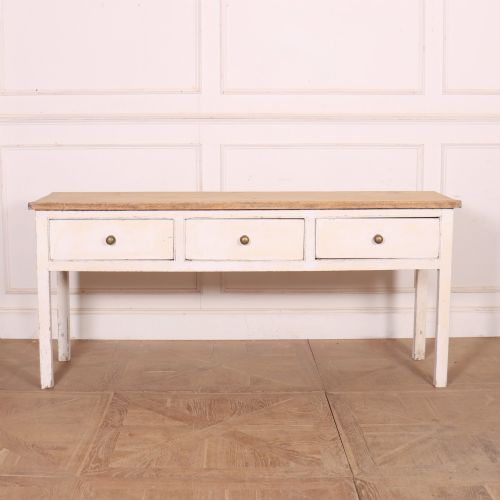
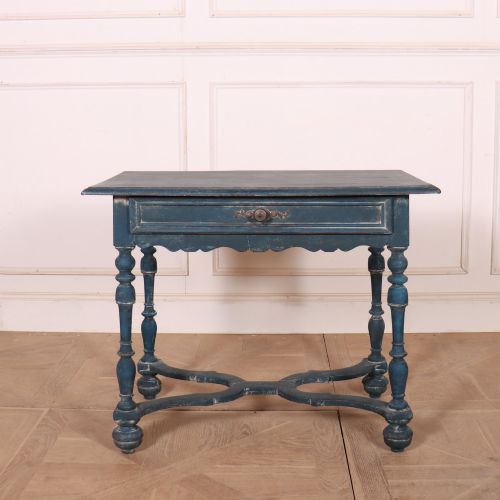
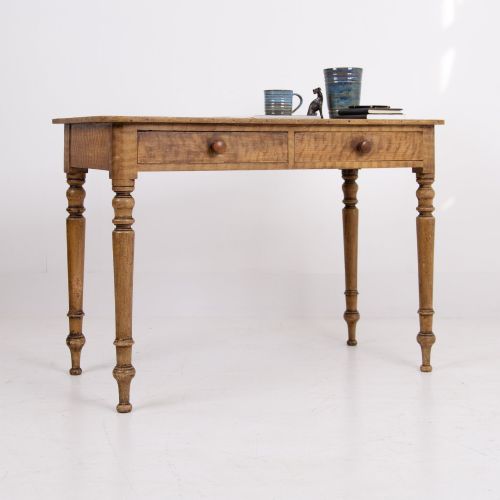
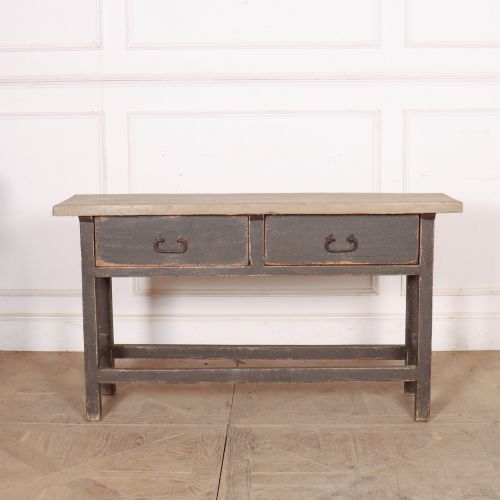
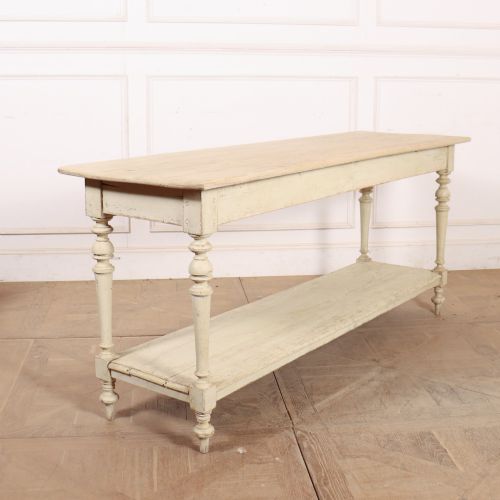
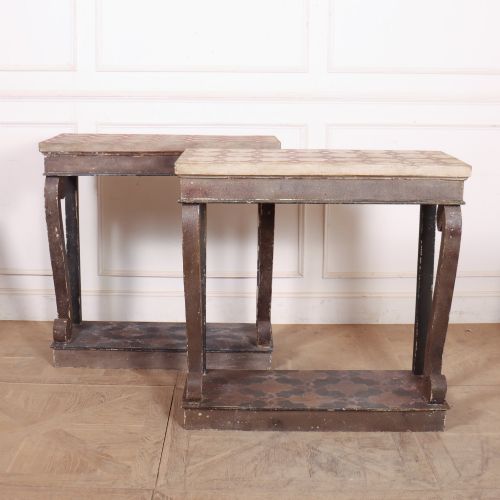
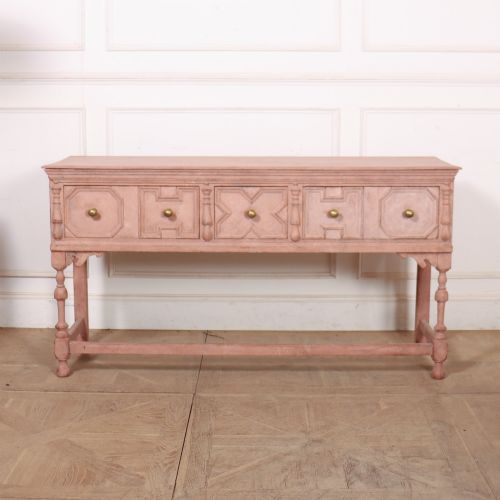
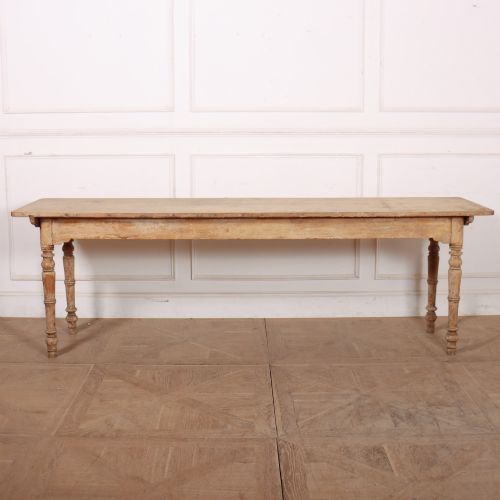
A painted wooden console takes several forms across the inventory, appearing as dedicated wall tables, serving tables, and dresser bases adapted to narrow spaces. The pieces span centuries from the eighteenth through to the early twentieth century, originating from English, French, Italian, Spanish, and Swedish workshops.
You are most likely to encounter pine and oak structures finished in period paint finishes, ranging from scumble effects to antique white and green pigments. These tables serve hallways, dining rooms, and drawing rooms where surface depth is restricted but decorative presence is required.
Materials and construction
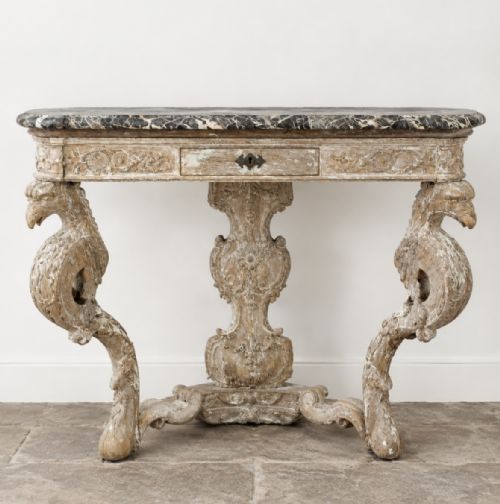
Makers utilised native timbers such as pine and oak for the primary carcases, often applying gesso to prepare surfaces for decorative schemes. Iron and brass hardware appears on drawers, while selected pieces incorporate marble tops for heavier use.
The painted surfaces themselves are applied over wood, with many surviving in original scumble or layered pigments that show decades of wear. Hand-carved detailing marks the finer French and Italian examples, contrasting with the simpler joinery of English country pieces.
Painted Wooden Console Retail Price Guide 2026
Typical asking prices for painted wooden console among the pieces listed under this phrase on Sellingantiques today, from the lower quarter to the upper quarter. They describe what is for sale here now, not the wider market.
Pine and oak form the structural core of the tables listed here, paired with marble, gesso, and iron elements.
Assessing quality and finish
The integrity of the original paint surface determines much of the distinction between ordinary and exceptional examples. Surfaces that retain undisturbed layers of early pigment carry greater historical weight than later overpainting.
Joinery execution and timber selection set the baseline for each piece, whether it is a heavily scrubbed kitchen table adapted for display or a finely carved continental wall bracket. Proportion and the preservation of original hardware complete the assessment.
The Painted Wooden Console Glossary
- Scumble
- A decorative painting technique where a translucent glaze is dragged over an opaque base coat to simulate grain or texture. It creates a mottled finish popular on nineteenth-century country furniture.
- Potboard
- A lower open shelf fitted between the legs of a dresser base or serving table, originally intended for storing earthenware pots. It provides structural stability while adding lower display space.
- Demi-lune
- A half-moon shape used for console tables designed to sit flush against a wall. This form saves floor space in narrow hallways.
- Gesso
- A plaster mixture consisting of chalk, pigment, and glue used to coat wood surfaces before painting or gilding. It provides a smooth ground for decorative work.
- Overmantel
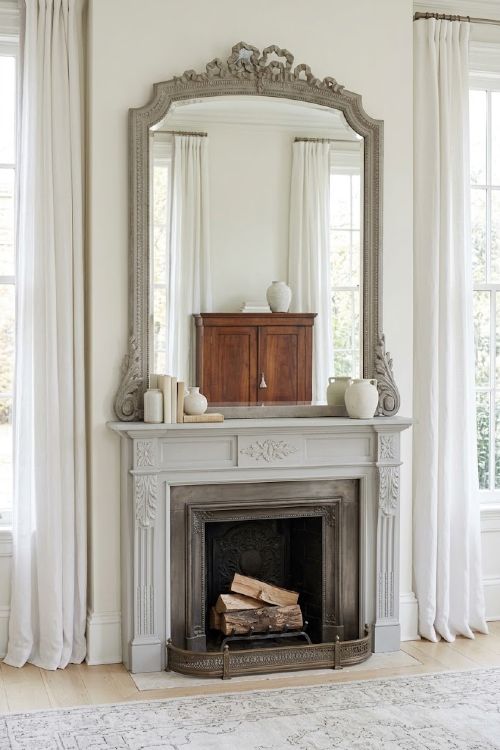
- A decorative structure or mirror designed to sit directly above a fireplace mantelpiece. In some instances, it pairs with a matching console table.
Painted Wooden Console: Frequently Asked Questions
Where should I place a console table?
These tables suit narrow circulation areas such as hallways, landings, and entrance passages where a deep piece of furniture would obstruct movement. Their shallow profile allows them to anchor a mirror or painting without dominating the floor space.
Living rooms and dining spaces also accommodate them well, functioning as serving surfaces or display ledges for lamps and decorative objects.
How do I care for original painted wood?
Protect antique paint surfaces from direct sunlight and excessive moisture by using dry dusting cloths rather than liquid polishes. Maintaining stable room humidity prevents the underlying timber from shrinking and cracking the gesso or paint.
Avoid abrasive cleaners entirely, as they strip the historic layers of pigment that give these pieces their character.
What is the difference between a console and a serving table?
Console tables traditionally anchor against a wall, sometimes relying on wall brackets or legs for support, and focus on decorative display. Serving tables are typically freestanding functional furniture designed for dining rooms to hold food and service items.
In practice, surviving antiques often blur these distinctions depending on their proportions and regional naming conventions.
How can I identify original paint?
Original paint shows natural wear patterns, underlying craquelure, and integration with the timber beneath that modern refinishing cannot replicate. Examination under magnification often reveals multiple historic layers and oxidation consistent with the stated age.
Synthetic uniformity or lack of wear around high-touch areas usually indicates later decoration.