


Painted Wooden Beds
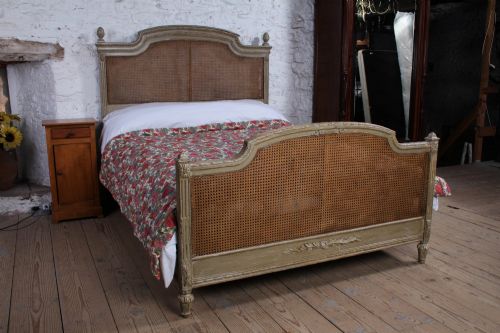
These painted wooden beds bring continental and domestic charm to a bedroom, offering sturdy wood frames finished in period paint.
Painted Wooden Beds
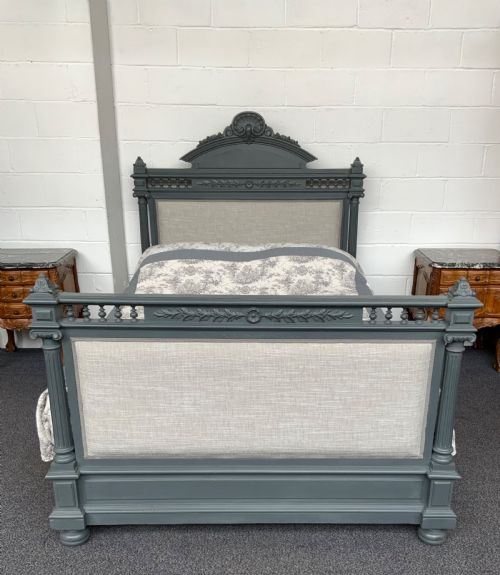
Painted wooden beds encompass substantial double, kingsize and single bed frames constructed primarily from timber and finished with decorative painted surfaces. Buyers searching this phrase encounter substantial French provincial designs alongside Victorian pine framing, ranging from compact singles to grand emperor and kingsize proportions.
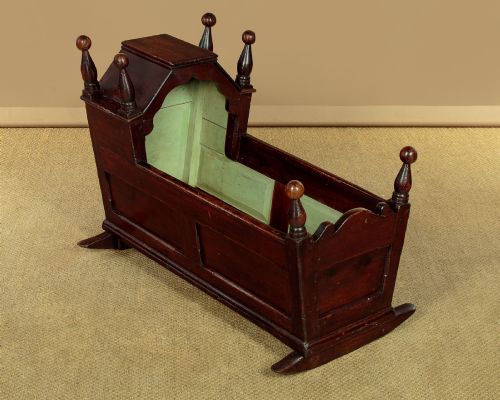
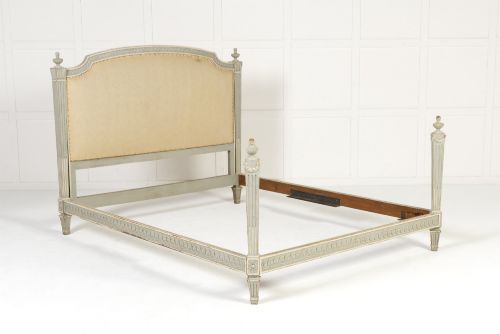
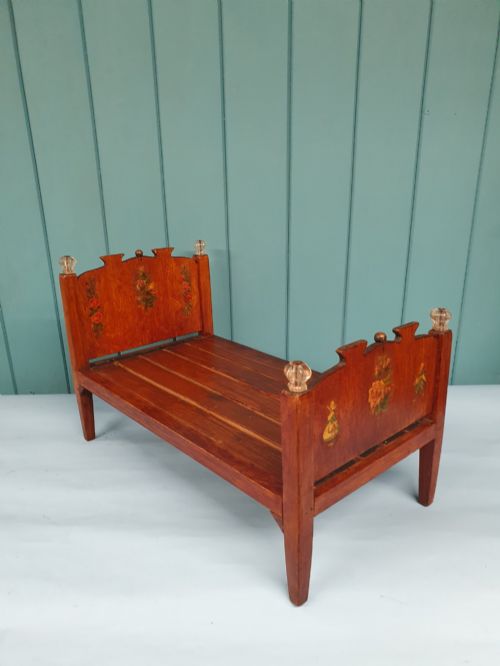
The selection on this page leans heavily towards continental aesthetics, featuring Louis XVI style curves and hand-painted floral panels on wooden headboards and footboards. Alongside full-sized bedsteads, the listings include related sleeping furniture such as rocking cradles and child's beds in matching painted pine.
Materials and construction
Craftsmen built these bed frames using solid timbers like pine and satinwood, frequently integrating woven cane panels or upholstered fabric sections into the headboards and footboards. Structural integrity relied on traditional joinery, whilst decorative details incorporated hand-carving and parcel gilding directly onto the wooden surfaces.
The defining characteristic is the application of paint, ranging from original single-colour coatings on Victorian pine to intricate hand-painted floral panels and brass embellishments on French neoclassical frames.
One listed king size bed arrives with cinematic provenance, having appeared directly on screen in the second series of The Great.
Markers of quality
Quality in these beds is determined by the refinement of the carved wood details and the authenticity of the painted finish, whether preserved in original condition or executed with artistic floral panels. Superior examples exhibit harmonious proportions in styles such as Louis XVI or French provincial, combined with integral materials like fine cane work and solid brass fittings.
The distinction between standard domestic pine furniture and high-tier pieces rests on the complexity of the hand-carved woodwork, the presence of matching suites or bedside cabinets, and the preservation of early painted surfaces.
maple and co·Harrods
The Painted Wooden Beds Glossary
- Caned
- Woven cane panelling utilised in headboards and footboards to provide lightweight ventilation and decorative texture. This technique appears frequently in Louis XVI style frames.
- Parcel Gilt
- A decorative method where specific carved wooden details are highlighted with thin layers of gold leaf over the painted surface. It adds subtle illumination to provincial headboards.
- Corbeille
- A French bed style featuring an enveloping, rounded headboard and footboard that curves inward like a basket. These single and double frames create an enclosed sleeping space.
- Pine
- A soft timber commonly utilised in Victorian and continental vernacular furniture for its reliable workability. It provides the solid carcass for painted blanket boxes and children's beds.
- Satinwood
- A durable, fine-grained wood utilised for high-end Victorian furniture and painted decorative schemes. It offers a smooth canvas for detailed artistic finishes.
Painted Wooden Beds: Frequently Asked Questions
What sizes do these painted beds come in?
The available frames span a wide range of dimensions, from small children's beds and cradles to standard double, kingsize, and large emperor proportions.
Larger variations frequently showcase elaborate French carving, whilst more compact examples utilise simple pine construction.
Are modern mattresses suitable for antique bed frames?
Many antique frames accommodate standard modern mattress sizes, though older French and Victorian dimensions can occasionally require bespoke sizing.
Buyers should verify the internal length and width of the specific bedstead before purchasing a mattress.
How do I care for painted wooden surfaces?
Maintenance requires gentle dusting with a soft, dry cloth to protect the painted finish and any delicate hand-painted floral panels.
Avoid chemical polishes and keep the wood away from direct heat sources to prevent cracking in the timber.
What is the difference between Louis XVI and Louis XV styles?
Louis XVI style furniture typically displays straight, neoclassical lines, fluted columns, and geometric symmetry in the carved wood.
Louis XV design favours asymmetrical curves, flowing organic motifs, and pronounced cabriole shapes.