


Painted Wood Trumeau Panel
A painted wood trumeau panel brings architectural presence and classical balance to an interior, combining mirror glass and decorative painting within a single wall piece.
Painted Wood Trumeau Panel
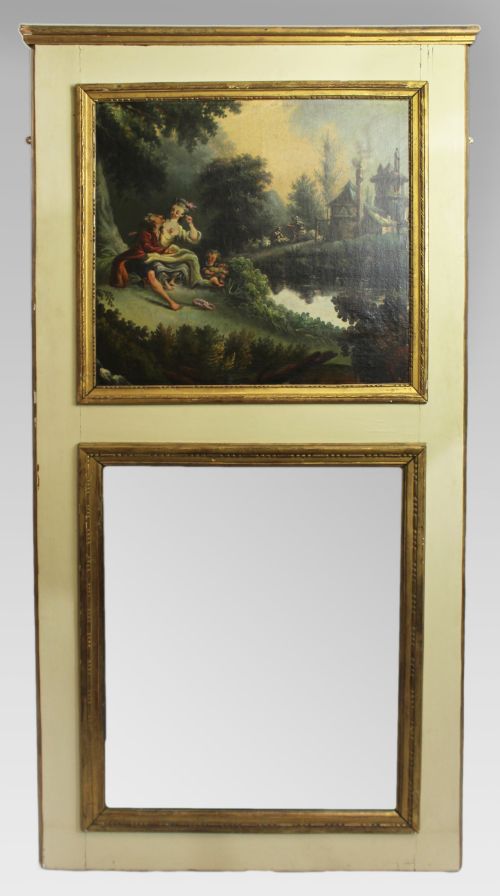
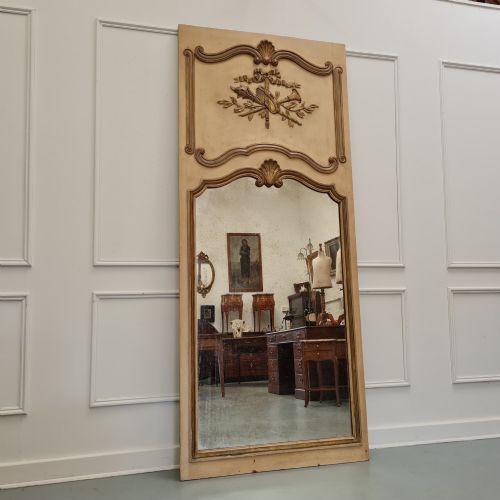
A painted wood trumeau panel integrates vertical woodwork with either an inset oil painting or a looking glass, functioning primarily as a wall mirror or overmantel. The form originates in French interior decoration, designed to fit seamlessly between windows or above a fireplace.
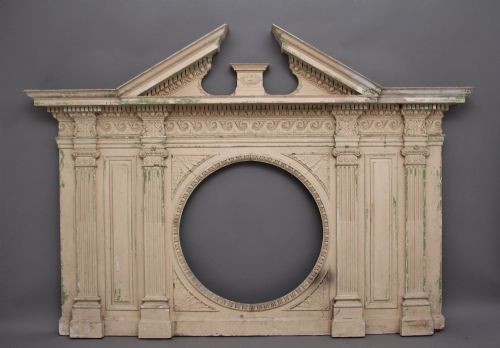
Examples on this page span from the eighteenth century through to the early twentieth century, taking in Regency, Victorian, and Louis XVI revival styles. These pieces often feature painted pine or gilded wood frames housing pastoral scenes or floral panels alongside glass plates.
How they were made
Construction relies on timber framing, typically using painted pine or mahogany to create the tall upright panels. Artisans applied gesso and paint directly to the wood, often incorporating gold leaf or parcel gilt highlights to accentuate the classical moulding.
Surfaces are completed with oil paint for figurative or foliate scenes and mirror glass set into the lower section. The integration of hand-painted panels required traditional joinery methods suited to large wall fixtures.
Several panels double as domestic art galleries by inserting pastoral oil paintings directly above the morning mirror.
What varies in quality
The sophistication of the painted artwork sets the better examples apart from standard decorative pieces, particularly where hand-painted foliate or pastoral oil scenes display genuine artistic merit. Original paint surfaces and authentic parcel gilding carry greater visual harmony than later repainting.
Proportion and the handling of classical mouldings dictate the success of the design, with Georgian, Regency, and Louis XVI style frames showing varying degrees of architectural crispness. The integration between the mirror glass and the upper panel reflects the care taken by the original maker.
The Painted Wood Trumeau Panel Glossary
- Trumeau panel
- An architectural wall panel, often placed between windows, combining woodwork with a mirror or painting. This form gained popularity in classical European interiors.
- Overmantel
- A large mirror or decorative panel designed specifically to hang above a fireplace mantelpiece. These pieces anchor the chimney breast in period rooms.
- Pier mirror
- A tall narrow looking glass made to hang on the pier of wall between two windows. They reflect light into the centre of a room.
- Giltwood
- Timber that has been coated with fine leaf gold or metal powder over a prepared gesso ground. It provides a reflective, warm finish suited to formal reception rooms.
- Parcel gilt
- Woodwork where only specific carved details or mouldings are highlighted with gold leaf while the rest remains painted. This technique creates subtle contrast.
Painted Wood Trumeau Panel: Frequently Asked Questions
Where should I hang a trumeau panel?
These pieces suit positions above a fireplace mantel or on a substantial wall space where their vertical proportions can command the room.
They work particularly well between windows or above low console tables to bounce light around a drawing room or dining space.
How do I identify a French trumeau?
French examples often incorporate pastoral oil paintings or neoclassical motifs like urns and ribbons within the upper wooden section.
They frequently display Louis XVI style characteristics, including straight architectural lines and restrained carved detailing.
Are these panels heavy?
Due to the timber construction and inset glass plates, these wall fixtures carry considerable weight that requires secure wall fixings.
Professional installation into structural wall studs or solid masonry is essential to support the load safely.
What is the difference between an overmantel and a pier mirror?
An overmantel is proportioned to sit horizontally or vertically above a fireplace opening, grounding the hearth area.
A pier mirror is traditionally designed for the narrow wall space between windows, focusing on height and light reflection.