




Painted Wood Settee
A painted wood settee brings continental polish and generous seating to a room, spanning from crisp neoclassical lines to relaxed country forms.
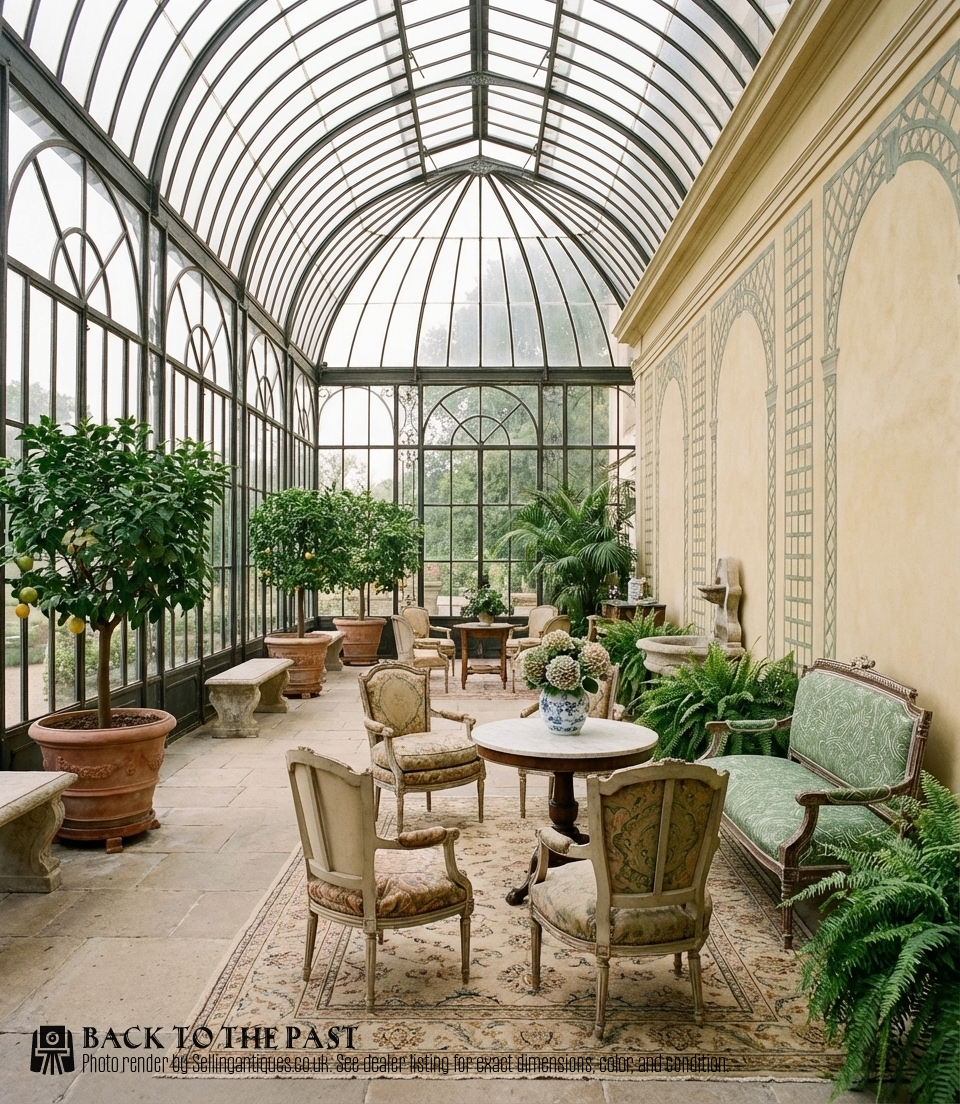
Painted Wood Settee
A painted wood settee provides extended seating built from timber finished with pigment rather than clear polish. These pieces appear across multiple historical periods, taking the form of large sofas, two-seat love seats, daybeds, and chair-back benches.
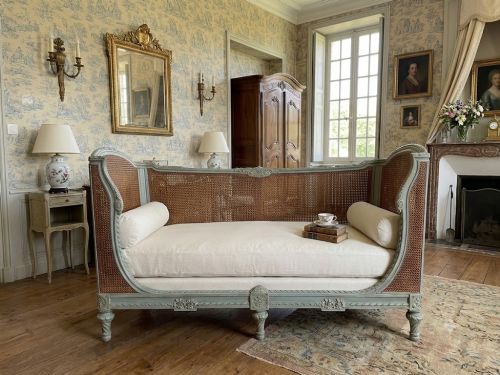
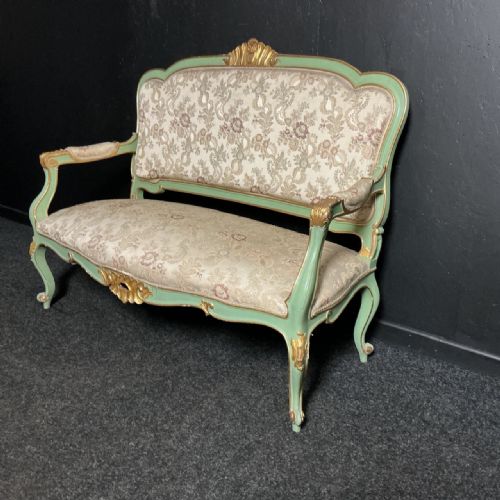
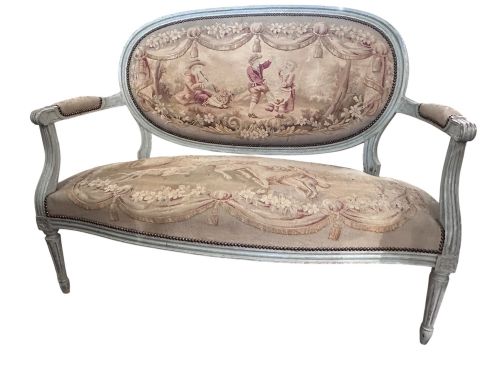
The version most commonly encountered on this page is the French-inspired seat, particularly items referencing Louis XV or Louis XVI styles alongside Swedish Gustavian forms. These examples often feature carved frames finished in muted paint, sometimes heightened with gilt accents.
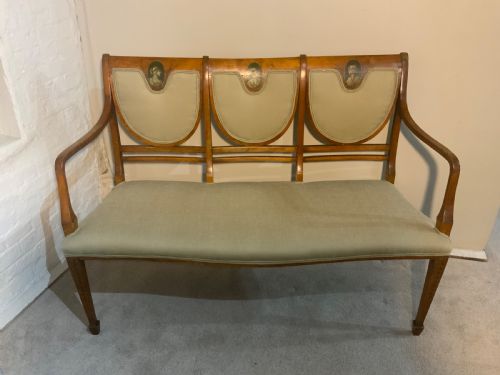
English and Scandinavian interpretations also surface, ranging from Regency satinwood designs to simple nineteenth-century benches. Each maker approached the form with regional flair, combining structural timber with upholstery, cane panels, or exposed wooden backs.
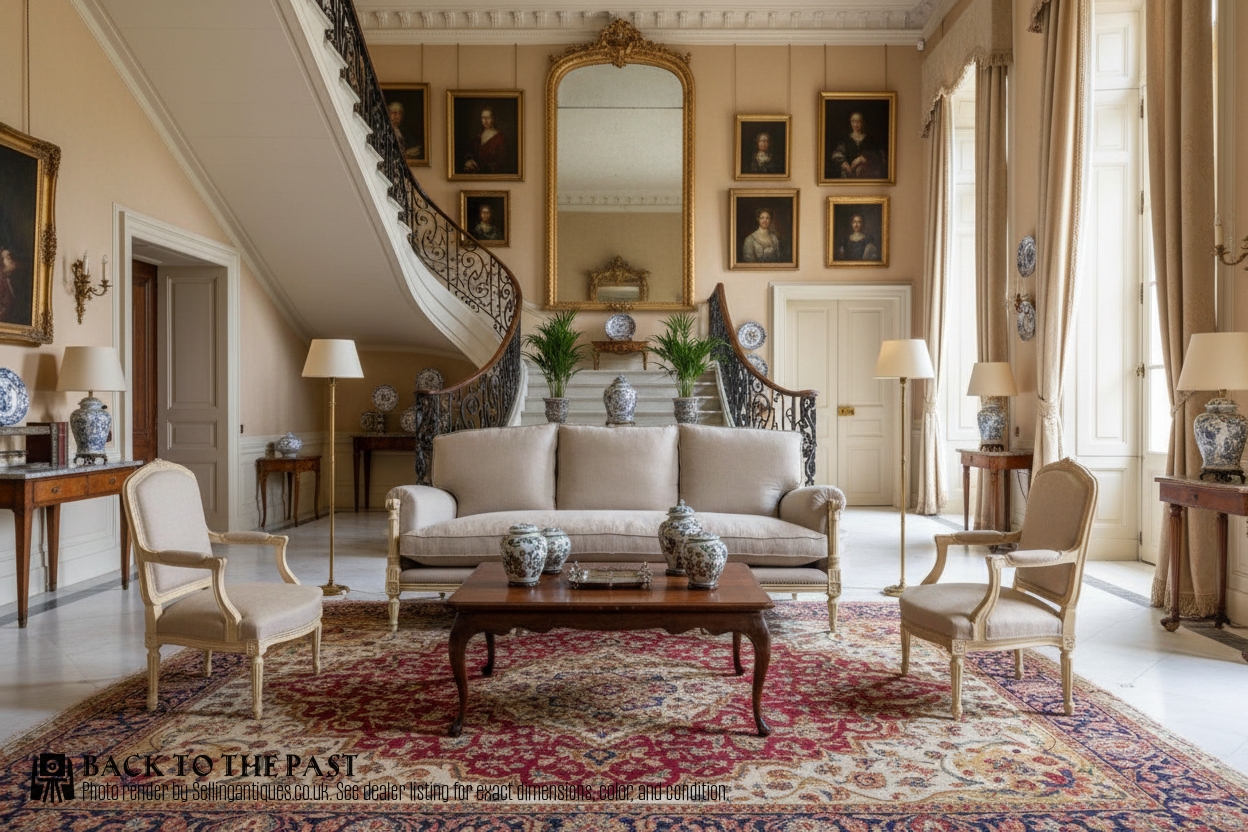
Materials and construction
Makers constructed these frames from solid hardwoods including beech and satinwood, shaping the timber through carving and joinery before applying surface decoration. Paint layers went directly onto the prepared wood, occasionally over gesso grounds, allowing for subsequent distressing or gilding.
Seating portions integrated woven cane panels or upholstered pads covered in fabric such as linen. Frames supported weight through sturdy legs, which varied from fluted neoclassical columns to curved cabriole supports depending on the period style.
Painted Wood Settee Retail Price Guide 2026
Typical asking prices for painted wood settee among the pieces listed under this phrase on Sellingantiques today, from the lower quarter to the upper quarter. They describe what is for sale here now, not the wider market.
Listings feature eighteenth, nineteenth, and twentieth-century pieces, including Edwardian satinwood variations and mid-century French arrivals.
Judging execution and finish
Quality rests in the crispness of the wood carving and the integrity of the underlying frame structure. Finer pieces display deliberate hand-carved detail along the crest rails and legs rather than soft, moulded resin or heavy plaster replacements.
The handling of the painted surface dictates visual success, with superior examples showing sympathetic ageing or layered historical pigments rather than flat, modern commercial emulsions. Original upholstery systems and tight joinery at the joints further separate standard workshop output from exceptional commissions.
Thonet
The Painted Wood Settee Glossary
- Canapé
- A traditional French term for a decorative sofa or settee. These pieces often feature exposed wooden frames and upholstered seats.
- Gustavian
- A Swedish neoclassical style originating in the late eighteenth century. It typically employs light paint colours, restrained carving, and functional elegance.
- Satinwood
- A durable hardwood native to Ceylon and India with a natural golden sheen. Makers utilised veneers and solids of this timber for fine eighteenth and nineteenth-century seating.
- Bergère
- An enclosed upholstered armchair or settee with solid upholstered sides. The style gained popularity in France during the reign of Louis XV.
- Fluted
- A decorative technique involving parallel vertical grooves carved into furniture legs or columns. This detail appears frequently on neoclassical and Louis XVI designs.
Painted Wood Settee: Frequently Asked Questions
How do I clean a painted wooden frame?
Dust the carved surfaces gently with a soft, dry cloth to remove daily accumulation without disturbing the finish. Avoid commercial chemical sprays and abrasive cleaning pads which can strip historic pigment.
Test any mild moisture on a hidden area if stubborn marks require attention. Preserving the integrity of the original paint surface remains paramount for maintaining character.
Can these settees be used for daily seating?
Most antique settees handle regular sitting perfectly well when the frame remains structurally sound. Checking the joints and upholstery webbing ensures the piece safely supports everyday domestic use.
Lighter frames, particularly delicate satinwood or cane models, benefit from more considered placement. Placing them in low-traffic zones protects fragile painted details from accidental knocks.
What is the difference between Gustavian and Louis XVI styles?
Gustavian pieces reflect Swedish interpretations of French neoclassical design, favouring understated symmetry and pale, chalky paint finishes. They prioritize domestic comfort and simpler geometric restraint.
Louis XVI furniture tends towards sharper carved details, richer gilding accents, and more formal proportions. Both styles share straight fluted legs and classical architectural motifs.
How do I identify the period of a painted settee?
Examine the wood species, tool marks left by the maker, and the composition of the paint layers. Earlier eighteenth-century examples display hand-cut joinery and aged patination across the timber substrate.
Later revival pieces from the twentieth century often utilise modern fixings or machine-sawn framing beneath the surface decoration. Comparing the decorative vocabulary to known historical styles confirms the timeline.