
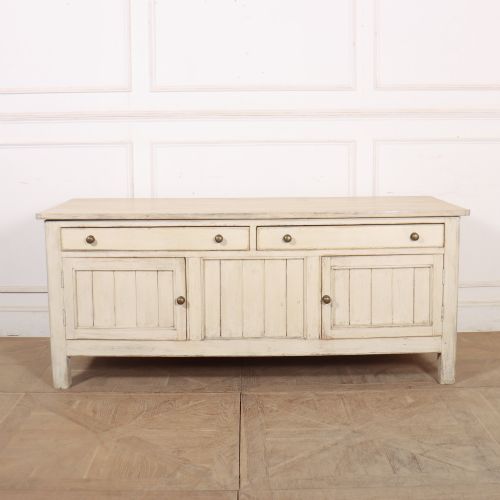


Painted Wood Credenza
A painted wood credenza delivers practical storage while bringing colour and decorative surface work directly into a room.
Painted Wood Credenza
A painted wood credenza combines low storage architecture with decorated external surfaces spanning several centuries of European cabinetmaking. These pieces serve as sideboards, buffets, and cabinets designed to anchor dining rooms or living spaces.
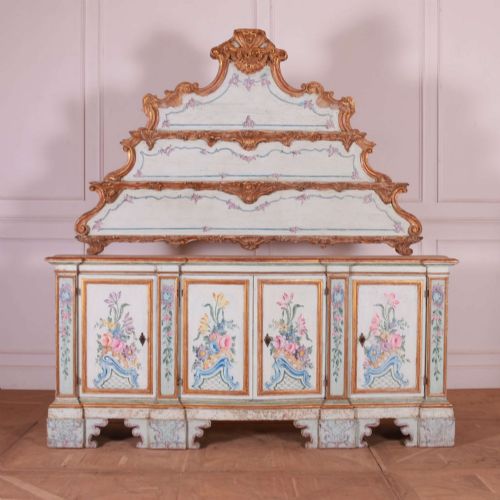
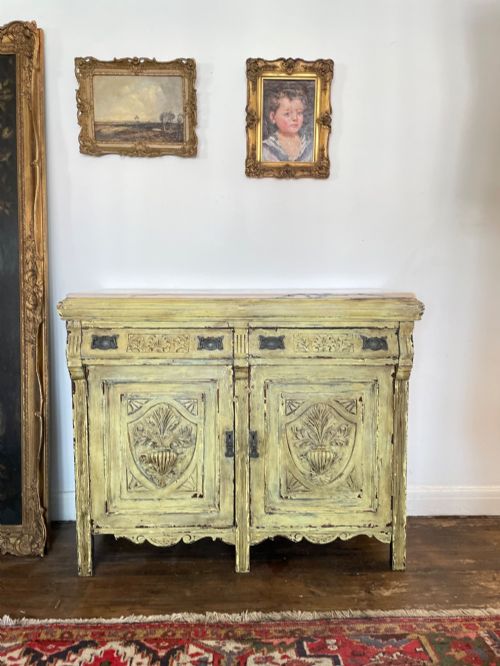
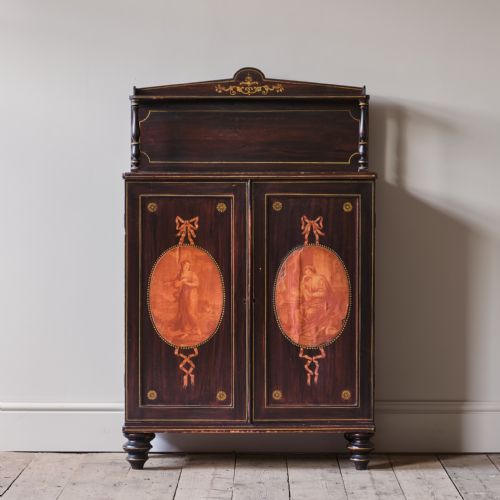
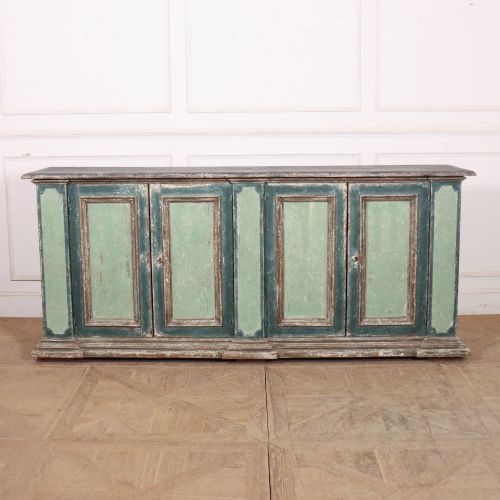
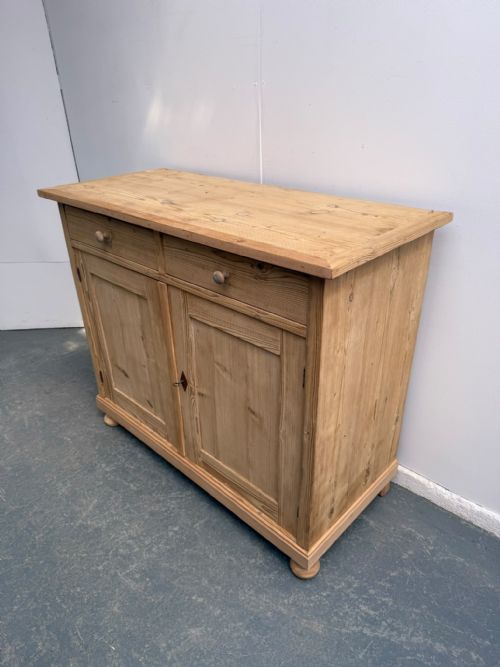
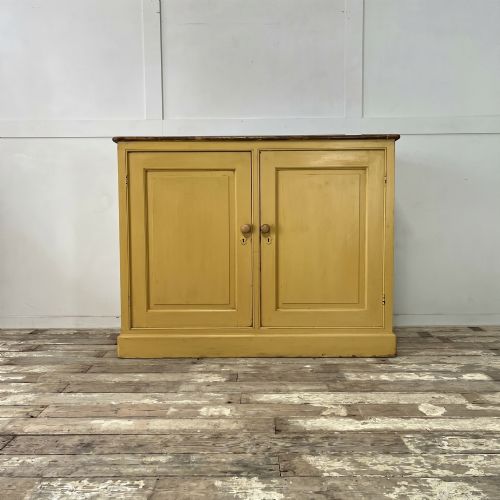
The versions met most frequently on this page range from nineteenth-century English pine dresser bases and school cupboards to eighteenth-century Venetian and French buffets, alongside Regency simulated rosewood pieces.
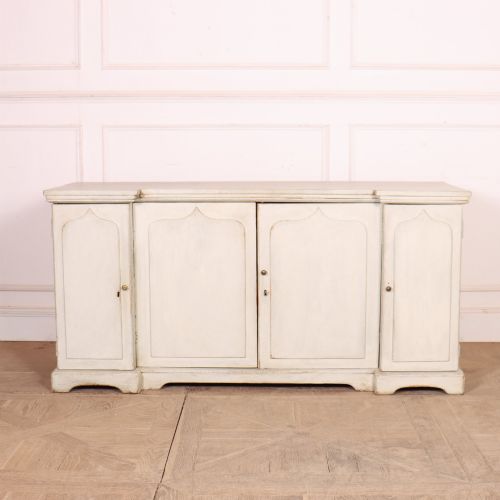
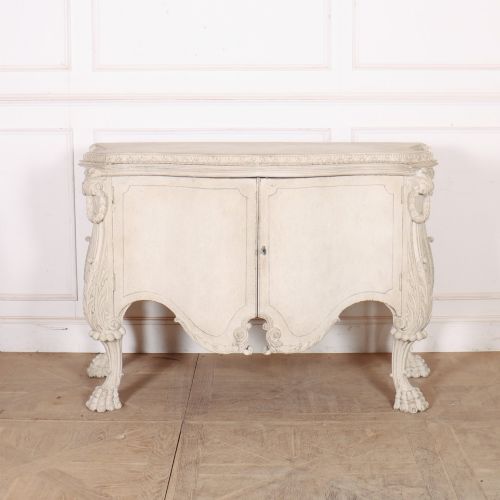
Makers utilised various formats, including breakfront designs, demi-lune commodes, and serpentine cabinets, pairing utilitarian timber carcases with decorative paint finishes.
How they were made
Carpenters constructed the primary carcases using solid timbers such as pine, walnut, and rosewood, often reinforced with brass and iron hardware. These woods provided stable foundations for subsequent surface decoration.
Surface finishes relied on layered paintwork, including simulated rosewood graining, ragwork, and floral motifs, sometimes complemented by giltwood highlights and marble tops.
Some nineteenth-century pine cupboards survived decades of institutional schoolroom use before finding new life in domestic hallways.
What varies in quality
The distinction between tiers rests upon the sophistication of the timber preparation and the dexterity of the brushwork. Original painted surfaces executed with fine detail command greater attention than later utilitarian pine scrubbed down for domestic waxing.
Structural harmony also dictates standing: balanced proportions in breakfront or serpentine forms, alongside integrated brass mounts and intact marble or timber tops, elevate the piece.
The Painted Wood Credenza Glossary
- Breakfront
- A cabinet design where the central section projects forward from the flanking outer sections. This configuration adds architectural depth to large sideboards and bookcases.
- Serpentine
- A curved shape featuring a convex centre flanked by concave ends. It appears frequently on eighteenth and nineteenth-century commodes and buffets.
- Demir-lune
- A half-moon shape characteristic of side cabinets and commodes designed to sit flush against a wall. The flat back meets a curved front.
- Potboard Dresser Base
- A low kitchen or dining table base featuring an open lower shelf traditionally used for storing pots and heavy crockery. These pieces typically display utilitarian pine construction.
- Ragwork
- A paint decoration technique where rags or cloths are manipulated across wet glaze to create mottled textures. This method imitates richer materials or adds decorative depth.
Painted Wood Credenza: Frequently Asked Questions
Where should I place a painted wood credenza?
These cabinets suit dining rooms, hallways, and living spaces where low storage is required against a wall. Their decorative surfaces allow them to function as focal points in a room.
Consider the clearance needed for doors or drawers when positioning the piece among existing furniture.
How do I care for painted wood surfaces?
Dust surfaces regularly with a soft, dry cloth to prevent grime accumulation on the decorative paintwork. Avoid harsh chemical cleaners that can strip historic finishes.
Keep pieces away from direct heat sources and strong sunlight to prevent the timber from warping and the paint from fading.
What is the difference between a credenza and a buffet?
A credenza traditionally denotes a low-profile storage cabinet, whereas a buffet often stands taller and serves food presentation purposes in a dining room. In practice, historical terminology frequently overlaps across periods.
Both forms share similar internal storage capacities behind doors and drawers.
How can I tell original paint from later decoration?
Original painted surfaces show integrated wear patterns, craquelure, and pigment ageing consistent with the timber's age underneath. Later overpainting often conceals this natural degradation.
Examine hinges, screw types, and interior timber surfaces to verify whether the exterior finish matches the construction period.