
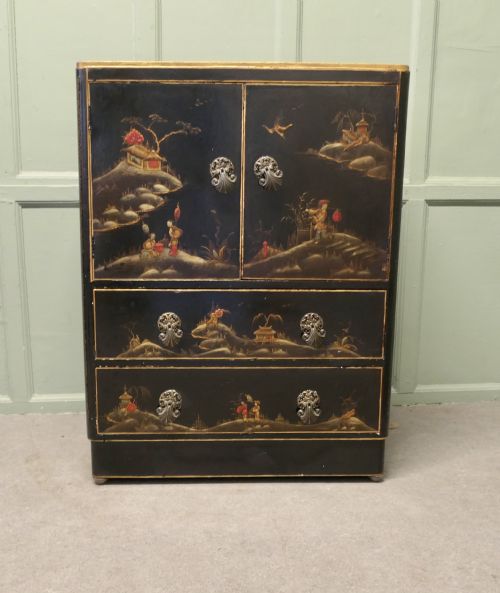
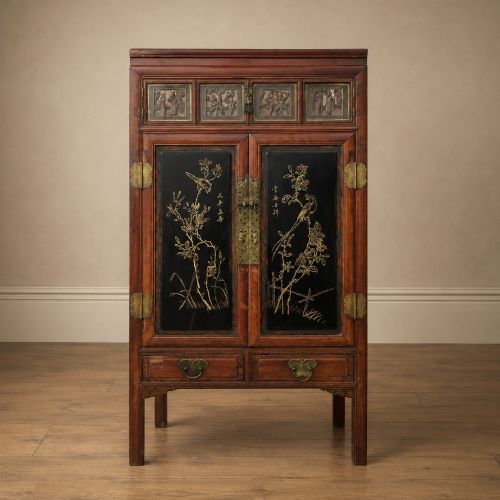
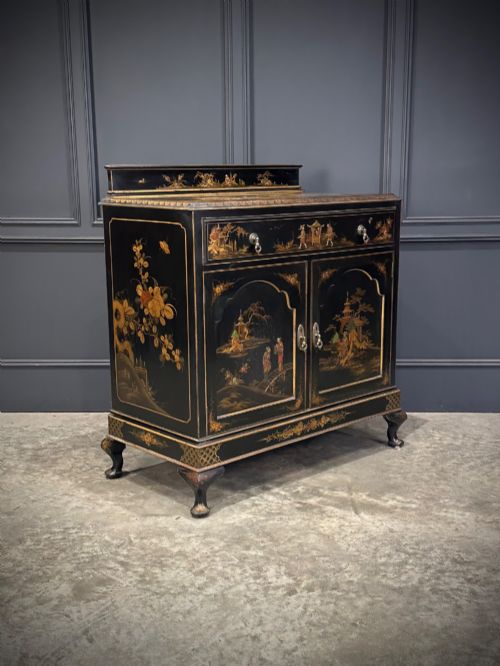


Gilt Painted Sideboard
A gilt painted sideboard brings surface decoration and practical storage together, offering a decorative focal point for a dining room or hall.
Gilt Painted Sideboard
When buyers search for a gilt painted sideboard, they encounter a variety of decorative storage furniture spanning the eighteenth, nineteenth, and early twentieth centuries. These pieces encompass styles such as French Chateau, Louis XV, Chinoiserie, and the Aesthetic Movement, reflecting diverse international design influences.
The forms available include side cabinets, breakfront side cabinets, commodes, and console tables, often incorporating marble tops or glass elements. Such furniture serves both decorative and functional purposes in period and contemporary interiors alike.
The selection ranges from British and French interpretations to Asian export pieces, including Chinese Qing Dynasty lacquer cabinets and Japanese porcelain items associated with the broader stylistic category.
Materials and construction methods
Construction relies upon woods such as walnut and ebonised timber, alongside lacquered wood surfaces prepared with traditional paint and gilt decoration. Artisans applied successive layers of lacquer or paint to create deep, reflective finishes before adding hand-painted motifs and gilt highlights.
Many cabinets incorporate fitted marble tops in white or coloured stone, resting on wooden carcases alongside brass mounts and hardware. Glazed doors and majolica ceramic panels also appear, integrated into the timber structures to add texture and colour.
The furniture styles represented across the inventory include Chinoiserie, Louis XV, French Chateau, Neoclassical, and the Aesthetic Movement.
Assessing quality and craftsmanship
Quality reveals itself in the execution of the surface decoration, from the precision of the hand-applied gilt work to the depth of the lacquer and paint layers. Finer examples display meticulous detailing in Chinoiserie scenes, japanning, or floral motifs rather than mechanical or simplified application.
The choice of materials and secondary woods also dictates standing, with heavy marble slabs, quality brass fittings, and solid joinery distinguishing superior pieces. The integrity of the painted and gilt surfaces, and how well they age with the underlying wood, marks the difference between standard production and higher craftsmanship.
The Gilt Painted Sideboard Glossary
- Japanning
- European imitation of East Asian lacquerwork involving layered varnishes and metallic dust. This technique creates a hard, glossy dark finish adorned with raised gilt designs.
- Demi-lune
- Half-moon shape characteristic of console tables and commodes designed to sit flush against a wall. This curved form was particularly favoured in French and English neoclassical furniture.
- Ebonised
- Wood finished to resemble ebony through staining or dark painting. Victorian furniture makers frequently used this technique to contrast against bright gilt ornamentation.
- Breakfront
- Furniture design where the central section projects forward from the flanking outer sections. This architectural arrangement adds depth and visual rhythm to side cabinets and bookcases.
Gilt Painted Sideboard: Frequently Asked Questions
What is a gilt painted sideboard?
A gilt painted sideboard is a decorative storage piece finished with painted surfaces and metallic gold leaf or paint highlights. These items often feature detailed motifs drawing from European and Asian design traditions.
They function as both serving surfaces and prominent decorative elements within a room, combining woodwork with artistic ornamentation.
How do I date a painted cabinet?
Dating relies on examining the construction methods, secondary woods, and stylistic markers visible in the piece. Hardware types, cabinet joints, and the composition of the paint or lacquer layers offer key clues.
Comparing the decorative style, such as Aesthetic Movement ebonising or eighteenth-century neoclassical lines, helps place the object within a specific period.
Where should I place a console table?
Console tables fit well in hallways, living rooms, or dining spaces where floor space is limited against a wall. Their shallow depth allows them to serve as display surfaces for lamps, vases, or ornaments without obstructing walkways.
Pairing them with a wall mirror or placing them beneath artwork creates a balanced focal point in an interior.
How do I care for antique lacquer?
Antique lacquer and painted surfaces require gentle treatment using a soft, dry cloth for dusting. Avoid chemical cleaners, moisture, and direct sunlight, which can damage delicate gilt work and varnish.
Maintaining a stable room temperature helps prevent the underlying wood from expanding or contracting, protecting the fragile surface finishes.