

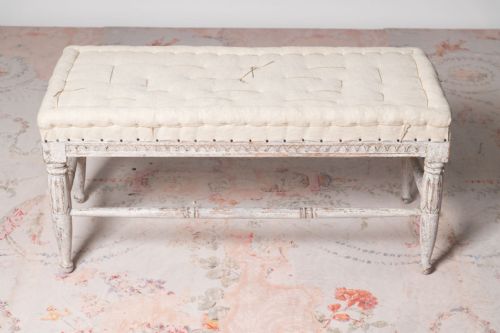


Painted Window Seats
These painted window seats bring a refined architectural presence to a room, offering low-slung seating designed specifically for placement beneath sills.
Painted Window Seats
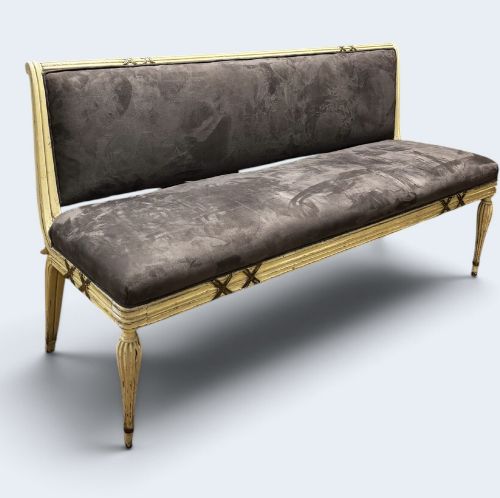
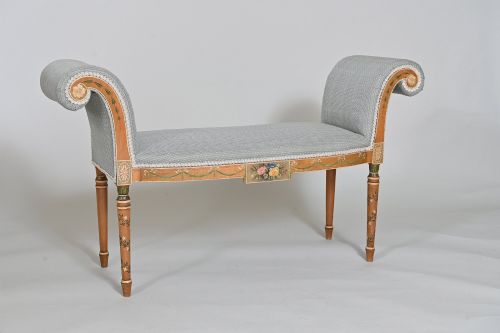
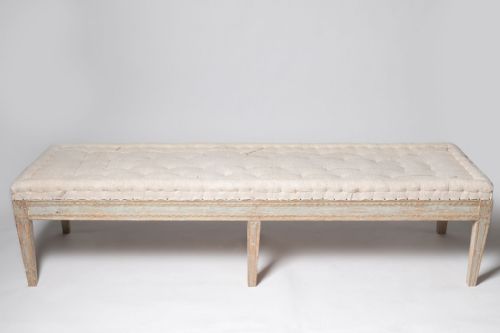
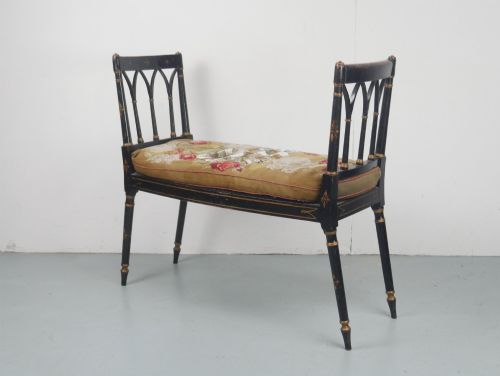
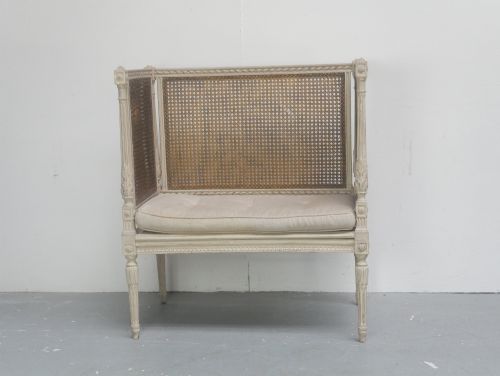
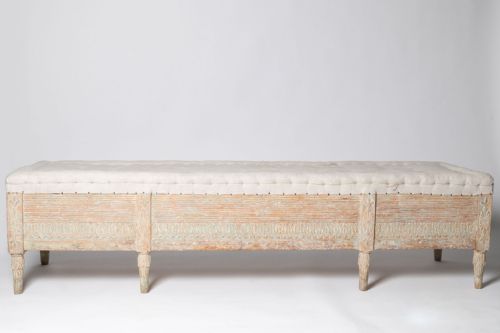
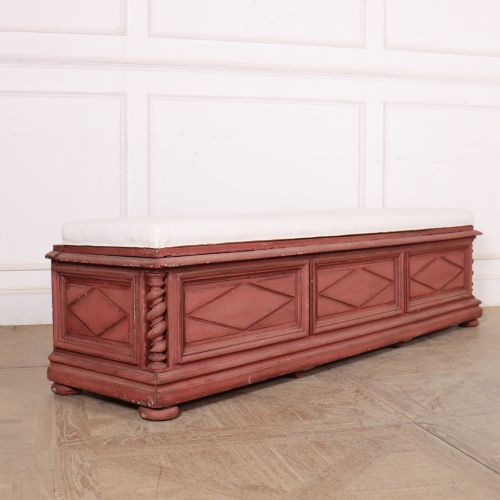
When you search for painted window seats, you encounter a variety of long stools, settees, and benches originating from the eighteenth century through to the early twentieth century. The selection spans distinct regional interpretations, including Gustavian Swedish designs, Italian neoclassical forms, and French styles.
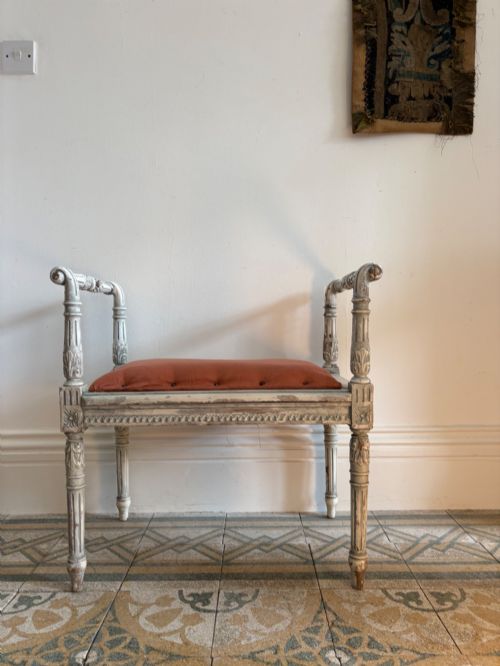
The pieces often take the form of long stools or compact settees, sometimes featuring canework or upholstered pads in silk, linen, and other textiles. These seats frequently reflect neoclassical or regency aesthetic traditions, employing painted wood finishes rather than exposed natural timber.
Materials and construction
Makers utilised timber substrates such as beech, pine, and satinwood, which were then coated in paint to achieve a smooth finish. Some examples incorporate gilt highlights alongside the painted surfaces, particularly on pieces influenced by regency and neoclassical styles.
Seating portions frequently utilise woven canework or drop-in frames upholstered in fabrics like linen and silk. Carved wooden details occasionally appear on the frames, aligning with the French and Italian regional designs represented in the listings.
Painted Window Seats Retail Price Guide 2026
Typical asking prices for painted window seats among the pieces listed under this phrase on Sellingantiques today, from the lower quarter to the upper quarter. They describe what is for sale here now, not the wider market.
Some nineteenth-century window frames were occasionally repurposed into coffee tables, proving that even a perch needs a second act.
Distinctions in execution
The refinement of the wooden frame carving and the crispness of the painted finish differentiate examples across the range. Finer pieces display carefully proportioned joinery and delicate decorative details that reflect their specific stylistic origins.
The integrity of the structural frame and the execution of secondary materials, such as canework or upholstery work, contribute to the overall standard of an individual piece.
The Painted Window Seats Glossary
- Gustavian
- A Swedish neoclassical design movement characterised by restrained ornamentation and pale painted finishes. This style emerged in the late eighteenth century and heavily influenced Scandinavian seating forms.
- Canework
- A method of weaving plant material, typically rattan, to form a resilient seat or back panel. It provides a lightweight texture that contrasts with solid painted wooden frames.
- Satinwood
- A durable timber with a fine grain and natural sheen, frequently utilised in nineteenth-century decorative furniture. It accepts paint finishes well or can be displayed with polished surfaces.
- Regency
- An English design style spanning the early nineteenth century, drawing inspiration from classical Greek and Roman antiquity. Pieces from this period often combine painted surfaces with gilt accents.
Painted Window Seats: Frequently Asked Questions
Where should I place a window seat?
These pieces are traditionally proportioned to sit low beneath a window recess, making use of otherwise unoccupied architectural space.
They also function effectively as long stools or compact benches at the foot of a bed or within a hallway.
How do I clean painted wooden frames?
Dust the painted surfaces regularly with a soft, dry cloth to prevent the accumulation of grit.
Avoid using abrasive cleaning agents or excessive moisture, which can degrade the painted finish over time.
Are these seats comfortable for daily use?
Many examples feature upholstered pads in materials like silk or linen, while others rely on woven canework for support.
Consider adding a loose cushion if you require additional padding for extended periods of sitting.
How do I identify a Gustavian piece?
Gustavian pieces typically exhibit pale painted woodwork, clean neoclassical lines, and restrained, symmetrical carvings.
Originating in Sweden, they favour a brighter, lighter aesthetic compared to heavier continental baroque styles.