




Painted Upholstered Bench
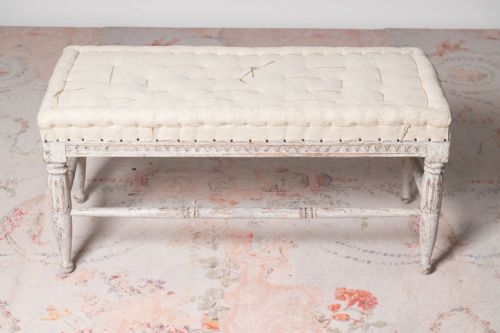
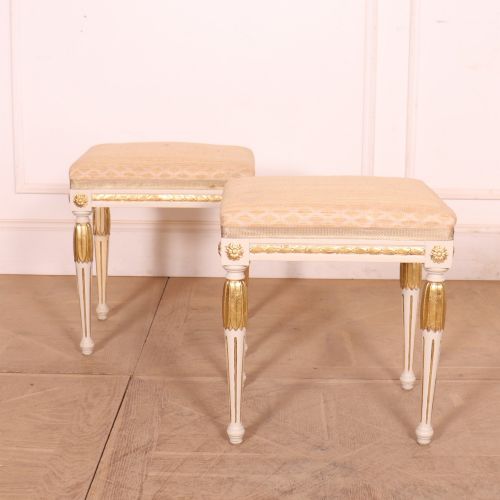
These painted upholstered bench pieces bring together soft textiles and painted timber frames, offering practical seating with distinct decorative presence.
Painted Upholstered Bench
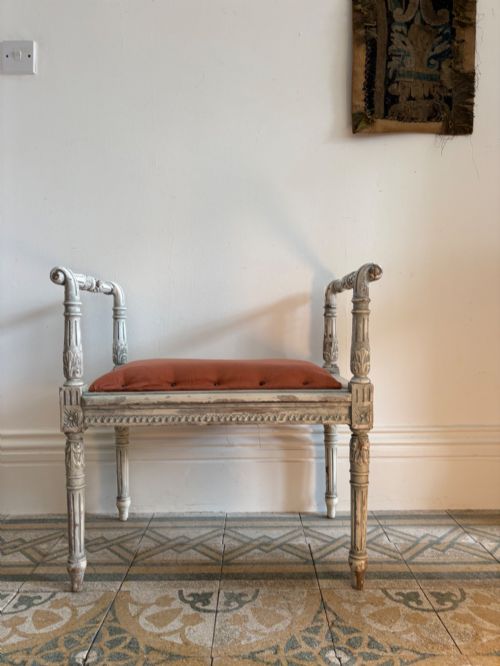
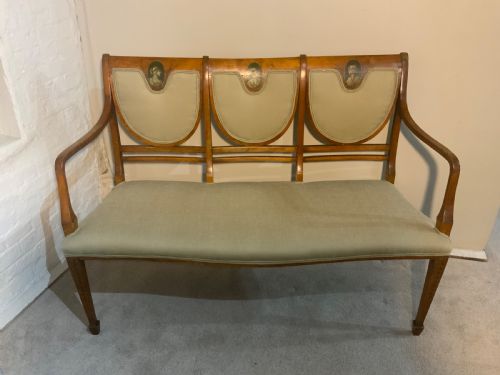
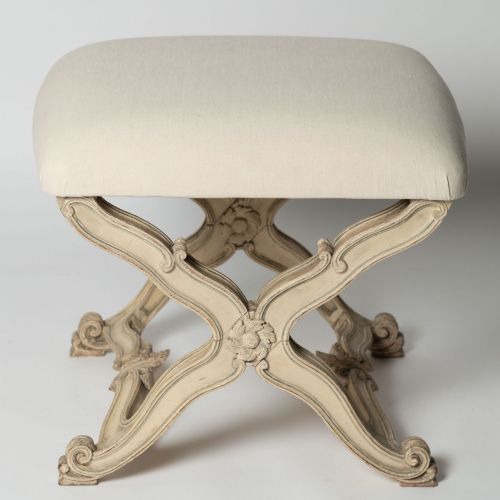
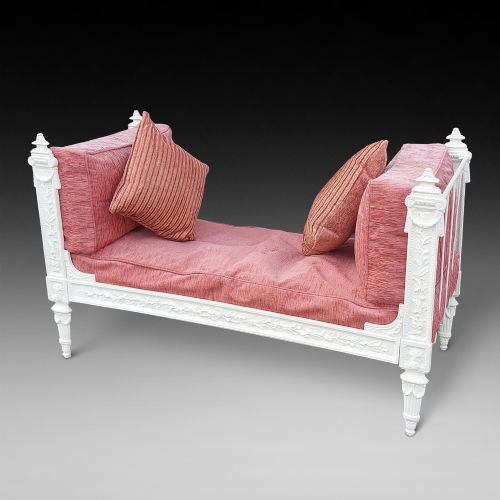
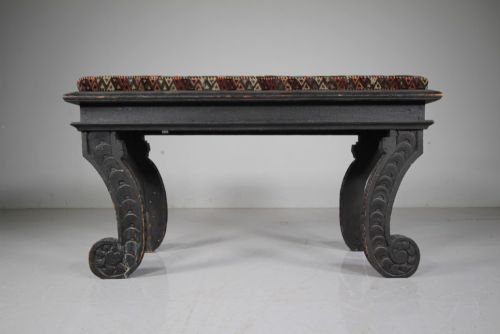
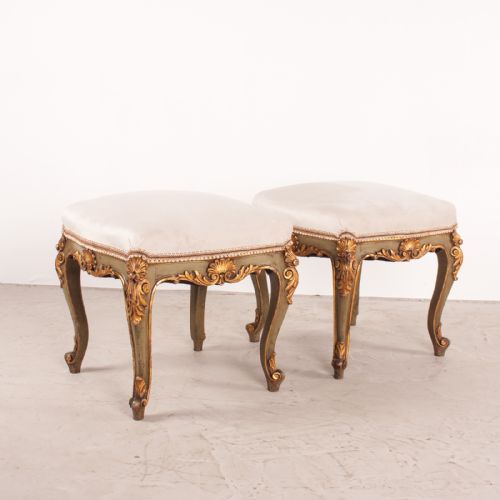
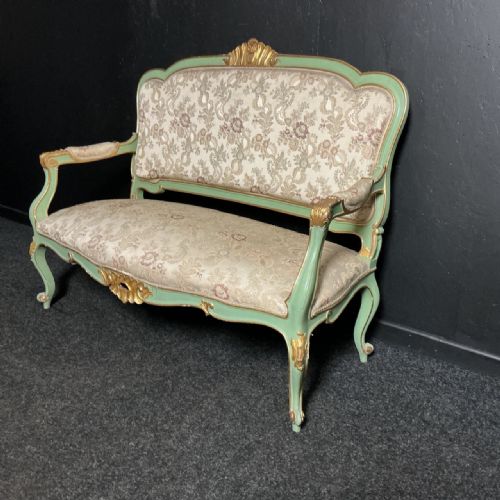
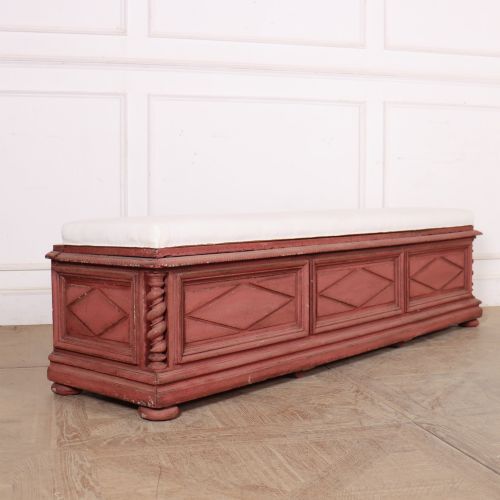
A painted upholstered bench encompasses a range of seating forms including settees, window seats, daybeds, and footstools produced across the eighteenth, nineteenth, and early twentieth centuries. When searching for a painted upholstered bench, buyers typically encounter examples rendered in French, Swedish, and Italian stylistic traditions.
The selection here draws primarily from nineteenth-century origins alongside eighteenth-century items and later pieces from the nineteen-twenties and thirties. Common formats include small stools, two-seat settees, and longer window seats bearing painted or gilded finishes paired with fabric coverings.
Makers and designers from various European regions adapted classical motifs, resulting in pieces that range from restrained Gustavian seating to ornate Venetian polychrome frames. These variations provide diverse options for integrating historical seating into modern interiors.
Assessing craftsmanship and finish
Quality in these pieces is dictated by the precision of the wood carving and the integrity of the original painted surface. Finer examples display crisp detail in moulded frames and harmonious application of polychrome or gilt decoration.
The longevity of the piece depends on the structural stability of the timber joints and the preservation of the textile upholstery. Superior items retain their original decorative scheme without excessive modern intervention.
The listings on this page span the eighteenth, nineteenth, and twentieth centuries, featuring painted wood, beech, pine, satinwood, and various textile upholstery types.
Miles & Edwards
The Painted Upholstered Bench Glossary
- Gustavian
- A Swedish neoclassical design style characterised by pale painted finishes and restrained decorative carving. This aesthetic emerged during the late eighteenth century and influenced Scandinavian seating forms for decades.
- Settee
- A medium-length upholstered seat with a backrest and arms, designed to accommodate multiple people. These forms often mirror the stylistic traits of larger sofas from the same period.
- Polychrome
- The practice of decorating architectural elements or furniture with multiple colours. Venetian pieces frequently employ this technique to create vibrant floral or scenic motifs.
- Curule
- An ancient Roman shape of stool characterised by intersecting X-shaped legs. Nineteenth-century iterations revive this classic profile for formal footstools and benches.
- Canapé
- A French term for an upholstered sofa or settee featuring an exposed wooden frame. These decorative seats often incorporate carved details along the back rail and legs.
Painted Upholstered Bench: Frequently Asked Questions
How do I identify a Gustavian bench?
Gustavian benches typically feature pale, chalky painted finishes over carved wooden frames with understated neoclassical details. Their design prioritises symmetry and simplicity.
Look for fluted legs, restrained floral carvings, and neutral linen or textile upholstery that complements the lighter woodwork.
What rooms suit a window seat?
Window seats function well in reception rooms, bedrooms, or hallways where long, low seating is practical. Their shallow depth allows them to fit beneath windows or along narrow corridors.
These pieces provide a decorative focal point while offering functional seating without obstructing natural light.
How should I care for antique painted wood?
Maintain painted wooden frames by dusting them gently with a dry, soft cloth. Avoid using harsh chemical cleaners that might lift historic paint layers.
Keep the furniture away from direct sunlight and extreme humidity fluctuations to protect both the timber substrate and the delicate surface finish.
What is the difference between a settee and a daybed?
A settee is built primarily for seated company, featuring a defined backrest and often arms designed for upright posture. They accommodate two or more occupants.
A daybed incorporates an extended frame intended for reclining or resting. These pieces frequently blend elements of a chair and a bed into a single lounge format.