

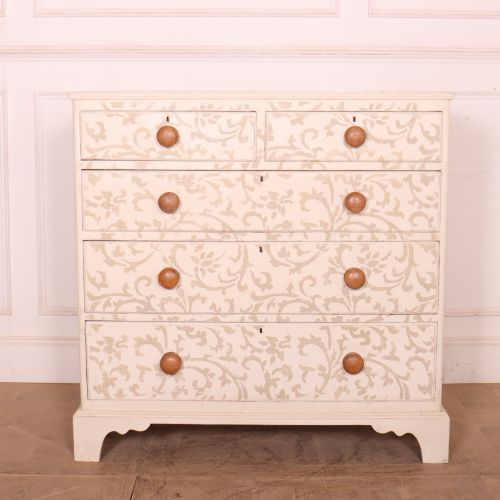
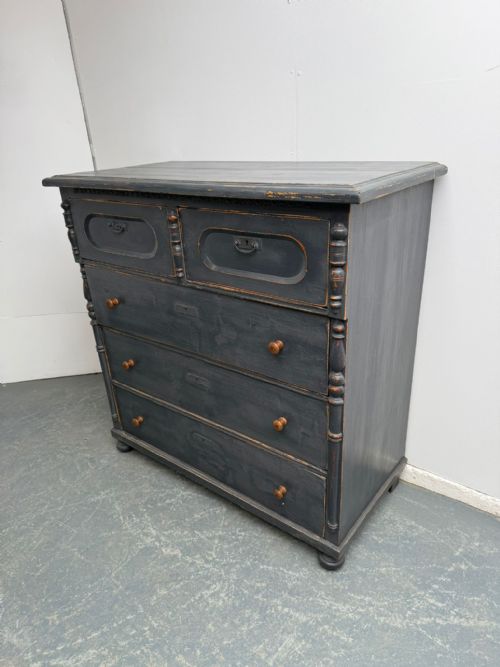


Painted Two Over Three
These painted two over three chests of drawers offer genuine vernacular character and practical storage, combining traditional proportions with honest painted surfaces.
Painted Two Over Three
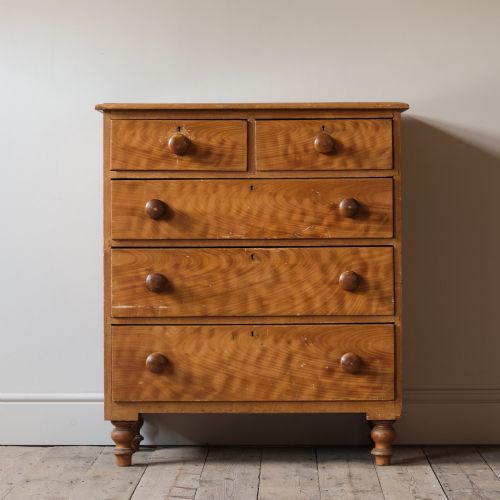
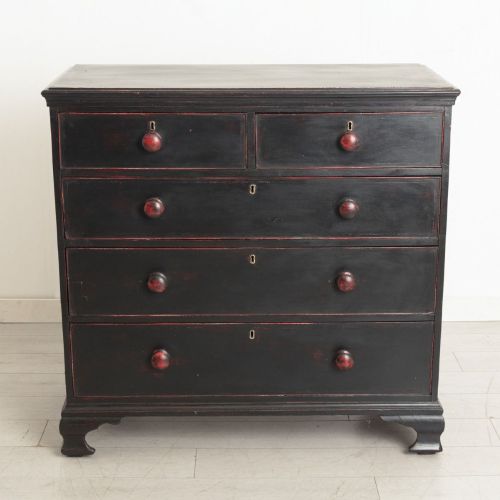
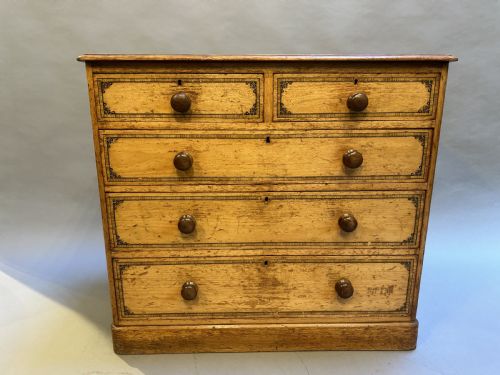
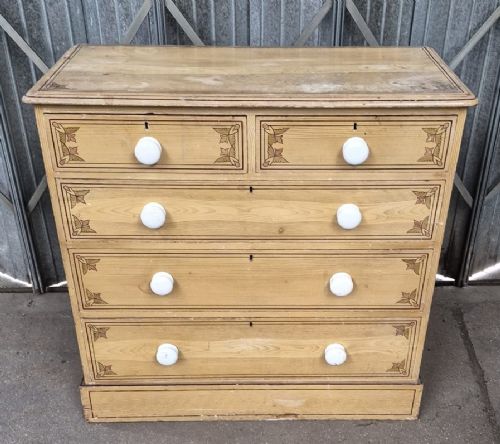
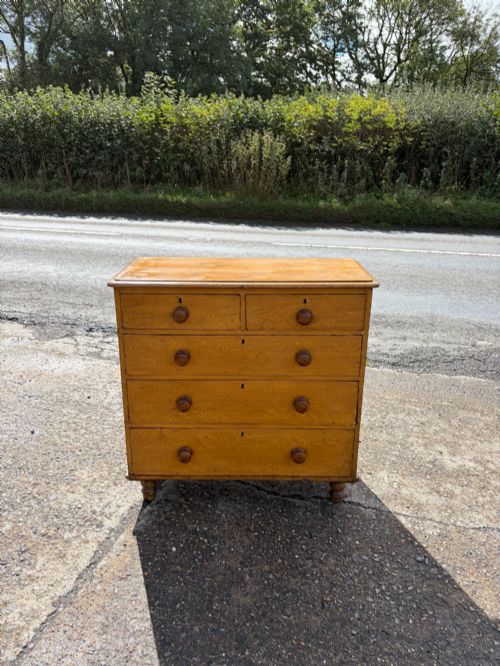
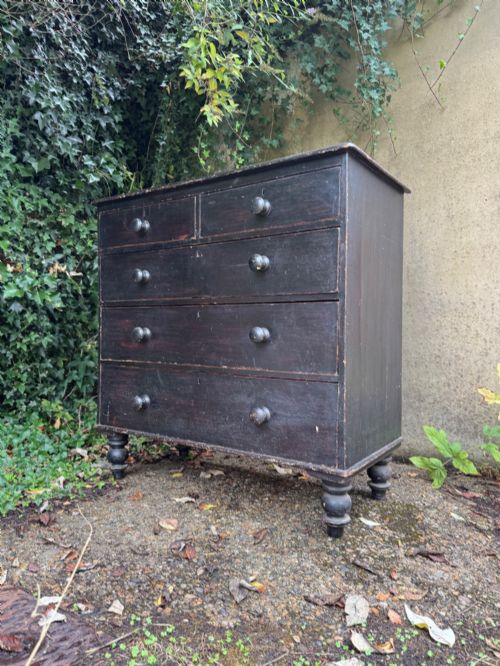
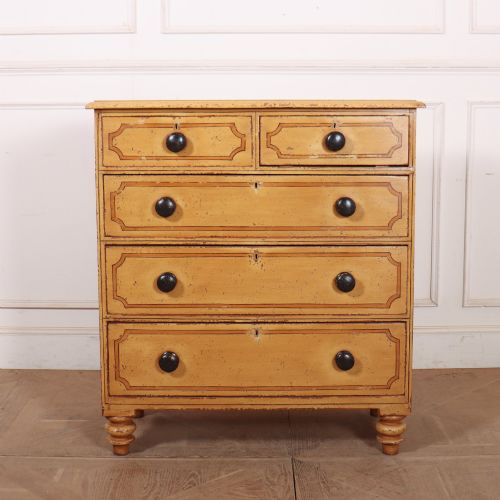
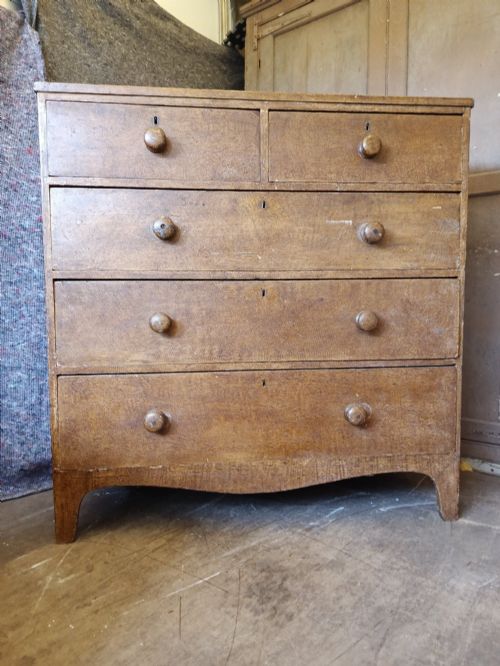
A painted two over three chest of drawers provides a classic five-drawer arrangement with two smaller drawers above three wider ones. These pieces belong primarily to the Victorian and Regency periods, stretching back to the eighteenth century.
The form appears most frequently in pine, constructed for domestic settings ranging from English country houses to period town dwellings. Surviving examples often display their original painted finishes, offering immediate visual warmth to a room.
How They Were Made
Carpenters built these chests using solid timber such as pine, joined with traditional methods to withstand daily domestic use. Iron and brass hardware, including handles and key escutcheons, completed the functional structure.
Makers applied decorative treatments directly to the wood, including plain paint, stencilling, and scumbling techniques designed to imitate more expensive timbers. These finishes were layered onto the timber substrate and left to age naturally over generations.
Painted Two Over Three Retail Price Guide 2026
Typical asking prices for painted two over three among the pieces listed under this phrase on Sellingantiques today, from the lower quarter to the upper quarter. They describe what is for sale here now, not the wider market.
Some nineteenth-century painters enjoyed mimicking expensive hardwoods so convincingly that only a closer inspection reveals humble pine beneath.
What Varies in Quality
Quality rests in the survival of the original painted surface and the crispness of any decorative stencilling or scumble work. Pieces retaining their untouched early finishes sit at the top of the range compared to later overpainting.
Proportion and timber selection also divide everyday utility from finer examples. Heavier construction and well-balanced drawer arrangements demonstrate superior regional craftsmanship.
The Painted Two Over Three Glossary
- Scumble
- A decorative painting technique involving layers of translucent glaze manipulated to simulate the grain of more costly wood. This finish is frequently found on nineteenth-century country furniture.
- Stencilled
- A method of applying patterns using a cut-out template and paint. It appears on Victorian pieces to add simple surface decoration.
- Pine
- A soft timber widely utilised for domestic case furniture throughout the eighteenth and nineteenth centuries. It provides a stable base for painted finishes.
- Regency
- An architectural and design period dating from the early nineteenth century. Furniture from this era often displays refined proportions.
- Victorian
- The period spanning the reign of Queen Victoria, encompassing diverse regional styles of furniture making. Pieces from this era form the majority of these listings.
Painted Two Over Three: Frequently Asked Questions
Are these chests made of solid wood?
These pieces are constructed primarily from solid timber, predominantly pine, rather than manufactured boards. Carpenters utilised natural wood for both the structural frames and the drawer linings.
This solid construction allows the furniture to endure through centuries of domestic use.
How do I care for original paint?
Original painted surfaces require gentle treatment, avoiding harsh chemical cleaners and excessive moisture. Dusting with a dry or very slightly damp cloth preserves the integrity of the historic finish.
Keeping the chest away from direct heat sources prevents the wood from moving and protects the paint layer from flaking.
How do I date a painted pine chest?
Dating relies on examining construction methods, timber thickness, and the characteristics of the paint layer. Regency examples often display lighter framing, while Victorian pieces frequently incorporate heavier pine and stencilled decoration.
Hardware styles and the type of fixings used inside the drawers also offer clues to the period of manufacture.