




Painted Swedish Country Table
These painted swedish country table pieces bring functional rustic utility and calm painted surfaces to an interior.
Painted Swedish Country Table
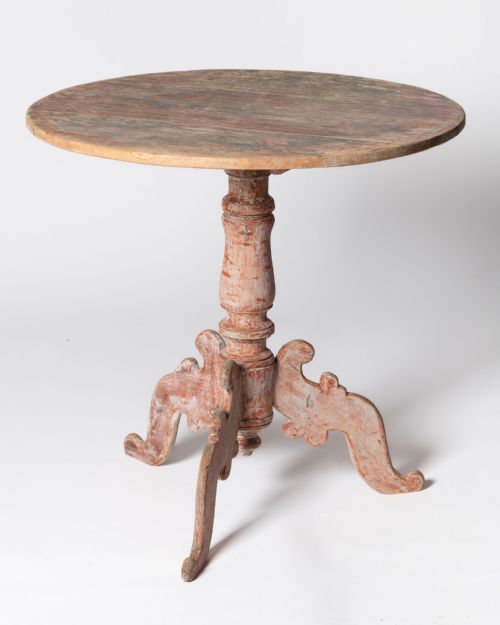
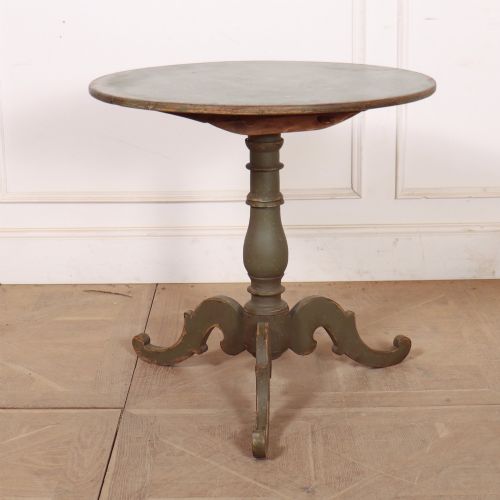
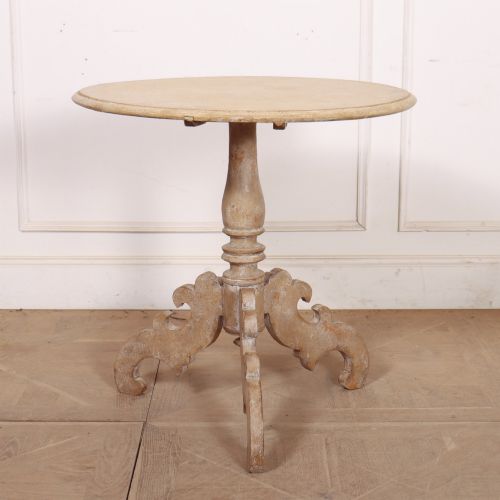
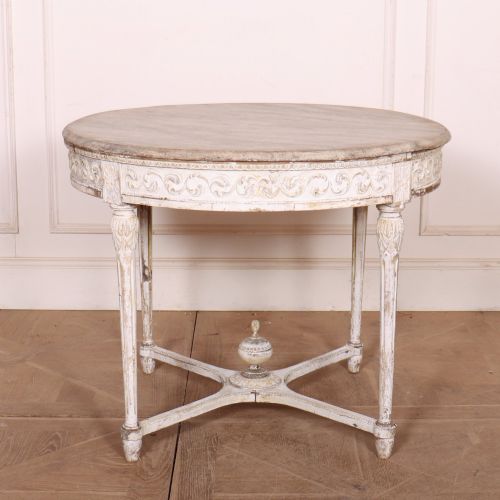
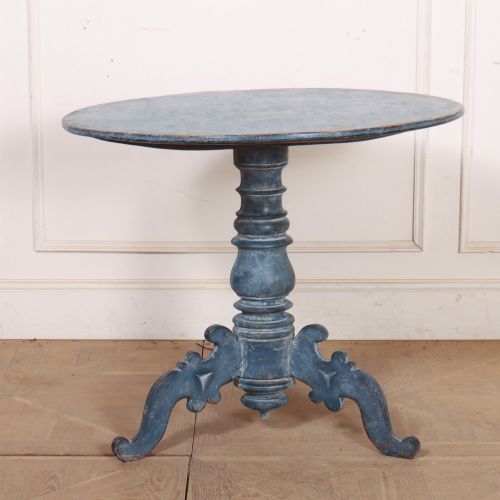
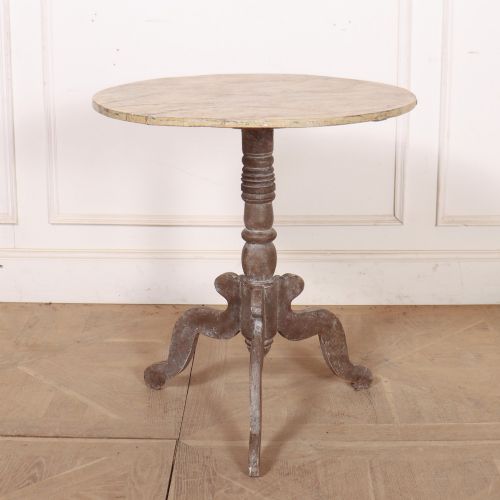
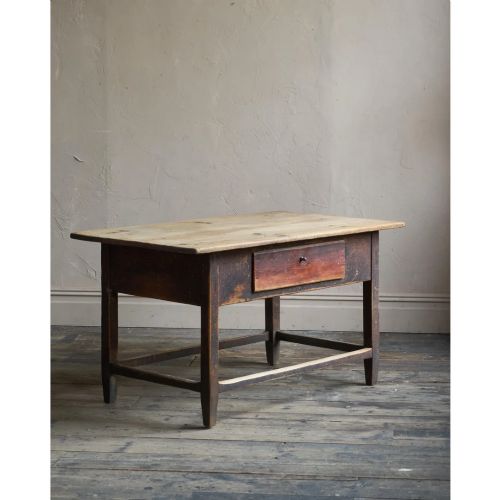
A painted swedish country table spans various forms built for practical domestic tasks, with lamp tables, kitchen tables, and side tables appearing most frequently alongside occasional pieces and dining preparation tables. The evidence centres on nineteenth-century examples, though eighteenth-century and early twentieth-century dates also occur.
Makers working within styles such as Scandinavian Country, Gustavian, Swedish Folk Art, and Rustic Farmhouse produced these items. Side tables and lamp tables dominate the selection, accompanied by drop-leaf tables, console tables, and bakers tables.
How they were made
Construction relies primarily on pine and softwood, shaped into practical domestic forms often strengthened with box stretchers or folding mechanisms. Wood surfaces receive coats of paint, including traditional Falu paint and ragwork techniques, which provide the characteristic coloured finish.
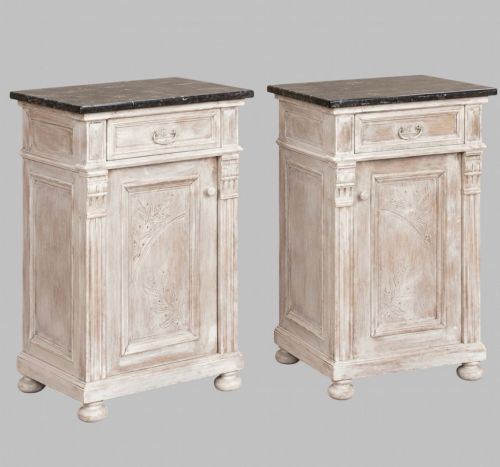
Makers utilised simple joinery suitable for regional workshops and folk production, combining timber frames with applied painted finishes. Brass fittings occasionally appear on specific forms, while marble tops feature on select tables.
Painted Swedish Country Table Retail Price Guide 2026
Typical asking prices for painted swedish country table among the pieces listed under this phrase on Sellingantiques today, from the lower quarter to the upper quarter. They describe what is for sale here now, not the wider market.
Pine and softwood dominate the material record, paired with applied paint finishes across nineteenth-century forms.
What varies in quality
Quality rests in the survival of original paint surfaces and the proportion of the piece, where untouched folk application differs from later repainting. Well-proportioned framing in pine or softwood retains structural integrity without heavy restoration.
Finer examples show distinct regional character in decorative paint effects like ragwork or traditional Falu finishes. The integration of functional elements such as drop leaves or box stretchers distinguishes more ambitious workshop construction from simpler utilitarian items.
The Painted Swedish Country Table Glossary
- Falu paint
- A traditional deep red or dark paint originating from copper mines in Dalarna, Sweden. It protects softwood surfaces effectively.
- Slagbord
- A traditional Scandinavian drop-leaf dining table supported by swinging wooden gates. These tables extend to accommodate multiple diners.
- Ragwork
- A decorative painting technique applied to furniture surfaces using rags to dab or wipe colour. This creates mottled or textured patterns on the timber.
- Box stretcher
- Wooden rails connecting the lower legs of a table to add rigidity. They often double as a rest for the feet.
Painted Swedish Country Table: Frequently Asked Questions
How do I identify Falu paint?
Falu paint exhibits a characteristic matte, earthy red or dark tone derived from copper mine residues. It ages with a chalky texture that settles deep into the pine grain.
Over decades, genuine applications develop a soft sheen from handling, unlike modern synthetic paints which retain a uniform gloss.
What is a slagbord used for?
A slagbord functions as a flexible dining or work table with hinged drop leaves. Raising the leaves expands the surface area quickly for meals or food preparation.
Swinging wooden gates pivot outward from the base to support the extended leaves safely.
Are these tables made of pine?
Most pieces utilise pine or softwood as the primary timber for both frames and tops. This native timber was readily available and easy to work in regional workshops.
Surfaces were then painted to protect the soft wood and provide a finished appearance.
How do I care for antique painted surfaces?
Maintain painted surfaces by dusting with a dry microfibre cloth and avoiding harsh chemical cleaners. Moisture should be wiped away immediately to protect the underlying softwood.
Keeping the table away from direct heat sources prevents the old paint from drying out and flaking.