

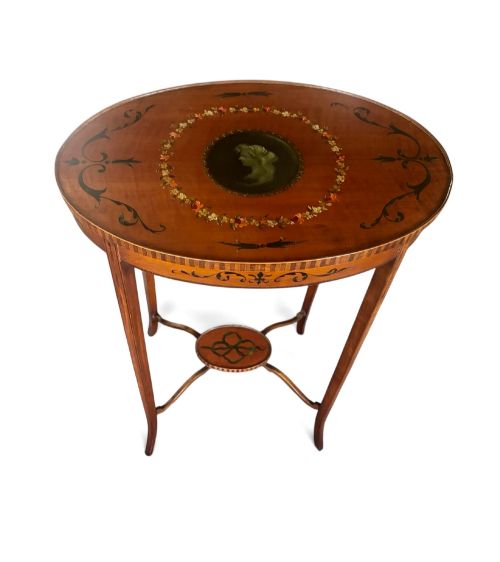
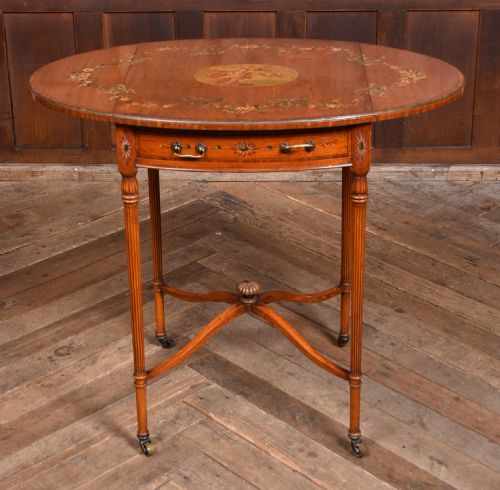


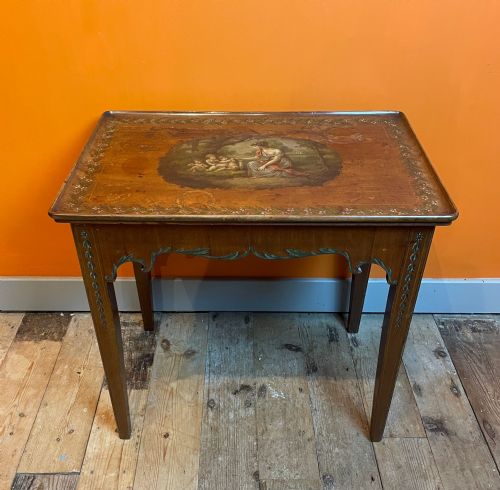


Painted Satinwood Tea Table
A painted satinwood tea table brings light, finely figured timber and delicate brushwork into a room, offering both a surface and a decorative focal point.
Painted Satinwood Tea Table
A painted satinwood tea table combines pale, lustrous timber with surface decoration, taking forms such as card tables, pembroke tables, and occasional pieces. These items appear across Georgian, Regency, and Edwardian periods, frequently demonstrating Sheraton Revival and Neoclassical design influences.
Buyers encounter variations including demi-lune games tables, drop-leaf tables, and oval centre tables. The physical evidence shows pieces spanning the late eighteenth century through to the Edwardian era, with various makers adopting classical motifs on satinwood and mahogany structures.
Materials and construction
Construction relies upon satinwood veneers and solid timbers such as mahogany, often enhanced with contrasting inlay and brass hardware. Artisans applied hand-painted floral decoration and Neoclassical scenes directly onto the timber surfaces.
Cabinetmakers utilised techniques of drop-leaf framing, turn-over leaves for card and games tables, and demi-lune configurations. The combination of painted detail and figured wood defines the physical execution of these pieces.
Painted Satinwood Tea Table Retail Price Guide 2026
Typical asking prices for painted satinwood tea table among the pieces listed under this phrase on Sellingantiques today, from the lower quarter to the upper quarter. They describe what is for sale here now, not the wider market.
Object forms recorded on this page include pembroke tables, demi-lune card tables, kettle stands, and oval centre tables.
Judging quality and execution
Quality rests in the crispness of the hand-painted floral motifs and Neoclassical scenes relative to the grain of the underlying satinwood. Finer examples display meticulous brushwork that integrates harmoniously with the natural figure of the timber.
The precision of the joinery in turn-over leaves, drop-leaves, and inlaid borders separates standard production from superior cabinet work. Structural integrity in forms such as card tables and pembroke tables maintains the balance between decorative surface and practical utility.
The Painted Satinwood Tea Table Glossary
- Satinwood
- A hard, yellow-tinted timber with a natural sheen, highly prized for fine furniture veneers in the eighteenth and nineteenth centuries. Its reflective surface provides an ideal canvas for painted decoration.
- Demi-lune
- Half-moon shaped, frequently describing card or games tables designed to stand flat against a wall when closed. This form gained popularity during the Georgian and Regency periods.
- Pembroke table
- A rectangular drop-leaf table with hinged flaps on either side, often featuring a single drawer. It originated in the eighteenth century and serves as a versatile occasional piece.
- Sheraton Revival
- A late nineteenth-century design movement inspired by the neoclassical furniture of George Sheraton. Pieces from this era frequently feature satinwood surfaces and delicate hand-painted motifs.
Painted Satinwood Tea Table: Frequently Asked Questions
What is a painted satinwood tea table?
A painted satinwood tea table is an item of antique furniture constructed from pale, figured satinwood and embellished with hand-painted floral or classical decoration. These tables take various forms, including pembroke, card, and occasional tables, spanning periods from the Georgian era to the Edwardian revival.
Such pieces functioned historically as versatile surfaces for social gatherings and tea service. Today, they serve both practical roles in domestic interiors and as decorative objects showcasing historical cabinet-making techniques.
How do I date an antique painted table?
Dating relies upon stylistic markers, construction methods, and materials visible in the piece. Georgian and Regency examples exhibit period-specific neoclassical proportions, while Edwardian pieces often reflect Sheraton Revival influences.
Examining the secondary timbers, hinge types, and the style of the hand-painted decoration helps determine whether a piece originates from the eighteenth century or later revival periods.
Where were these tables used historically?
These tables occupied principal reception rooms, drawing rooms, and parlours of grand houses. They provided a surface for serving tea, playing cards, or displaying decorative items.
Because of their light timber and painted surfaces, they were positioned away from direct sunlight and heavy dampness to preserve the delicate brushwork and veneer.
How do I care for satinwood furniture?
Care requires maintaining stable indoor humidity and avoiding direct sunlight, which can fade both the paintwork and the pale satinwood timber. Dusting with a soft, dry cloth is sufficient for routine maintenance.
Harsh chemical polishes must be avoided to protect the historic painted decoration and the polished surface of the wood.